Can You Refrigerate Bananas? Practical Guide for Homeowners
Learn when and how to refrigerate bananas, how it affects ripening and texture, and practical storage tips for fresh use or freezing. Includes safety considerations, step-by-step methods, and expert guidance from How To Refrigerator.


Bananas can be refrigerated to slow ripening and extend edible life, especially when they are already ripe. The fridge cools the fruit and reduces enzymatic activity, but the peel tends to darken in color even while the flesh stays firmer for a few days. For longer storage, freezing peeled bananas is a better option. Always store bananas away from strong odors.
What happens to bananas in the fridge
Bananas are climacteric fruit, meaning they continue to ripen after picking due to ethylene they emit. When you move ripe or ripe-able bananas into the refrigerator, the cold slows ethylene action, delaying softening and overripe flavors. The result is flesh that remains more firm for a few days, while the peel develops dark spots or a brownish hue. According to How To Refrigerator, refrigeration can be a practical way to extend the window between ripe and overripe bananas, especially if you have a surplus or want to manage meal prep. However, keep in mind that the cold can darken skins even as the interior stays edible. This is not a safety issue, but it can affect appearance and perceived freshness.
When refrigeration is useful
Refrigeration is handy when you want to slow the ripening of bananas that are already ripe or nearing peak sweetness. It can also be useful if you’ve bought a bunch and want to space out consumption, or if you need ready-to-blend fruit for smoothies on busy mornings. The How To Refrigerator team notes that keeping bananas in the fridge can prevent them from turning mushy too quickly, which is particularly helpful for meal prep and kid-friendly snacks. To minimize odor transfer and browning, keep peeled slices in an airtight container or sealable bag and avoid placing them near strong-smelling foods.
Storage options: whole, peeled, sliced, or frozen
Bananas can be stored in several ways depending on how soon you plan to use them. Whole bananas can be refrigerated to slow ripening, though their peels will darken. If you plan to eat them within a few days, storing whole bananas in the fridge is fine, just be aware of the peel discoloration. For peeled or sliced bananas, a tightly sealed container or bag is best to prevent browning and absorption of odors. If you want to keep bananas for smoothies or baking, freezing is the most reliable long-term option. Peel (if desired), slice, place in a single layer on a tray to freeze (flash-freeze), then transfer to a freezer bag. This method preserves texture for ice creams, pancakes, or baked goods. The science behind banana storage supports freezing as the most stable method for months, while refrigeration remains a practical short-term option.
Timing and safety: how long bananas last in the fridge
In the fridge, ripe bananas can stay usable for several days, with the exact window depending on how ripe they were at the time of refrigeration and the fridge’s temperature stability. If peeled, expect a shorter window, often a few days, before texture becomes mushy. Unpeeled bananas generally show browning on the skin first but may still be edible for several days. If you notice a strong off-odor, slimy texture, or significant mold, discard them. This guidance aligns with general food-storage principles from How To Refrigerator and government food-safety guidance, which emphasize keeping produce cold and using it while it’s still fresh.
Practical tips and common mistakes
To get the most from refrigerated bananas, separate ripe fruit from unripe fruit in your fridge to prevent rapid browning of nearby produce. For peeled bananas, use airtight containers or bags to limit oxidation and odor transfer. If you plan to freeze, keep pieces in small portions to simplify thawing. Avoid storing bananas in a metal container or near onions, as odors and acids can affect flavor. Remember that color changes in the peel do not always reflect the fruit’s safety; interior quality remains the best indicator.
Authoritative guidance and practical tips
For those seeking official references, see government and university extension guidance on safe food storage and handling. The recommendations align with established food-safety principles that emphasize cold storage, careful handling of ripening fruits, and using frozen fruit for long-term needs. For further reading, consult sources from USDA and university extension programs. How To Refrigerator emphasizes that bananas are best stored by purpose: fresh consumption, smoothies and baking, or long-term freezing.
Tools & Materials
- airtight container or sealable bag(Use with peeled or sliced bananas to minimize browning)
- paper towel(Optional for absorbing moisture in the container)
- freezer-safe bags(Needed for freezing banana pieces; lay flat to freeze)
- marker or label(Label date and contents when freezing)
Steps
Estimated time: 40-60 minutes
- 1
Assess ripeness and decide storage path
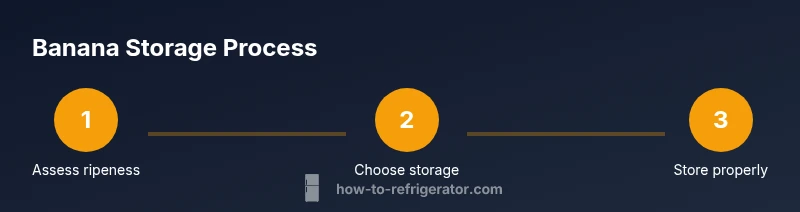
Look at the bananas: if they are already ripe and you’ll eat them soon, refrigeration can slow further ripening. If they’re underripe, you may want to let them finish ripening at room temperature before refrigerating, or choose freezing for long-term storage.
Tip: Label with the date you placed them in the fridge to track freshness. - 2
Decide between whole, peeled, or sliced
If you plan to use bananas for smoothies or baking within a few days, peeled or sliced is convenient in an airtight container. Whole bananas in the fridge will brown the peel but stay edible for a longer period.
Tip: Peel before freezing for easy portioning later. - 3
Prepare the container
Choose a clean, airtight container or bag. If you’re refrigerating peeled slices, lay a small parchment sheet between layers to prevent sticking. Remove as much air as possible before sealing.
Tip: Use single-serving portions to simplify future use. - 4
Place bananas in the fridge
Put the container on a shelf where temperatures stay consistent and away from strong-smelling foods. Do not overcrowd; some airflow helps preserve quality.
Tip: Keep at a steady refrigerator temperature and avoid temperature fluctuations. - 5
Monitor and plan usage
Check bananas every few days for browning or off-odors. Use peeled or sliced portions within a few days; reseal promptly after each use.
Tip: Combine refrigeration with smart meal planning to minimize waste. - 6
Long-term option: freeze bananas
For longer storage, freeze peeled or sliced bananas in a freezer-safe bag. Frozen bananas are ideal for smoothies, bread, or baking. Thaw in the fridge or at room temperature as needed.
Tip: Flash-freeze on a tray first to keep pieces separate.
FAQ
Can unripe bananas be refrigerated, or should they be kept at room temperature to ripen first?
Unripe bananas can be refrigerated, but they may not ripen as expected in the cold. It’s often better to let them reach a ripe stage at room temperature, then refrigerate to slow further ripening.
You can refrigerate unripe bananas, but they might not ripen normally. Let them reach ripe stage first for best results, then chill to slow further ripening.
Do refrigerated bananas taste different after being peeled or sliced?
Cold storage can slightly alter texture and flavor, especially if peeled or sliced. The flesh remains usable, but some sweetness and aroma may be muted compared with fresh fruit at room temperature.
The texture may be a bit different, and sweetness can be milder after refrigeration, especially for sliced or peeled bananas.
Is it better to freeze bananas than refrigerate for long-term storage?
Yes. Freezing peeled or sliced bananas preserves quality for months and is ideal for smoothies and baking. Refrigeration is a short-term option to extend freshness by a few days.
If you won’t eat them soon, freeze peeled or sliced bananas for long-term use.
How long do peeled bananas last in the fridge?
Peeled bananas generally stay usable for a few days in the fridge when stored in an airtight container, but texture may become soft sooner than unpeeled fruit.
Peel banana slices and store in a sealed container; expect a few days of good quality.
Should I refrigerate bananas in bunches or separate them first?
Separating bananas can slow browning and ripening more evenly. If kept together, monitor for spots, but it’s fine for short-term storage.
Separate them if you can to keep ripening even and reduce browning.
Is it safe to eat a banana that has turned brown in the fridge?
Yes. Brown bananas in the fridge are usually safe to eat; they may have a softer texture and sweeter flavor, ideal for baking or smoothies.
Brown outside doesn’t mean it’s unsafe—use in baking or smoothies if the texture is too soft for fresh eating.
Watch Video
Top Takeaways
- Bananas can be refrigerated to slow ripening.
- Peels darken in the fridge, but the flesh can stay firm for days.
- Peel or slice before refrigerating for convenience or freeze for long-term storage.
- Use airtight containment to prevent odor transfer and browning.