Which Integrated Fridge: A Practical Comparison Guide
An analytical, in-depth comparison of integrated fridges to help homeowners choose the right panel-ready model for their kitchen, focusing on design, installation, energy efficiency, and long-term value with practical, How To Refrigerator-backed guidance.


If you’re deciding which integrated fridge fits your kitchen, focus on cabinet depth, panel compatibility, and installation effort. Fully integrated, panel-ready models deliver a seamless look but require precise cabinetry and potential professional installation; semi-integrated options are easier to fit and often cheaper, with a more forgiving panel fit. This guide compares the main considerations so homeowners can choose confidently.
What is an integrated fridge?
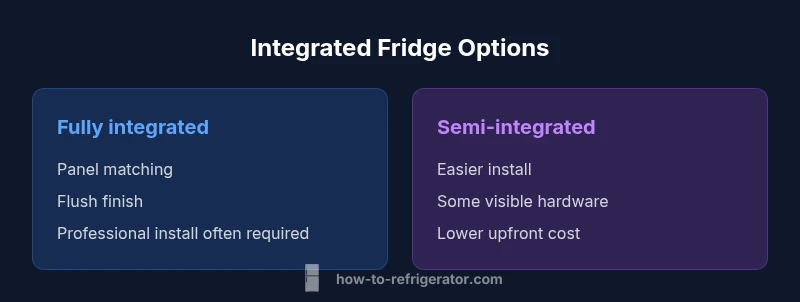
The term "integrated fridge" refers to a refrigerator designed to sit flush with your cabinetry, often panel-ready to match cabinet doors. In practice there are two common configurations you’ll encounter: fully integrated (panel-ready with no visible fridge face) and semi-integrated (panel-ready on the door but with some visible hardware or architectural cues). When asking "which integrated fridge should I pick?", you’re weighing appearance against installation practicality, service access, and long-term value. The How To Refrigerator team emphasizes that the right choice balances aesthetics with realistic maintenance and space constraints. For homeowners, the decision begins with your cabinet footprint, the depth you can tolerate, and how often you expect to rearrange a kitchen that relies on a flush, clean look.
- Fully integrated panel-ready fridges disappear into cabinetry, offering a seamless look.
- Semi-integrated models preserve easier access for installation and servicing while preserving a built-in silhouette.
- Budget, timeline, and cabinet compatibility all influence the decision.
This section sets the stage for a rigorous, metric-driven comparison, grounded in practical, real-world experience and in line with How To Refrigerator’s guidelines for reliable home fixes and maintenance.
Comparison
| Feature | Fully integrated (panel-ready) | Semi-integrated (panel-ready) |
|---|---|---|
| Cabinet compatibility | Highest level of panel matching; front matches cabinetry | Strong panel options, but may show edges or gaps |
| Installation complexity | Typically requires professional installation and precise measurements | Often installable with standard cabinetry modifications and simpler alignment |
| Ventilation and clearance | Strict ventilation and airflow clearances; flush back | |
| Accessibility for service | Challenging access to components; service hinges on panel removal | |
| Price range | Higher upfront costs due to cabinetry integration | Moderate upfront costs, often lower overall installation complexity |
| Best for | Homes with custom cabinetry and desire for a seamless look | Homes prioritizing flexibility and easier future updates |
Strengths
- Creates a seamless, built-in kitchen aesthetic
- Can enhance resale value with a high-end, integrated look
- Panel-ready options available for cohesive design
- Potential energy efficiency gains from flush installation and enclosure
Cons
- Higher upfront cost and more intricate installation
- Limited accessibility for maintenance and repairs
- Requires precise cabinet dimensions and professional measurement
- Longer lead times for panel-ready configurations
Fully integrated fridges win on aesthetics and cabinet harmony; semi-integrated models win on installation ease and price.
If your priority is a flawless, cabinet-matching appearance and you’re willing to invest in precise installation, choose a fully integrated panel-ready model. If you want easier installation, lower costs, and more flexibility for future changes, a semi-integrated option is typically the better choice. Your cabinet depth, panel availability, and willingness to involve a contractor will drive the final decision.
FAQ
What is the main difference between fully integrated and semi-integrated fridges?
Fully integrated fridges disappear behind cabinet panels, offering a seamless look but requiring precise cabinet measurements and professional installation. Semi-integrated fridges keep some visible fridge face or frame, making installation easier and often cheaper, with simpler future service access.
The main difference is in how much of the fridge disappears behind the cabinetry—fully integrated is seamless, semi-integrated is a mix of built-in and visible hardware.
Are integrated fridges energy efficient?
Yes, many integrated fridges are energy efficient and carry standard energy labels. The efficiency depends on the model, door seal quality, compressor type, and how well the unit is integrated into the cabinet with proper ventilation.
Integrated fridges can be very energy efficient; look for energy star labels and efficient compressors.
Can I install an integrated fridge myself?
Some semi-integrated models can be installed by a capable DIYer with basic cabinet modifications, but fully integrated units typically require professional installation due to precise alignment and ventilation needs.
Some setups are DIY-friendly, but fully integrated units usually need a pro for proper fit and airflow.
Do integrated fridges require special cabinet dimensions?
Yes, integrated fridges need accurate cabinet depth, height, and panel thickness. Mismatches can cause misalignment or gaps in the finish, so verify dimensions with the manufacturer before purchasing.
They do require careful matching of cabinet size and panel thickness for a clean look.
What maintenance is needed for panel-ready frames and seals?
Regularly inspect door seals for wear, clean gaskets, and ensure panels stay properly aligned. Some models may require panel removal for access to coils or filters during service intervals.
Keep door seals clean and check alignment; panels may need removal for maintenance.
How long does installation typically take?
Installation time varies with cabinet readiness and whether a pro is involved. Allow for measurement, panel fitting, and final alignment, which can extend the timeline compared with freestanding units.
Installation can take longer than standard fridges, especially if cabinetry needs adjustment.
Top Takeaways
- Choose fully integrated for seamless cabinetry alignment
- Opt for semi-integrated when installation ease and service access matter
- Ensure cabinet depth and panel availability before purchasing
- Budget for professional installation and potential lead times
- Prioritize energy-efficient, panel-ready models when possible