What Size Refrigerator for a Family of 6
Discover the right refrigerator size for a family of six with practical ranges, layouts, and real-world examples that balance capacity, space, and energy use.


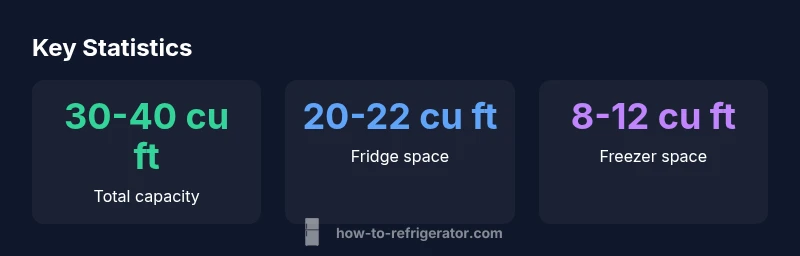
For a family of six, target a total capacity of about 30-40 cubic feet, with roughly 20-22 cu ft for the refrigerator and 8-12 cu ft for the freezer. French-door or side-by-side layouts offer flexibility but require more floor space. If you’re unsure, start with a 21-23 cu ft fridge paired with an 8-12 cu ft freezer and adjust for your habits.
Understanding family size needs
If you’re wondering what size refrigerator for a family of 6, start with the basics: daily intake volume, shopping cadence, and storage habits. The How To Refrigerator team emphasizes measuring weekly groceries (produce, dairy, proteins) and considering bulk buys. A family of six typically benefits from extra fresh-food space for fruits and vegetables, plus a reliable freezer for bulk meals and frozen staples. In practice, you’ll want to balance ease of access to everyday items with enough freezer capacity for weekly meal planning and holiday gatherings. This balance often translates into a total capacity of about 30-40 cubic feet, but exact needs depend on layout preferences and kitchen footprint. If your kitchen has a narrow doorway or tight corners, you may favor slimmer, taller configurations that still deliver storage.
How to calculate usable space
Total capacity is a starting point, but usable space matters more. Refrigerator capacity refers to gross volume; practical space depends on shelves, bin sizes, and door storage. For a family of six, prioritize sections that fit bulk groceries: tall crisper bins for vegetables, wide shelves for milk and beverages, and adjustable shelves to accommodate oversized items. Divide the plan into a primary fresh-food zone (roughly 60% of total space) and a secondary freezer zone (roughly 20-40%), adjusting for your cooking style and weekly menus. Don’t overlook door shelves and labeling zones so leftovers don’t get lost.
Layout options and trade-offs
Layout choice dramatically affects usability. A French-door or side-by-side arrangement often provides better fresh-food organization and wider door storage, which helps with jars, cartons, and large beverages. However, these layouts usually require more kitchen width and can be pricier. A traditional top-freezer or bottom-freezer model saves floor space and cost but might offer less accessible fresh-food storage for everyday items. For six people, many households lean toward French-door models for their balance of capacity and organization, but measure your space and door swing to avoid traffic jams at the fridge.
Real-world sizing guidelines by family activity
Active households with six diners often generate more leftovers and bulk shopping. If you batch cook, opt for larger freezer capacity (8-12 cu ft or more) and a fridge section sized around 20-22 cu ft. If your routine is centralized grocery trips with frequent fresh meals, a slightly smaller fridge with a larger door-storage area can reduce food waste. Consider your meal patterns: dinner parties, school lunches, and weekend meat preps all benefit from extra space. Always account for garage or pantry storage for overflow items when space is tight.
How to measure your space and buy
Begin with precise measurements: width, height, and depth, plus door swing clearance. Bring a tape measure, and check the clearance around the unit (usually 1-2 inches on each side and at the top) to prevent overheating. Use the kitchen layout to pick between counter-depth options (slimmer, integrated look) or full-depth models (more storage). When shopping, compare models by capacity per inch of width, energy efficiency (look for a strong Energy Star rating), and reliability history. Finally, verify delivery and installation constraints—some homes require door removal or stair access.
Common mistakes and how to avoid them
Avoid sizing mistakes by not basing decisions on esthetics alone. Don’t chase the largest model if your space or budget won’t accommodate it. Ignore energy efficiency in favor of features that don’t translate into daily savings. Don’t overlook the importance of adjustable shelves and bin flexibility; a misfit layout reduces usable space. Before buying, physically test door swing and clearance with the model’s open doors to mimic real-world usage. Finally, compare models with the same global dimensions to ensure apples-to-apples capacity.
Common fridge configurations for large families
| Layout Type | Typical Refrigerator Capacity | Typical Freezer Capacity | Notes |
|---|---|---|---|
| Top-Freezer | 16-24 cu ft | 4-8 cu ft | Budget-friendly; compact footprint; traditional design |
| Bottom-Freezer | 20-28 cu ft | 6-12 cu ft | Good balance; more freezer space; easy access |
| French-Door / Side-by-Side | 22-36 cu ft | 6-14 cu ft | High capacity; versatile storage; more features |
FAQ
What size fridge do you need for a family of six?
Aim for a total of about 30-40 cu ft, with roughly 20-22 cu ft for the fridge and 8-12 cu ft for the freezer. Choose a layout that fits your space and lifestyle.
For a family of six, target about 30 to 40 cubic feet total, split between fridge and freezer, and pick a layout that fits your kitchen.
Is a French-door fridge better than a side-by-side for a family of six?
French-door models typically offer more organized space and larger fresh-food areas, while side-by-side saves width and can be more energy efficient. The choice depends on kitchen layout and how you store items.
French doors give you more frid ge space and organization; side-by-side saves width and can be efficient.
How much freezer space does a family of six need?
Plan for about 8-12 cubic feet of freezer space to accommodate bulk meals and frozen staples, adjusting for your meal-prep habits and bulk-buyer tendencies.
Typically 8 to 12 cubic feet of freezer space is sufficient for a large family.
Do energy-efficient models justify the cost for large families?
Yes. Energy-efficient models reduce operating costs over time, especially given the higher capacity. Look for Energy Star ratings and compare annual energy use across models.
Energy efficiency pays off over time, even with a bigger fridge.
How can I tell if my current fridge is undersized?
If you routinely stock bulky items, run out of door space, or regularly rearrange shelves to fit groceries, your current fridge may be undersized for a family of six.
If shelves crowd and doors rub, you may need more space.
“Sizing your refrigerator for a large family is about balancing daily meals with flexible storage and energy efficiency.”
Top Takeaways
- Estimate total capacity by family needs and layout.
- Prioritize a layout that fits your kitchen and usage.
- Choose energy-efficient models to save long-term costs.
- Measure door openings and clearance before buying.
- Consider a secondary freezer for bulk items.