What Size Refrigerator for 2 People: A Practical Guide
Discover practical fridge sizes for two people, including capacity ranges, measurement steps, and energy-saving tips to help you buy smarter in 2026 and minimize waste.


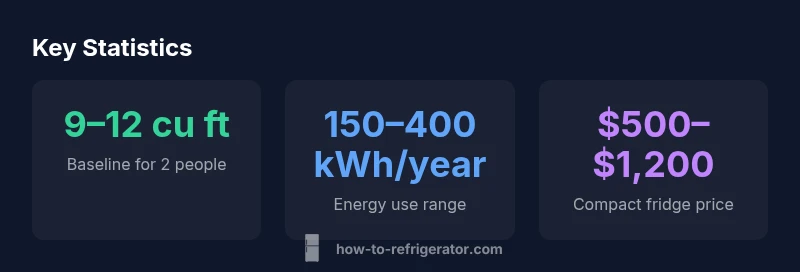
For a two-person household, a refrigerator in the 9–12 cubic feet range (260–340 liters) is usually comfortable, depending on groceries and layout. Start with 10 cu ft as a baseline and adjust for shopping habits and entertaining needs. This guidance aligns with How To Refrigerator Analysis, 2026 and emphasizes energy efficiency and sensible organization.
Understanding baseline needs for two people
For most two-person households, the question starts with the daily rhythm: how much food do you store, how often do you shop, and how much kitchen space can you spare? If you're asking what size refrigerator for 2 people, the answer is not one-size-fits-all, but there is a pragmatic baseline that balances storage with energy efficiency. In general, a fridge in the 9–12 cubic feet range (roughly 260–340 liters) provides ample room for weekly groceries, several containers of leftovers, and beverages without forcing the shelves to jam. This range aligns with the framework outlined by How To Refrigerator Analysis, 2026, which emphasizes not just capacity but layout, door shelves, and adaptability.
Two important caveats: if you batch-cook and freeze meals weekly, you may lean toward the higher end (12 cu ft). If you shop daily, prefer fresh produce, and frequently cook for one, you might comfortably live with 9 cu ft. The key step is to measure your current groceries and map them to the space you have in your kitchen, factoring in doors, clearance, and the layout of shelves and drawers. A well-chosen size reduces wasted energy and makes weekly routines smoother—an outcome many homeowners appreciate in 2026.
How groceries, layout, and lifestyle influence capacity
Capacity decisions hinge on real-world usage. A couple who buys bulky items like large containers of beverages or pre-marinated foods will fill shelves faster than a minimalist duo who mainly cooks. If your kitchen has awkward corners, door swing constraints, or tight aisles, even a theoretical 9 cu ft unit may feel cramped. Start by listing a typical weekly grocery catalog: milk, meat, vegetables, frozen items, and beverages; then estimate how many of each you bring home. Translate that list into a rough cubic-foot requirement by comparing each item to standard grocery packaging (a gallon of milk ~ 1 cu ft of shelf space; a carton of eggs ~ small fraction). Don’t forget freezer space for leftovers and batch-cooked meals. Also consider lifestyle: if you entertain guests or host family dinners, you may need extra storage for beverages and dessert platters. Finally, note that some models with adjustable shelves, humidity-controlled crisper drawers, and multi-tier door racks can dramatically improve usable space without increasing overall dimensions. This aligns with consumer patterns observed in 2026 and underscores the value of thoughtful interior design.
Size ranges by fridge type: compact, standard, and large
Compact under-counter fridges (roughly 8–10 cu ft) fit tight kitchens, studio apartments, or closets where space is at a premium. They are energy efficient and create a neat footprint but offer less flexibility for bulky groceries. Standard top-freezer or bottom-freezer models (about 10–12 cu ft) strike a balance between capacity and footprint, making them a common choice for two-person households. Larger French-door or side-by-side configurations (12–15 cu ft or more) provide abundant storage and flexible shelving but require broader kitchen real estate and can consume more energy. When choosing, map your kitchen layout and confirm that doors can fully swing without hitting walls or counters. If dimensions are tight, you may need to consider a compact model with a clever interior layout rather than simply chasing the largest exterior footprint. Also, note that energy efficiency ratings often improve noticeably in newer compact designs, even if the overall size remains modest.
Energy efficiency and layout considerations
Energy efficiency should be a primary filter for any fridge size, especially for smaller units that operate more often as you push them to capacity. Look for models with high insulation, efficient compressors, and good door seals. A 2–4 percent difference in energy consumption can translate into meaningful annual savings—over a decade that adds up. Position the fridge away from heat sources such as ovens or direct sunlight, and ensure adequate airflow around the back and sides. Use reflective or light-colored surroundings to minimize workload, and consider interior layout features that maximize space: adjustable shelves, sliding bins, and multi-height door racks. In some layouts, a tall narrow fridge can outperform a shorter, wider model by using vertical space more efficiently. Finally, consider whether you will benefit from a model with a dedicated beverage drawer or a separate freezer section for batch cooking; these features can reduce waste and improve organization for two-person households.
Measuring your kitchen and projecting clearance
Before you buy, take precise measurements: width, height, depth, and the door swing. Add at least 2 inches of clearance on the sides and back for ventilation and heat dissipation—this has a noticeable impact on performance and longevity. Check whether you need a freestanding unit or a built-in look, since built-ins demand tighter tolerances. Measure the space where the hinge will sit and the path the doors will take when opening. Don’t forget to account for plumb walls or floor variations that might prevent the door from opening fully. Use painter’s tape to map the footprint on the floor; this helps you visualize if the new fridge will fit through doorways and around corners during delivery. Finally, create a simple grocery map to ensure your chosen size will accommodate typical weekly buys without forcing you into constant rearrangement.
Practical steps to choose and verify in-store
Take your measurement notes and your grocery list with you when shopping. Start with a baseline in the 9–12 cu ft range, but test a few models side-by-side to evaluate interior space efficiency, shelf adjustability, and freezer layout. In-store, open every shelf and drawer; test the crisper humidity controls; and check if the door bins can hold tall bottles without blocking shelves. Compare energy labels to gauge expected annual running costs, using your local electricity rate to estimate monthly bills. If possible, bring a tape measure to verify dimensions and a friend to help perform door swing demonstrations in tight aisles. Finally, verify warranty details and after-sales support; a two-person household wants a fridge that will serve reliably for years to come.
Common mistakes to avoid for two-person households
Buying based on external appearance instead of interior usability. Choosing a model with a large exterior footprint but cramped interior storage. Underestimating the importance of door swing clearance and ventilation. Ignoring energy efficiency in favor of fancy features that don’t improve daily use. Not measuring kitchen space or groceries before purchase, leading to a mismatch between model size and actual needs. Finally, neglecting the freezer’s capacity when bulk items or batch cooking are part of your routine. By avoiding these pitfalls, you can select a fridge that balances size, cost, and practicality, and last longer with fewer compromises.
Fridge size options for two-person households
| Size (cu ft) | Typical groceries per week | Best use |
|---|---|---|
| 8–10 cu ft | Light weekly groceries | Small apartments |
| 10–12 cu ft | Average weekly groceries | Balanced option for 2 people |
| 12–15 cu ft | Bulk shopping / leftovers | Better for entertaining / larger households |
FAQ
What size fridge is best for a two-person household?
Typically 9–12 cu ft, with 10 cu ft as a practical baseline. Adjust for groceries and entertaining frequency.
For two people, aim for about 9 to 12 cubic feet, with 10 cubic feet as a good starting point.
Is a compact under-counter fridge a good option for a small kitchen?
Under-counter units can work for two people in tight spaces, but verify capacity and airflow. 8–12 cu ft models are common compromises.
In tight kitchens, an under-counter fridge can work if it fits and still holds your groceries.
How does energy efficiency affect running costs for a small fridge?
Energy-efficient models lower operating costs; look for Energy Star ratings, good insulation, and tight door seals.
Energy efficiency matters because you run it daily, even in small fridges.
Should I prioritize a certain door style for two people?
Door style depends on space. A standard top-freezer or bottom-freezer in the 10–12 cu ft range often offers the best balance.
Door style matters less than fit and interior layout; pick what fits your space.
What measurements should I take before buying?
Record width, height, depth, and door swing; leave a few inches for ventilation and clearance.
Measure width, depth, height, and door swing; leave space for ventilation.
How can I maximize storage in a small fridge?
Use adjustable shelves, clear bins, door organizers, and vertical stacking to maximize space.
Maximize space with adjustable shelves and door organizers.
“Getting the fridge size right isn't just about capacity—it's about matching your weekly groceries and kitchen layout to prevent energy waste.”
Top Takeaways
- Start with 9–12 cu ft as a baseline.
- Measure available space before shopping.
- Prioritize energy efficiency and adjustable shelves.
- Match size to your weekly groceries.