Refrigerator 30 Inches Wide: A Practical Guide for Homeowners
Learn how to choose and install a refrigerator 30 inches wide. This How To Refrigerator guide covers width, capacity, energy use, and maintenance for homeowners.


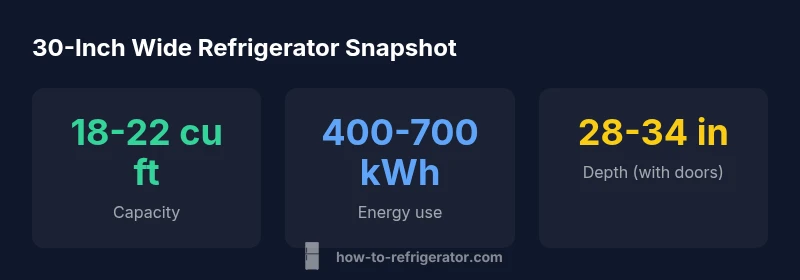
A refrigerator 30 inches wide fits standard 30-inch openings and is common for apartment and small kitchens. It typically offers 18-22 cubic feet of capacity in a compact form, with energy-efficient models ranging from roughly 400 to 700 kWh/year. When shopping, measure the width, depth, and clearance, and compare installation options such as door swing.
Understanding the 30-inch width and its impact on your kitchen
The 30-inch width is a standard measure that many homeowners encounter when designing or updating a kitchen. In practice, this width influences not only the fridge footprint but also door swing, ventilation clearance, and cabinetry. According to How To Refrigerator, choosing a model that fits the opening without crowding adjacent cabinets is essential for reliable performance and easy maintenance. In small kitchens, this width can maximize usable space while still offering a reasonable storage footprint. Consider your workflow, aisle width, and nearby appliances as you evaluate fit.
Width, height, and depth: what to measure and why it matters
A 30-inch-wide refrigerator sits inside a defined footprint. The width is often the most critical constraint, but depth and height matter for cabinet alignment and kitchen ergonomics. Measure not only the frontal width but also the hinge depth, door clearance, and allowable bump-out from walls. Add a few inches of ventilation space on the sides and back; a crowded condenser can raise operating temperatures and reduce efficiency. The How To Refrigerator team emphasizes documenting exact room dimensions and comparing them against product specs. If your space has uneven walls or a sloping floor, plan for shims and side clearance to avoid rubbing doors. Finally, confirm that the unit will clear any pantry doors or adjacent drawers when opened.
Capacity and layout options in 30-inch models
Thirty-inch fridges come in several layouts. Top-freezer models are compact and often the most affordable; bottom-freezer designs maximize refrigeration space below the main shelves; French-door configurations offer wide shelves and flexible storage but can require more depth. In the 18-22 cubic feet range, these models balance footprint with usable space, though internal layouts vary by brand. If you store large containers or tall beverages, pay attention to adjustable shelves and door bins. For families, door storage and drawer organization can significantly affect perceived capacity. How To Refrigerator's analysis shows that even within the same width, usable space can differ by about 2-5 cubic feet depending on shelf design and refrigerant layout.
Energy efficiency and operating costs for 30-inch fridges
Energy efficiency is a key factor alongside capacity. Look for models with Energy Star certification and per-year kWh estimates in a practical range. For 30-inch refrigerators, annual energy use commonly falls within a broad band due to layout differences, often around 400-700 kWh/year. Differences between LED lighting, high-efficiency compressors, and door seals can yield noticeable savings over time. When evaluating total cost of ownership, factor in potential rebates, local utility rates, and the expected lifespan of the compressor. The How To Refrigerator guidance stresses comparing not just purchase price but ongoing energy costs.
Measuring space and preparing for installation
Preparation is everything. Start by measuring width at multiple points (top, middle, bottom) to catch any irregularities. Verify the line voltage and outlet spacing to accommodate any model’s plug arrangement. Check doorway clearance, especially for entryways with narrow corners. If you have a tall island or a built-in, verify clearance for airflow vents. Keep a flexible tape measure handy and record the precise dimensions in a notebook. Finally, confirm counter and cabinet heights align with the fridge’s top edge for a seamless look.
Comparing models: features that matter in 30-inch refrigerators
Beyond width, prioritize feature sets that maximize usability. Look for adjustable shelves, wide-door bins, and crisper drawers that fit your groceries. Door swing and hinge type affect where you can place the unit; several brands offer left- or right-swing doors or reversible hinges. Energy efficiency, noise levels, and compressor type influence long-term satisfaction. Consider warranty terms and service accessibility in your region. In practice, a slightly deeper model with flexible shelving can outperform a shallower but less adaptable unit in everyday tasks.
Installation pitfalls and common mistakes to avoid
Common mistakes include underestimating ventilation space, ignoring door swing constraints, and choosing a model that is slightly too wide for the opening. Never squeeze a fridge into a narrow gap; it can impair cooling, refrigerant lines, and door operation. Use a level, account for plumbing and drainage if you have an automatic ice maker, and ensure that the chosen model has a compatible electrical outlet. Lastly, plan for future needs; a model with adjustable shelves and a good warranty will adapt to changing groceries and family size.
Comparison of common 30-inch-wide refrigerator models
| Model Type | Typical Width | Typical Capacity | Energy Use | Notes |
|---|---|---|---|---|
| Top Freezer (30 in) | 30 inches | 18-22 cu ft | 400-600 kWh/year | Budget-friendly footprint |
| French Door (30 in) | 30 inches | 20-22 cu ft | 500-700 kWh/year | Flexible shelves, wider storage |
| Side-by-Side (30 in) | 30 inches | 22-25 cu ft | 600-800 kWh/year | Convenient access, larger capacity |
FAQ
Is a 30-inch wide fridge suitable for a family of four?
Yes, a 30-inch wide fridge can work for a family if you choose a model with 20+ cu ft capacity and flexible shelving. Check the door swing and interior layout.
A 30-inch fridge can work for a family if you pick a model with enough capacity and flexible shelves.
What is the typical capacity of a 30-inch wide refrigerator?
Most 30-inch models range from about 18 to 22 cubic feet, depending on layout. French-door styles can push toward the upper end.
Most 30-inch fridges run about 18 to 22 cubic feet.
Can I replace a standard fridge with a 30-inch wide model in a narrow kitchen?
Yes, if the width is the same or within tolerances, but you must verify depth, ventilation, and door clearance.
Yes, as long as width and depth fit, plus space for door swing.
What are common door swing options for 30-inch fridges?
Most 30-inch fridges offer adjustable or reversible doors with left- or right-swing; check hinge hardware.
Look for doors that swing in your kitchen layout; many models offer reversible doors.
Are 30-inch wide refrigerators energy efficient?
Energy efficiency varies by model; look for Energy Star rating and per-year kWh estimates in the 400-700 range.
Yes, many are energy-efficient, especially newer models with Energy Star.
How do I install a 30-inch wide refrigerator without damaging countertops?
Plan for a minimum ventilation gap, use a level, and provide a dedicated outlet; avoid countertop overlap by leaving clearance.
Leave space for ventilation, use a level, and have a dedicated outlet.
“Choosing a 30-inch-wide refrigerator means balancing footprint with usable space. Prioritize accurate measurements and door clearance to avoid installation surprises.”
Top Takeaways
- Measure the opening precisely before you buy.
- Check door swing and clearance for flawless operation.
- Balance capacity with energy use to optimize cost.
- Plan ventilation and depth to ensure proper installation.