33-Inch Wide Refrigerator: Buying Guide and Practical Tips
Explore 33-inch wide refrigerators, configurations, installation tips, energy efficiency, and buying guidance to help homeowners fit mid-sized kitchens with confidence.


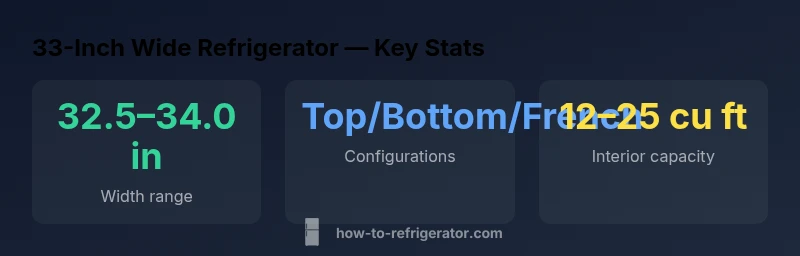
A 33-inch wide refrigerator is a mid-sized model with exterior width around 33 inches, designed for kitchens with tighter openings. It fits spaces narrower than standard 36-inch layouts and comes in common configurations such as top-freezer, bottom-freezer, and French-door. For homeowners, the key is matching width, door style, and interior capacity to your kitchen workflow.
Why a 33-inch width matters for your kitchen
In many homes, a 33-inch wide refrigerator hits a sweet spot between compact and full-size models. It can fit in openings that are narrower than the common 36-inch standard, while still offering practical storage. For homeowners, this means you can preserve valuable cabinet space and maintain a cohesive kitchen flow without sacrificing core refrigeration capacity. According to How To Refrigerator, the width of a refrigerator significantly affects installation fit, airflow, and door swing clearance. If you’re working with a narrow, but not tiny, footprint, a 33-inch model can allow for comfortable maneuvering around counters and an open entry path to the pantry or dining area. Beyond space, consider overall depth and handle projection, as these influence both clearance and aesthetics in a busy kitchen environment.
Common configurations you’ll find in 33-inch wide refrigerators
The 33-inch width supports several popular layouts, each with trade-offs. Top-freezer models tend to be the most compact and budget-friendly, making the most of freezer space while offering easy access for daily meals. Bottom-freezer designs place the fresh food section at eye level, which many cooks prefer for daily use. French-door variations maximize interior visibility and storage with wide shelves and adjustable dividers, ideal for larger families or entertaining. When choosing among configurations, compare interior dimensions for crisper space, gallon-door storage, and the number of adjustable shelves. How To Refrigerator analysis highlights that the right configuration often depends on your household rhythm, how often you shop, and whether you prioritize freezer capacity or quick access to fresh produce.
Measuring space and planning installation
Before committing to a 33-inch wide refrigerator, map your space with precision. Start by measuring the opening width at three vertical points (top, middle, bottom) and record the smallest value. Do the same for depth, including handles, doors, and any trim. Check the available clearance on the sides, rear, and above the unit to ensure proper ventilation and door swing. If your kitchen has a tight corner, sketch the planned path for doors to open without hitting cabinets or appliances. It’s also wise to confirm electrical outlet placement and the availability of a proper water line if you want an ice maker or water dispenser. This careful measurement step reduces post-purchase surprises and helps you select a model that truly fits your space.
Energy efficiency considerations for 33-inch fridges
Energy efficiency is a practical, long-term concern for any refrigerator. Look for Energy Star labeling and compare annual energy consumption across models with similar widths. Remember that exterior width is only part of the equation—the interior layout, door seals, insulation, and compressor technology all influence efficiency. If you’re balancing upfront cost against operating costs, prioritize models with advanced cooling features that minimize temperature fluctuations and reduce energy draw. How To Refrigerator Analysis, 2026, suggests tracking the energy guide label on each model you’re considering and weighting long-term energy savings against sticker price. This approach helps you choose a 33-inch fridge that remains economical over its lifespan.
Interior layout optimization for 33-inch width
Maximizing storage in a 33-inch refrigerator requires thoughtful shelf and bin arrangements. Favor models with adjustable shelves, wide door bins for gallon jugs, and multi-height crisper drawers. For mixed-storage needs—frozen dinners, beverages, and fresh produce—prioritize flexible organizers and spill-proof shelves. If you regularly stock tall bottles or large trays, ensure there’s enough clearance between shelves and a tall, accessible freezer section. By planning spacing and zones, you’ll enhance usability and keep your 33-inch width from feeling cramped. According to How To Refrigerator guidance, a flexible interior is often more valuable than a marginally larger width when it comes to real-world storage.
Installation, door swing, and ventilation basics
Installation complexity increases with door swing and hinge direction. Decide whether you need a left- or right-swing door, and confirm it aligns with your kitchen layout. Some 33-inch fridges offer reversible doors, but hardware may be sold separately or require professional installation. Leave ample ventilation behind and to the sides, especially if the unit sits flush against cabinetry. Avoid tight corners where doors could contact adjacent appliances. For built-in or semi-integrated spaces, verify that trim kits and panels are available. Proper installation reduces noise, vibration, and wear on seals, extending the life of your 33-inch refrigerator.
Maintenance and troubleshooting basics for 33-inch models
Regular maintenance preserves performance and energy efficiency. Clean condenser coils at least twice a year to prevent overheating, verify door seals are intact, and replace water filters when applicable. If you notice frost buildup in a fragile area, check the defrost system or defrost drains for blockages. Ice-maker and water-dispenser components require occasional inspection for leaks. For most homeowners, simple tasks—like condensing coil cleaning, door seal inspection, and filter changes—are manageable without professional service. When issues persist, consult the manufacturer’s troubleshooting guide or contact a qualified repair technician. How To Refrigerator emphasizes routine checks to avoid unexpected breakdowns that disrupt food safety.
Buying tips and value considerations for 33-inch wide fridges
Budgeting for a 33-inch refrigerator means balancing upfront cost with ongoing energy use and service availability. Compare models within your width target by features such as adjustable shelving, door organization, ice maker options, and warranty length. A longer compressor or sealed system warranty often represents a better long-term value, especially if you expect heavy daily use. Consider service network density in your area and confirm compatibility with standard water lines if you want ice or filtered water. By focusing on practical needs—refrigeration capacity, organization, and reliability—you’ll select a model that delivers consistent performance in your kitchen.
Key considerations before finalizing a purchase
As you compare 33-inch wide refrigerators, keep a short list of essential questions: Does the width fit exactly into your planned cabinet space with acceptable clearance? Which door configuration best suits how you cook and shop? Are there interior features that will save you time or reduce waste? And finally, does the model offer a warranty and service support that matches your home needs? With careful planning and a clear understanding of your space, a 33-inch wide refrigerator can become a reliable centerpiece in your kitchen.
Space and feature considerations for 33-inch wide refrigerators
| Feature | 33-inch Width Variant | Notes |
|---|---|---|
| Configuration options | Top-freezer / Bottom-freezer / French-door | Varies by model and price |
| Opening width | Approximately 33 inches exterior | Measured at the widest point |
| Door swing | Fixed or reversible | Choose based on room layout |
| Shelf customization | Adjustable shelves and bins | Maximizes storage efficiency |
FAQ
What does '33-inch wide' refer to in refrigerators?
The term refers to exterior width around 33 inches. Exact dimensions vary by model and configuration, so always check the spec sheet for width, door swing, and clearance.
A 33-inch width means the outside is about 33 inches wide, but always confirm the exact measurement in the model specs.
Which configurations are common in 33-inch fridges?
Common layouts include top-freezer, bottom-freezer, and French-door designs. Each offers different storage emphasis and door access convenience.
Most 33-inch fridges come as top-freezer, bottom-freezer, or French-door models.
Will a 33-inch fridge fit in a standard 36-inch opening?
Yes, but you’ll need to account for door clearance, hinge direction, and venting space. Precise measurements help ensure the doors swing freely and there’s no contact with adjacent cabinetry.
A 33-inch fridge can fit a 36-inch space, but measure door clearance carefully.
Are 33-inch wide fridges more energy-efficient than wider models?
Energy efficiency varies by model. Look for Energy Star labels and compare annual energy usage among width-matched models to find the best long-term value.
Energy use depends on the specific model; compare energy guides across width-matched options.
What should I check in a warranty for a 33-inch fridge?
Check compressor warranty length, coverage for sealed systems, and service network in your area. A longer warranty can offer peace of mind with frequent use.
Make sure the compressor and sealed system have solid warranty coverage and check service availability.
How do I measure for door swing and clearance?
Measure the door swing path and ensure there’s enough clearance for full opening. Consider hinge side and whether doors need extra space to clear neighboring cabinets.
Measure the swing path and ensure the doors can open fully without hitting anything.
“Choosing a 33-inch wide refrigerator requires balancing space, door style, and capacity. Look for models that maximize usable storage without compromising fit.”
Top Takeaways
- Measure your space before selecting a 33-inch model.
- Consider door swing and interior layout.
- Compare configurations to match storage needs.
- Look for adjustable shelves to maximize interior layout.
- Ensure proper ventilation and installation clearance.