Is a 30-Inch Refrigerator Too Small? A Homeowner’s Guide
Discover whether a 30-inch refrigerator fits your family’s needs, learn how to measure space, compare storage, and explore upgrade options for tight kitchens. Practical steps, tips, and authoritative references for homeowners.


Is a 30-inch refrigerator too small for your home? This guide helps homeowners decide by weighing family size, grocery habits, and layout. You’ll learn how to measure clearance, compare capacities to your pantry, and explore practical upgrades if space or demand outgrows a 30-inch model. By the end, you’ll know whether to stick with 30 inches or look for alternatives.
Is a 30-inch Refrigerator Too Small? Understanding Your Space and Needs
In many kitchens, a 30-inch wide refrigerator is a common choice for a built-in or freestanding unit. The question is not just width, but how much fresh food your household consumes each week and how you organize it. A 30-inch model tends to have less overall storage capacity and a narrower door opening compared with larger widths, which can affect how you arrange large platters or tall bottles. If you regularly stock up for family meals, entertain guests, or store bulk items, a 30-inch fridge may feel cramped.
Key considerations include your grocery cycle, the size of your freezer, and the distribution of shelves and doors for produce, dairy, and beverages, and how often you need to thaw or refrigerate leftovers. If you’re upgrading from a smaller compact fridge, plan for more frequent restocking and a better layout to keep items visible. Conversely, in a tiny kitchen with tight traffic flow, a 30-inch unit can minimize footprint while keeping essential capacity. The decision hinges on your day-to-day rhythm, not a single measurement.
How to Assess Your Storage Needs Without Relying on Cubic Feet
Storage capacity is more than a number on a spec sheet. To judge whether a 30-inch refrigerator satisfies your household, start by mapping typical weekly groceries: fresh produce, dairy, meat, beverages, and frozen items. Visualize how you would arrange these items inside the pantry and fridge using a simple notepad or tape-out on the kitchen counter. Consider peak-store days (before holidays or parties) and the frequency of leftovers. If your current fridge feels hollow on Sundays or you frequently rearrange shelves to fit bulky items, a larger model may be worth considering.
Also evaluate your freezer space for bulk meat, frozen vegetables, or ice cream. Some 30-inch models have a smaller freezer section which can become a bottleneck during heavy usage. If your freezer is routinely full before your refrigerator, this is a red flag that capacity is not meeting demand. The goal is a balanced system that keeps items organized and easy to see at a glance.
Space Planning: Measuring Your Kitchen for a 30-Inch Model
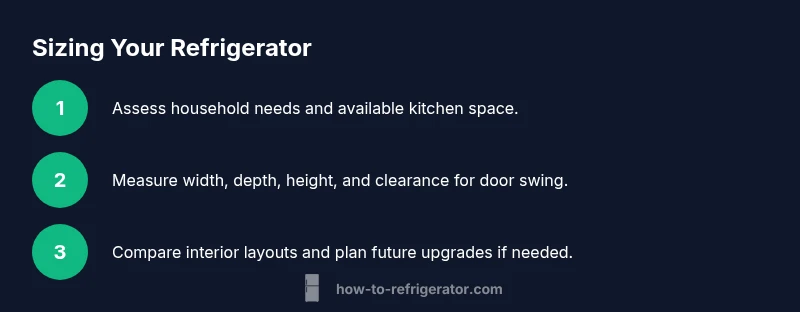
Before shopping, measure the area where the fridge will stand: width, height, and depth, plus at least a few inches of clearance on all sides for air flow and door swing. Check adjacent cabinets and the kitchen walkway to ensure doors can open fully without hitting walls or counters. Note the location of electrical outlets and water lines if you’re considering icemakers or water dispensers. Another critical factor is the door swing: a French door or side-by-side model may require more side clearance than a top-freezer unit. By recreating the space on paper or using a floor plan app, you can compare models more confidently and avoid buying a fridge that barely fits.
Real-World Scenarios: When a 30-Inch Fits, When It Doesn’t
In small apartments with compact kitchens and a light grocery footprint, a 30-inch model often works well without crowding counter space. For households with frequent entertaining, bulk shopping, or multiple daily meals, the fridge becomes a constraint. If you already own a 30-inch unit and regularly run out of space, you might consider reorganizing shelves, adding a compact freezer chest elsewhere, or moving seasonal items to a garage fridge if you have one. If you’re remodeling a kitchen or moving to a new home with larger storage needs, stepping up to a wider configuration may be the most straightforward path to adequate capacity.
Alternatives to a Larger Refrigerator in a Tight Kitchen
If a 30-inch size proves limiting, you have several practical options. Upgrading to a slightly wider unit (for example, a 33- to 36-inch model) is a common path, especially when you want better freezer layout or more flexible shelving. Another approach is a different door configuration—French door, two-door, or bottom freezer—that maximizes usable space and often provides better interior organization. In some layouts, a tall, slim built-in unit can fit where a standard freestanding refrigerator won’t. Finally, you can supplement with a secondary compact fridge or freezer in a garage, laundry room, or pantry, which can preserve kitchen flow while expanding storage.
Maximizing 30-Inch Capacity with Smart Organization
Even within a 30-inch footprint, you can squeeze more usable storage with thoughtful organization. Use adjustable shelves to create tall zones for jars and bottles; add clear bins to keep produce and dairy contained; place frequently used items at eye level; and maximize door bins for beverages. Freeze-friendly organization—labeling and grouping similar items—helps you locate things quickly and reduces waste. Consider cold zones within the fridge for perishables and plan ahead for weekly meal prep so you avoid overstocking on a single trip.
Planning for a Future Upgrade: Costs, Timing, and Financing
If you anticipate growth in your household or changes in your kitchen layout, plan for a future upgrade. Compare mid-range and premium models with different configurations and energy features, then narrow choices based on width, capacity, and interior layout rather than just price. Budget for professional installation if you’re moving to built-in or integrated units, and remember that electrical and venting requirements can affect the overall cost and feasibility. By aligning future needs with a phased upgrade plan, you can avoid multiple disruptions and make a smarter long-term choice.
Authoritative sources
For further guidance on refrigerator sizing and energy efficiency, consult credible sources such as government and university publications and major consumer publications. These references provide general principles and best practices without commercial bias and can help you compare models beyond vendor specs.
Tools & Materials
- Tape measure(to measure width, height, depth, and clearance)
- Notebook and pen(for jotting space calculations and model comparisons)
- Floor plan or graph paper(visualize space and door clearance)
- Level or straightedge(check level surface and install alignment)
Steps
Estimated time: 45-60 minutes
- 1
Measure the available width
Measure the full width of the space where the fridge will stand, including any trim, molding, or cabinetry that could constrain an installation. Note any protrusions that could interfere with doors or handles.
Tip: Take measurements at multiple heights to catch any front-to-back variations. - 2
Check depth and clearance
Measure depth from the wall to any adjacent cabinet or countertop; allow several inches for ventilation and door swing. Don’t forget space behind for cords and for the fridge to vent heat.
Tip: Use a straightedge to confirm the wall is truly vertical rather than sloped. - 3
Assess doorway and path access
Ensure there’s a clear path through halls and doorways to move the unit in, with room for turning and rotating the doors without obstruction.
Tip: If stairways are involved, plan for extra person-hours and protection for walls. - 4
Evaluate freezer and fresh-food balance
Consider how much freezer space you need versus fresh-food storage and how you split shelves and bins to optimize visibility and access.
Tip: Prioritize adjustable shelves for tall containers and bulky items. - 5
Plan for future upgrades
If you anticipate growth or remodeling, compare 30-inch models against slightly wider options to weigh capacity gains.
Tip: Create a simple budget range and list must-have features (energy efficiency, door configuration). - 6
Draft your final layout
Sketch a layout or use a planning tool to compare several models’ interior configurations against your current grocery habits.
Tip: Label each model with pros and cons for quick comparison.
FAQ
Is a 30-inch refrigerator a standard width?
Yes, 30 inches is a common width for standard models, but availability and interior layouts vary by brand and configuration.
Yes, 30 inches is a common width, though interior layouts vary by model.
What household size is best suited for a 30-inch fridge?
A 30-inch fridge can work well for singles or small households with steady but manageable grocery needs. Larger households may find it restrictive during busy weeks.
Best for singles or small households with steady groceries.
Can I improve storage without upgrading the fridge?
Yes, you can rearrange shelves, use bin organizers, and move infrequently used items to alternate storage spaces to free fridge space.
You can rearrange shelves and use organizers to gain more usable space.
Are there energy efficiency considerations for 30-inch models?
Energy efficiency varies by model; look for ENERGY STAR-rated options and compare annual energy usage across models.
Look for ENERGY STAR models to maximize efficiency.
What are good alternatives if a 30-inch is too small?
Consider a slightly wider model (33- to 36-inch), a different door configuration (French door or bottom freezer), or a secondary fridge for extra space.
Upgrade to a wider model or add a secondary fridge for more capacity.
How do I measure space accurately for a new fridge?
Measure width, height, and depth, plus clearance for doors and airflow. Check door swing and walk paths to ensure fit.
Measure width, depth, height, and clearance, and check door swing.
Watch Video
Top Takeaways
- Assess needs before buying by grocery habits, not just width
- Measure width, depth, and doorway clearance accurately
- Maximize storage with adjustable shelves and clear bins
- Consider a slightly wider model if freezer space is a bottleneck
- Plan upgrades strategically to minimize kitchen disruption