How Big Is a Full-Size Refrigerator: A Homeowner’s Size Guide
Learn the standard exterior dimensions and interior capacity of full-size refrigerators, plus practical tips for measuring your space and choosing the right configuration for your kitchen in 2026.


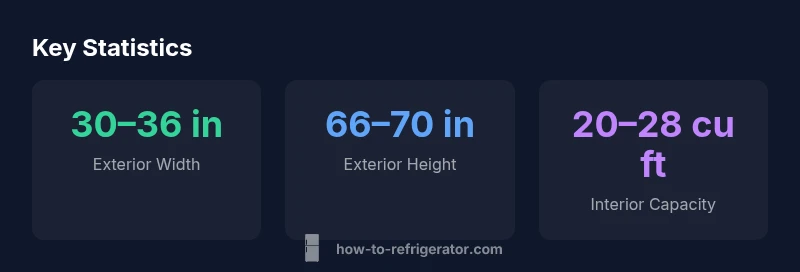
According to How To Refrigerator, a typical full-size refrigerator fits within about 30–36 inches wide, 66–70 inches tall, and 29–34 inches deep, with interior capacities commonly around 20–28 cubic feet. These dimensions vary by configuration (top-freezer, French door, or side-by-side). For precise planning, measure available space and compare model specs before buying.
What does it mean when we ask how big is a full-size refrigerator?
If you’re shopping for a kitchen upgrade or a new rental unit, the practical answer hinges on exterior footprint and interior capacity. In real-world terms, a full-size fridge typically measures about 30–36 inches wide, with a height around 66–70 inches and a depth of 29–34 inches. This yields interior space generally in the 20–28 cubic feet range, enough for a family's weekly groceries and frozen meals. It’s important to note that configurations like top-freezer, bottom-freezer, French door, and side-by-side can alter both exterior dimensions and usable storage. The How To Refrigerator team emphasizes checking product sheets and floor plans to ensure a comfortable fit in your kitchen geometry.
Dimensions you should measure in your kitchen
Before buying, take precise measurements of the space where the fridge will sit. Record clearances on all sides (sides, back, top) and account for door swing clearance when doors open fully. A typical home layout needs at least 1–2 inches of breathing room on the sides and back to prevent overheating and allow for venting. Knowing the doorway width and the path from the entrance to the install spot helps prevent a frustrating in-store or delivery experience. Finally, assess your countertop-to-raise requirements: some counters require a taller model, others a shallower depth for comfortable access.
Common configurations and their footprint
Top-freezer models tend to be among the most compact, often presenting the narrowest exterior width. French-door models maximize pantry-style storage but can be deeper and taller. Side-by-side configurations offer quick access to fresh and frozen zones but may limit tall item storage. When considering these footprints, factor in interior layouts: adjustable shelves, door bins, and in-door ice/water dispensers can reduce usable space if not planned for. Use the dimensional ranges listed above as a baseline, then compare the interior layout diagrams in the spec sheets.
Interior capacity versus exterior size: what to expect
A larger exterior footprint does not always translate to proportionally more usable space. For example, a 32-inch-wide fridge might offer 22–26 cubic feet of usable capacity depending on shelving and crisper layout. Recognize that some cubic feet are taken by chiller vs freezer compartments, shelves, and bins. The practical takeaway is to map your typical groceries (vegetables, dairy, beverages, and frozen meals) to the fridge’s zones and verify the model uses efficient shelving configurations to maximize every cubic foot.
Planning for tight spaces and unusual layouts
If you’re working within tight alcoves or irregular kitchens, consider models with reversible doors, shallower depths, or built-in solutions. Some households opt for counter-depth fridges that fit closer to cabinetry but offer slightly less interior space. In narrow hallways or apartments, a 30–34 inch width can be a practical compromise between capacity and room to maneuver. Always verify installation clearance and allow for hinge swing to avoid hitting cabinetry.
Energy efficiency and size: trade-offs that matter
Size often correlates with energy use, but efficiency ratings can offset some of that impact. Look for Energy Star-rated models in your target width/height range. A larger fridge consumes more energy by default, but modern compressors and smart defrost systems can mitigate this. When budgeting, compare annual energy costs across configurations and strive for the best balance between interior space and energy performance. The goal is to minimize energy use while meeting your storage needs.
A practical sizing checklist and next steps
To conclude, here is a quick sizing checklist: measure exact space, note doorway dimensions, decide on configuration, compare exterior dimensions, assess interior layout, and review energy ratings. Bring a tape measure, a notepad, and a photo of your space to the store or online cart. Re-check model specs against your kitchen’s true footprint and your family’s storage habits. This approach helps answer the question how big is a full size refrigerator with confidence and clarity.
Size benchmarks by configuration
| Configuration | Width (in) | Height (in) | Depth (in) | Interior Capacity (cu ft) |
|---|---|---|---|---|
| Top-freezer | 30–32 | 66–70 | 29–34 | 14–20 |
| Bottom-freezer | 30–36 | 66–70 | 29–34 | 20–25 |
| French-door | 32–36 | 68–70 | 30–36 | 22–28 |
FAQ
What is the typical width of a full-size refrigerator?
Most full-size refrigerators are about 30 to 36 inches wide. Always check the specific model specs and measure your space to ensure a proper fit.
Most full-size fridges are 30 to 36 inches wide. Check the exact model dimensions and measure your space to be sure.
Do larger refrigerators use more energy?
Larger units generally consume more energy, but efficiency ratings and features can offset those costs. Look for Energy Star certified models in your size range.
Yes, bigger fridges typically use more energy, but efficient models can offset that cost.
What configuration offers the best balance of space and footprint?
French-door models often provide excellent interior space without a disproportionately large exterior, but they require enough clearance for doors to open fully.
French-door fridges give you a lot of space without expanding the footprint too much, but door clearance matters.
Should I choose a counter-depth model for a small kitchen?
Counter-depth models sit closer to cabinetry and look integrated, but they usually offer less interior space. Use your storage needs as the deciding factor.
If you want a built-in look, counter-depth is nice, but expect a bit less storage.
How do I plan for installation in a tight space?
Measure doorway widths, the path to the kitchen, and clearance around the fridge. Ensure hinge swing and venting space are not blocked.
Measure every doorway and the path to the kitchen, and check hinge space and vents.
“Size decisions balance footprint with storage needs. Measure precisely, then compare layouts to ensure comfortable door swing and adequate ventilation.”
Top Takeaways
- Measure your space before buying to avoid installation issues
- Expect 30–36 in width, 66–70 in height, 29–34 in depth for full-size fridges
- Interior capacity typically ranges from 20–28 cu ft
- Choose configuration based on storage needs and kitchen layout
- Prioritize Energy Star models for long-term savings