Is Refrigerator Water Better Than Tap Water? A Practical Guide
Compare refrigerator water vs tap water: taste, filtration, safety, cost, and maintenance. Learn how to choose the right filtration options for your home and when fridge water makes sense.


In most homes, refrigerator water isn’t inherently healthier than tap water. The key difference is filtration and taste. If your fridge includes a certified filter and you regularly replace it, fridge water can taste cleaner and reduce chlorine. Without a good filter, tap water may be safer or purer depending on your local supply.
Is refrigerator water different from tap water?
The short answer to the question, is refrigerator water better than tap water, is: it depends. The water ultimately comes from the same public or private source, but the path it takes through your home can alter taste, odor, and perceived quality. A key factor is filtration. When a fridge offers a built-in water dispenser, it often relies on an inline filter to remove certain compounds that affect flavor and smell. According to How To Refrigerator, the real difference lies in filtration and maintenance rather than the source itself. If the fridge filter is properly installed and replaced on schedule, fridge water can taste cleaner and be clearer than unfiltered tap water. If the filter is old or poorly maintained, fridge water may carry the same taste or odor issues as tap water. Homeowners should assess both their local water quality and the fridge’s filtration status to determine which option feels better on the palate.
The science of taste: chlorine, minerals, and filtration
Taste and odor in drinking water are influenced by dissolved minerals and chlorine compounds used in water treatment. Tap water in many communities is treated to meet safety standards, but residual chlorine can leave a noticeable taste or smell. Fridge water, when paired with a well-maintained filter, can reduce chlorine taste and odor, making the water more pleasant to drink. Filtration also affects perceived mineral balance. Some people prefer the crisper taste provided by filtered water, while others may notice a flatter profile depending on the filter media used. It’s important to know that filtration is not a guarantee of safety alone; it is a complement to the source water and should be chosen based on the specific contaminants you want to address.
Filtration options: built-in fridge filters vs external options
Several pathways exist for obtaining cold, filtered water at home. Built-in fridge filters use activated carbon or multi-cartridge systems designed for inline use. These are convenient, compact, and require regular replacement. For those seeking higher filtration levels, pitcher filters can be a budget-friendly supplement or alternative, while under-sink or countertop systems can provide robust treatment, including reverse osmosis. Reverse osmosis (RO) systems remove a broad set of contaminants but can waste water and require professional installation. It’s essential to compare filtration efficacy, maintenance needs, and compatibility with your existing plumbing when deciding between fridge filters and external options. Remember that no single filter removes all possible contaminants; match your choice to your local water quality and your health priorities.
Safety and regulation considerations
Regulatory bodies like the EPA set safety standards for public drinking water, while specific home filtration products may carry certifications from organizations such as NSF/ANSI. When considering is refrigerator water better than tap water from a safety lens, seek filters that are certified to remove the contaminants you’re concerned about and verify maintenance guidelines. A certified fridge filter is not a universal guarantee of safety, but it can reduce certain contaminants and improve taste. Always follow the manufacturer’s replacement schedule and replace filters promptly to maintain effectiveness.
Cost, maintenance, and environmental impact
Costs for fridge water hinge on initial equipment and ongoing filter replacements. While fridge filtration can appear more expensive per gallon than direct tap water, it may reduce bottled-water purchases and plastic waste for households that rely heavily on dispensed water. Maintenance is a daily concern: filters have a finite lifespan, and neglecting replacement can negate the perceived benefits. Environmental impact also depends on your filtration choices; some systems reduce plastic waste if you reuse bottles, while others generate more waste through frequent filter cartridge disposal. Weigh upfront costs against long-term savings and environmental considerations when evaluating is refrigerator water better than tap water for your family.
Practical tests you can run at home
A practical approach to evaluating fridge water versus tap water is to run simple taste tests and sensory checks. Try a blind taste comparison with small samples of cold water from both sources, noting aroma, taste intensity, and mouthfeel. Check for chlorine aftertastes and odor by allowing water to sit briefly and smelling the glass. Observe clarity by holding up a light to the water to spot cloudiness or particulates. Document any differences you notice, then consider whether a filtered fridge option or a home water filter on the tap best matches your preferences and needs.
When fridge water is a winner, and when it isn’t
Fridge water often wins for people who want convenient cold water with a taste they prefer and who have a reliable, certified fridge filter. It can be especially advantageous for households that frequently drink water and want a quick pour without boiling or chilling. However, fridge water is not inherently safer than tap water; if your local supply is highly regulated and your fridge filter is not well maintained, the perceived quality might not improve. In some cases, a good home tap filtration system or installed under-sink filtration can offer stronger contaminant removal, lower long-term costs, or simpler maintenance depending on your needs.
Making the decision: a simple checklist
- Check your local water quality report to understand what contaminants may be present.
- Assess whether your fridge has a certified filter and commit to regular replacement.
- Compare ongoing filter costs for fridge vs tap systems and consider plastic usage.
- Consider taste preferences and how often you drink water daily.
- If you’re unsure about contaminants beyond taste, consult your local water authority and a filtration professional for a tailored solution.
Comparison
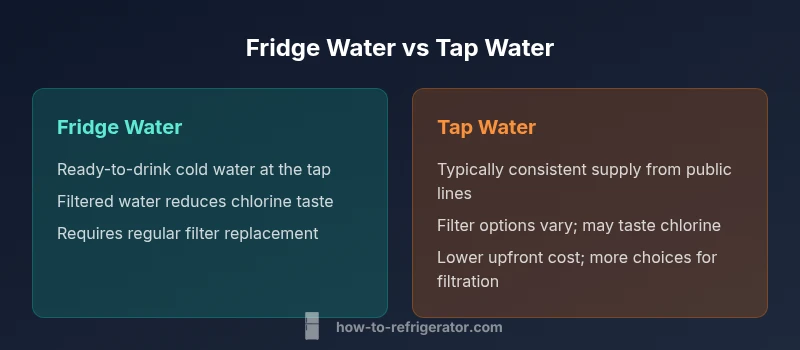
| Feature | Fridge Water | Tap Water |
|---|---|---|
| Taste & Odor | Often improved with a certified fridge filter | Depends on local supply; may retain chlorine taste |
| Filtration Dependency | Requires regular fridge filter maintenance | May require additional home filtration to address specific contaminants |
| Cost Range | Higher upfront and ongoing filter costs | Low upfront cost; filter costs vary by system |
| Environmental Impact | Potential reduction in bottled water usage | Variable; depends on filtration choice and usage |
| Quality Assurance | Filtered by built-in fridge system with certifications | Quality depends on chosen filtration setup and local water |
Strengths
- Convenient access to cold, filtered water
- Potentially better taste with certified filtration
- Reduces plastic bottle waste when reused
- Can lower overall bottle-wuyed exposure when used consistently
Cons
- Requires ongoing filter maintenance and replacement
- Not all filters remove every contaminant
- Upfront equipment cost and potential installation needs
- RO-based options can waste water if not managed properly
Fridge water is not universally better; it depends on filtration quality and maintenance
If you prioritize taste and cold accessibility and maintain a certified fridge filter, fridge water can be favorable. If you want strong contaminant removal or cost efficiency, a high-quality tap filtration setup may suit you better. The best choice balances your local water quality, maintenance willingness, and budget.
FAQ
Is fridge water safer than tap water?
Safety depends on the source water and the filtration system. A certified fridge filter can reduce certain contaminants, but no filter guarantees safety against all possible substances. Always ensure filters are certified and replaced on schedule, and refer to local water quality reports for guidance.
Fridge water safety depends on both the water supply and the fridge filter. Use a certified filter and replace it regularly for best results.
Do fridge filters remove chlorine?
Many fridge filters address chlorine taste and odor by using activated carbon media. If chlorine is a concern for you, verify the filter’s specifications and replacement cadence to ensure ongoing effectiveness.
Yes, many fridge filters reduce chlorine taste and odor when they are properly maintained.
How often should I replace fridge water filters?
Replacement timing varies by filter type and usage, but many manufacturers suggest replacing every several months. Follow the specific guidance for your filter and monitor water taste and flow to determine when a change is due.
Check your filter’s manual and replace it as recommended, typically every few months.
Can fridge water substitute bottled water?
Fridge water with proper filtration can reduce the need for bottled water for everyday use. It may not be a direct substitute for specialty bottled waters, but it offers a convenient, lower-waste alternative for daily hydration.
It can replace most daily bottled water needs if filtration is adequate and maintained.
Should I install a separate tap filtration system?
If you’re seeking stronger contaminant removal or have specific water concerns, a dedicated tap filtration system or under-sink unit can complement or outperform fridge-only filtration. Assess your needs and local water quality before buying.
A separate filter is worth considering if you want broader or stronger contaminant removal.
Top Takeaways
- Assess local water quality before choosing a system
- Prioritize certified fridge filters and schedule replacements
- Tap filtration can rival fridge water with proper setup
- Consider environmental impact and plastic waste
- Choose based on taste, convenience, and maintenance readiness