How to Get Starter Ready from Fridge: A Home Baker’s Guide
Learn how to revive a fridge-stored sourdough starter with practical steps, precise feeding, and troubleshooting to ensure a healthy, bake-ready starter for your next loaf.


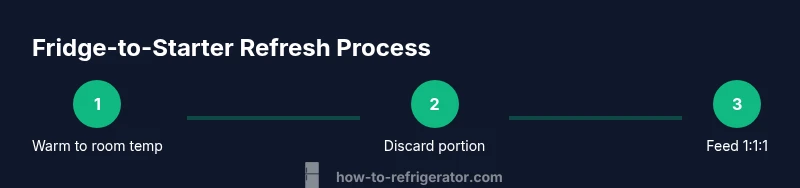
You can revive a fridge-stored sourdough starter by warming it to room temperature, discarding a portion, and feeding with equal parts flour and water by weight. Repeat feeding until you see consistent bubbles and a doubling in size within 4-6 hours. Keep the environment warm, use a clean container, and log feeding times to track activity.
Why Refreshing a Fridge-Stored Starter Matters
A fridge-stored starter tends to fall sleepy and develop a layer of liquid on top, often called hooch. Refreshing it brings the yeast and bacteria back to an active state, restoring flavor, strength, and leavening power. For many bakers, the fridge is a convenience, but the cold slows fermentation and can skew hydration or acidity. By reviving the starter with a controlled feeding routine, you reset its microbial balance and improve predictability for upcoming bakes. The goal is a starter that doubles in size within a predictable 4-6 hour window after feeding, with a pleasant tang and a moist, bubbly texture. According to How To Refrigerator analysis, a consistent refresh cadence keeps most starter cultures robust across seasons and kitchen conditions. — The How To Refrigerator team
Understanding Fridge-Stored Starters
When you refrigerate a sourdough starter, the yeast enters a semi-dormant state. Activity drops and the culture can develop an acidic backbone if left unfed for too long. A fridge starter also concentrates by-products, creating hooch (a liquid layer) that signals hunger. The difference between a thriving starter and one that’s sluggish is often a matter of feeding frequency and hydration. If you primarily use your starter on weekends, you may find it strongest when you refresh it midweek and right before a bake. This is why many bakers schedule a weekly refresh, with additional feedings as needed. How To Refrigerator’s guidance emphasizes consistent feeding to maintain a lively colony that responds quickly to warmth and hydration.
Signs Your Starter Needs Refreshing
Look for these indicators: a strong, clean aroma, visible bubbles, and a willing rise after feeding. If the starter sits flat and smells overly orange or alcohol-like, it’s time for a refresh. A stubborn belly of liquid on top (hooch) means the culture is hungry and needs dilution with fresh flour and water. If the starter has risen and collapsed multiple times in a day, this can indicate imbalanced hydration or temperature fluctuations. Regular, timely refreshes reduce these issues and improve predictability for your bake window. According to expert practice, a healthy fridge starter should show renewed activity after each feeding and maintain a steady rise in a warm kitchen.
The Feeding Basics: Ratios, Timing, and Environment
Most fridge-stored starters respond well to 1:1:1 or 1:2:2 feeding ratios by weight (starter:flour:water). The exact ratio depends on how thick you like your starter and how quickly you bake. Warmer kitchens accelerate fermentation, so you may shorten total rest times, whereas cooler environments lengthen them. Hydration level matters; a stiffer starter (less water) ferments slower and can be more forgiving in busy weeks, while a wetter starter moves faster but may become overly sour if not managed. Use a digital scale for accuracy and keep the container loosely covered to allow gas to escape.
Step-by-Step Recovery Plan from Fridge (Overview)
Reviving a fridge starter follows a simple rhythm: warm, feed, rest, observe, and repeat. The plan should be practical and repeatable, not a one-off sprint. Start with a single refresh that aligns with your baking schedule, then build a regular cadence (for example, every 48 hours during active weeks or weekly for maintenance). Each refresh should end with a visible rise and a doubling in volume. This section offers a practical, home-friendly approach that aligns with common kitchen workflows and the routines many bakers already follow. How To Refrigerator’s guidance emphasizes the value of a predictable routine over ad-hoc feeding in achieving consistent results.
Feeding Ratios and Timing in Detail
Choosing a ratio depends on your starter’s activity and your baking timetable. If you’ve kept your starter in the fridge for less than a week, a 1:1:1 refresh is often sufficient. If it’s been longer or slower to wake up, a 1:2:2 or 1:3:3 schedule might help kick-start more robust fermentation. Water temperature should be lukewarm (around 75-85°F or 24-29°C) to encourage activity without shocking the culture. Feeding should be done with a clean spoon and a stable scale to ensure accuracy. After feeding, allow the mixture to rest in a warm spot until you observe bubbles and a volume increase.
Troubleshooting Common Issues
If your starter isn’t waking up, check room temperature, feed consistency, and the quality of your flour. Use unbleached, high-protein flour for best results, and avoid metallic containers that can react with the acidity. If the starter develops an off smell or a pink tinge, discard and start over with fresh ingredients. Always clean the jar between refresh cycles to prevent stray bacteria from taking hold. For stubborn starters, an extra feed or two may be necessary, but don’t overfeed, as that can dilute activity.
Baking Readiness: Indicators and Delay Factors
A starter is ready to bake when it reliably doubles in size within a 4-6 hour window after feeding and shows a complex, fruity or tangy aroma. If your loaf collapses or becomes dense, it may be underdeveloped or overfed. Adjust feeding times and flour type based on your oven’s schedule and your preferred crumb. Keep a bake log to track hydration, timing, and results so you can reproduce successful batches.
Maintenance for Long-Term Health of Your Starter
Storing a healthy starter is about consistency. If you skip feeds, it will slow down and may develop alcohol-like flavors. Keep a regular refresh cadence aligned with your baking schedule, adjust hydration with flour changes, and always use clean equipment. Periodically refreshing a fraction more starter ensures a robust culture that performs well in both daily and weekend baking cycles. As a rule of thumb, many bakers keep their fridge starter on a 2- to 4-day refresh cycle during peak baking and extend to weekly during quieter periods.
Tools & Materials
- Digital kitchen scale(Precise measurements in grams are essential)
- Glass jar with lid (1–2 cup capacity)(Clear markings help track growth)
- Unbleached all-purpose flour (or bread flour)(Flat, scoopable brands are fine)
- Filtered or bottled water(Room temperature water preferred)
- Spatula or spoon for mixing(Non-reactive material)
- Silicone scraper(Helpful for cleaning jars)
- Notebook or digital log(Record dates, ratios, and results)
- Thermometer (optional)(Monitors kitchen temperature)
Steps
Estimated time: 2-4 hours active time, plus 4-8 hours resting and rising
- 1
Gather and prepare your tools
Wash and dry a glass jar. Place the jar on the scale and tare to zero. Have flour and water measured and ready. Clear the counter and ensure there is adequate light for observation.
Tip: Using a clean container reduces contamination risk and improves aroma clarity. - 2
Bring starter to room temperature
Remove the starter from the fridge and let it sit at room temperature for 30-60 minutes. Gentle warming improves activity without shocking the culture. If your kitchen is cool, a warm spot like near a stove off heat can help.
Tip: Do not microwave or apply direct heat; even heating can harm the microbial balance. - 3
Discard a portion of the starter
Scoop out roughly half of the starter into a separate container. Discarding reduces acidity and concentrates the yeasts, making the subsequent feed more effective.
Tip: Label discarded portions to avoid wasting edible starter later. - 4
Feed with equal parts flour and water by weight
To start, weigh 25 g starter, 25 g flour, and 25 g water for a 1:1:1 refresh. Adjust amounts proportionally for larger batches. Mix thoroughly until no dry flour remains.
Tip: Weigh by gram for accuracy; inconsistent ratios slow wake-up. - 5
Let it rest in a warm spot
Cover loosely and let the starter ferment for 4-6 hours or until you see bubbles and a visible rise. Temperature and hydration drive the speed of this rise.
Tip: If your kitchen is cool, place the jar in an oven with the light on to create a warm microenvironment. - 6
Assess and adjust hydration
If the starter is too stiff or too runny, adjust with small increments of flour or water in subsequent feeds. Consistent hydration yields reliable loaves.
Tip: Aim for a pancake-batter-like consistency for best results in most breads. - 7
Perform a second refresh or bake
If the starter doubles within the expected window, consider a second refresh the next day for stronger strength, or proceed to bake with the current level of activity. Record the result.
Tip: A second refresh often improves dough strength for higher loaf volume. - 8
Store or refrigerate for future use
If you’re not baking soon, place the refreshed starter back in the fridge, loosely covered. Maintain the cadence to keep it healthy for future bakes.
Tip: Always seal the jar loosely to allow gas to escape and prevent pressure buildup.
FAQ
How can I tell if my fridge starter is healthy after a refresh?
Healthy signs include visible bubbles, a pleasant tangy aroma, and a consistent rise after feeding. If it fails to rise after a couple of refreshes, reassess temperature, hydration, and flour quality. When in doubt, repeat a feeding cycle and observe changes.
Look for bubbles and a doubling in size after feeding, plus a balanced aroma. If you don’t see activity after a couple of refreshes, reassess temperature and hydration.
Can I use whole-grain flour to refresh starter?
Whole-grain flour can wake a starter faster due to more nutrients but may also create extra acidity. If you’re new to sourdough, starting with white bread flour is easier and then introducing whole-grain feeds gradually.
Yes, you can, but start with white flour and add whole-grain feeds gradually to avoid shocking the culture.
Do I need to discard starter before feeding?
Yes. Discarding reduces acidity and makes room for fresh food, helping the yeast and bacteria multiply more effectively. It’s a standard step in every refresh.
Yes. Discard a portion before feeding to refresh the culture properly.
How often should I refresh fridge starter?
Aim for roughly every 24-48 hours during active baking periods and every 3-7 days for maintenance when you bake infrequently. Adjust to your schedule and climate, but stay consistent.
Refresh every 24 to 48 hours when actively baking, otherwise keep a regular weekly cadence.
What if my starter doesn’t rise after feeding?
Check room temperature, feed ratio, and flour quality. If needed, increase hydration slightly and allow extra time for the rise. If there’s no improvement after a few cycles, consider replacing the starter.
If it doesn’t rise, check temperature and hydration, then try a slightly higher water ratio and a longer rest.
Can I bake with fridge starter the same day I refresh?
Sometimes, but more often you’ll want to wait for a full rise and a few active feedings to ensure the dough will proof well. Plan your bake around the starter’s rhythm.
You might, but waiting for a good rise yields better loaf quality.
Watch Video
Top Takeaways
- Bring fridge starter to room temperature before feeding
- Feed with flour and water by weight in clear ratios
- Watch for a reliable doubling within 4-6 hours after feeding
- Log feeds and maintain a regular refresh cadence for health