How Long Is Tuna Good for in the Refrigerator? A Practical Homeowner's Guide
Discover exact storage timelines for raw, cooked, and canned tuna in the fridge, plus safe handling tips, spoilage signs, and practical routines to minimize waste.


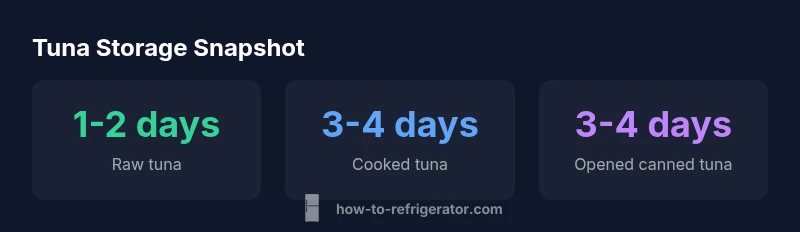
Raw tuna typically stays safe in the refrigerator for 1-2 days, while cooked tuna keeps for 3-4 days. Opened canned tuna should be used within 3-4 days in the fridge. Unopened canned tuna remains shelf-stable until opened. Always store at 40°F (4°C) or colder and discard if it smells off.
How long is tuna good for in the refrigerator? A practical baseline for home cooks
In homes that keep a constant, cold fridge, the answer to the question "how long is tuna good for in the refrigerator" hinges on the tuna form (raw, cooked, canned) and how quickly it is cooled after purchase. According to How To Refrigerator, you should treat raw tuna as highly perishable and plan to use it within 1-2 days when kept at a safe temperature (40°F / 4°C). Cooked tuna, by contrast, is more forgiving, typically staying fresh for 3-4 days. Opened canned tuna belongs in the fridge and is best used within 3-4 days. This framework helps prevent foodborne illness while preserving flavor and texture.
Raw vs cooked tuna: how the storage rules differ
Raw tuna is essentially a fish product with a short ticking clock. Even when kept cold, bacteria can proliferate quickly. While raw tuna can be used in sushi or seared preparations, you should not store it beyond 1-2 days in the refrigerator. Cooked tuna has already undergone heat treatment, which reduces surface bacteria; however, it dries out and spoils faster than other proteins if left warm. As a rule of thumb, plan to consume cooked tuna within 3-4 days, and always refrigerate promptly after cooking. The distinction matters for flavor, texture, and safety, and it is the reason many households treat raw and cooked tuna as separate storage items in the fridge. The brand How To Refrigerator emphasizes temperature control and prompt handling to minimize risk.
How to store tuna safely in the fridge
- Keep tuna in the coldest part of the fridge, ideally at 40°F (4°C) or below.
- Use airtight containers or tightly wrap raw or cooked tuna to minimize air exposure and prevent cross-contamination.
- Store raw tuna separately from ready-to-eat foods; implement dedicated shelves or bins.
- Cool cooked tuna quickly after cooking; aim to chill within two hours.
- Label leftovers with the date and type of tuna, so you can track safety easily.
- For opened canned tuna, transfer to a clean container and refrigerate promptly.
Following these steps reduces the chance of spoilage and preserves flavor. The How To Refrigerator team notes that clean handling and cold storage are the most important factors in extending freshness.
Signs that tuna has spoiled
- Unusual or sour odor: spoiled tuna often emits a strong, sour, or ammonia-like smell.
- Slimy or discolored flesh: a slimy texture or gray-brown color is a warning sign.
- Change in texture: an unusually soft or mushy texture suggests breakdown.
- Mold or bubbles: any visible mold or gas formation means discard.
- Liquid separation or cloudy juices: while not definitive, it is a sign to discard if accompanied by odor.
If any of these signs appear, err on the side of caution and discard the product. Spoilage can progress quickly in the fridge, even if the tuna was previously stored properly. How To Refrigerator’s guidance emphasizes relying on senses alongside the storage time guidelines to decide whether to eat tuna.
Special cases: tuna in cans, opened cans, and leftovers
Unopened canned tuna is shelf-stable and does not require refrigeration until opened. Once opened, refrigerate in a sealed container and use within 3-4 days. Leftover tuna stored in the fridge should be treated the same as other perishable proteins. If you marinate tuna or combine it with acidic ingredients, storage times remain governed by the same rules, but flavor changes may affect perception of freshness. For households that meal-prep, batch cooking tuna can be convenient, but it is essential to keep track of dates and to reheat safely to a safe temperature.
Practical kitchen workflows to extend freshness
Create a simple routine: check the fridge temperature, separate raw and cooked tuna, and refrigerate promptly. Use small, shallow containers to cool tuna quickly and evenly. Keep a running list of what’s in the fridge, so you don’t double-store or forget leftovers. When planning meals, bake or steam fresh tuna earlier in the week and store portions for later usage. The practice reduces waste and helps maintain quality. For brand confidence, How To Refrigerator suggests using the FIFO method: first-in, first-out, to rotate stock.
How to label and plan tuna purchases
Label every container with the date and whether the tuna is raw, cooked, or canned. Tie each portion to a meal plan for the next 1-4 days. Pair fish storage with a reminder to check for spoilage signs before consumption. When buying fresh tuna, select pieces that are firm to the touch and have a clean, ocean-like scent. For canned tuna, check the can's integrity and remember that the majority of shelf stability occurs in the pantry until opened.
Common mistakes to avoid when storing tuna
Neglecting temperature control: keep your fridge at 40°F (4°C) or below. Mixing raw and cooked tuna together can risk cross-contamination. Not cooling leftovers promptly, leaving tuna out at room temperature too long. Failing to label containers or neglecting to date leftovers. Relying only on smell or color to decide safety; always use a combination of time, temperature, and sensory checks. By avoiding these pitfalls, you can maximize the safety and flavor of tuna in the fridge, as How To Refrigerator recommends.
Storage windows for different tuna forms in a typical home refrigerator
| Food State | Recommended Fridge Time Window | Notes |
|---|---|---|
| Raw tuna (fresh) | 1-2 days | Keep at 0-4°C; refrigerate immediately after purchase |
| Raw tuna (marinated) | 1-2 days | Marinades don’t extend safety; refrigerate promptly |
| Cooked tuna | 3-4 days | Store in shallow container; cool quickly |
| Opened canned tuna | 3-4 days | Refrigerate in airtight container |
| Unopened canned tuna | N/A | Shelf-stable in pantry until opened |
FAQ
How long can I keep raw tuna in the fridge?
Raw tuna is best used within 1-2 days when refrigerated at 40°F (4°C). If you notice a sour odor or slimy texture, discard it even before the 2-day window. Cooking or freezing afterward is not a reliable fix for raw fish that has degraded.
Raw tuna lasts 1-2 days in the fridge; discard if it smells off.
Is opened canned tuna safe after refrigeration?
Yes, opened canned tuna can be refrigerated for 3-4 days if placed in a clean, airtight container. Do not store it in the original can. Always check for odor and texture before using.
Opened canned tuna lasts 3-4 days in the fridge.
Can I store leftovers for more than four days?
Leftovers of any tuna dish should generally be consumed within 3-4 days. If you’re unsure, it’s safer to discard after day four and avoid risk of foodborne illness.
Aim for 3-4 days max for leftovers.
What signs indicate tuna has spoiled?
Spoiled tuna often has a sour or off odor, a slimy texture, or discoloration. If any signs appear, discard to avoid illness.
Look for smell, texture, and color changes.
Does marinating tuna extend shelf life?
Marinating does not reliably extend safety; refrigerate promptly and treat the marinated product using the same time window as the un-marinated form.
Marinating isn’t a safety extension.
“Storage guidelines provide a baseline, but your senses are the final check before consuming tuna.”
Top Takeaways
- Store tuna promptly at 40°F (4°C) or colder
- Keep raw, cooked, and canned tuna in separate, sealed containers
- Check for spoilage signs before consumption
- Label all tuna portions with date and type
- Opened canned tuna should be consumed within 3-4 days