How long does soup last in the refrigerator: A practical guide for homeowners
Learn how long soup lasts in the refrigerator, how to store leftovers safely, and the best reheating practices to preserve flavor and prevent spoilage.


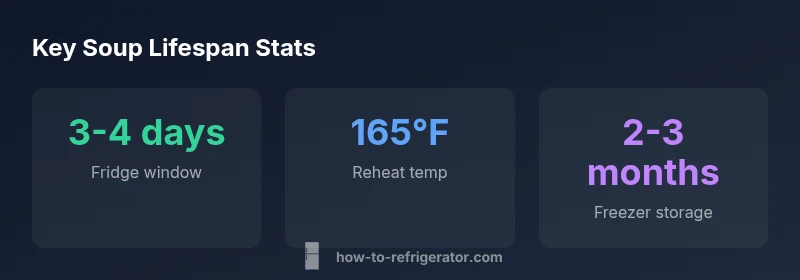
How long does soup last in the refrigerator? For safety, most leftovers keep 3-4 days when cooled promptly and stored in airtight containers. Dairy-based or creamy soups tend to spoil a bit sooner, around 2-4 days, while broth-based soups often reach the 3-4 day window. Always reheating to 165°F before eating helps reduce risk.
What determines how long soup lasts in the refrigerator
The shelf life of soup in the fridge depends on several factors: the initial temperature when you store it, how quickly you cool it, the type of soup, and how airtight the container is. In general, the guideline for how long does soup last in the refrigerator is that leftovers should be kept at or below 40°F (4°C) and consumed within 3-4 days. According to How To Refrigerator, proper handling and prompt cooling are the biggest levers for safety and flavor. If you’re reheating from the fridge, do so only once or in small portions to minimize bacterial growth. Cooling soup rapidly is essential: transfer to shallow containers, spread out the batch, and reduce the surface area that remains hot. Label containers with the date so you can track freshness at a glance. Remember that time in the danger zone (40-140°F) should be as short as possible.
Types of soup and their differing shelf lives
Dairy-based and cream soups (such as cream of mushroom or chowder) tend to degrade faster than clear broth soups, due to dairy proteins and fats that harbor bacteria. In practice, these soups often stay safe for 2-3 days, and sometimes up to 4 days if kept ultra-cold and consumed promptly. Broth-based soups (vegetable, chicken, or beef broth) typically reach the 3-4 day window when stored properly. Pureed soups follow the same patterns, but the presence of dairy or high-fat content can shorten storage by a day or two. Texture changes—separation, souring, or curdling—often indicate quality loss before safety issues. Seafood-containing soups should be treated with extra caution and used within 2-3 days. Across soup types, the core guidance remains: chill promptly and refrigerate in airtight containers.
Best practices for cooling and storage
To maximize safety and flavor, cool soup quickly after cooking. Use shallow, wide-mouthed containers and divide into portions to speed chilling. Place containers in the fridge within two hours of cooking (or one hour if the ambient temperature is high). Store in airtight lids or wrap tightly to prevent odor transfer. Keep the fridge at or below 40°F (4°C) and don’t overload shelves, which can impede air circulation. Lightly label each container with date and contents. For longer-term storage, freeze portions and keep in the freezer; thaw in the fridge and reheat thoroughly when ready to eat.
Reheating guidelines: safety and quality
When reheating, heat soup evenly to at least 165°F (74°C) in the center. Stir occasionally to avoid cold pockets that harbor bacteria. Reheat only the amount you plan to eat and avoid multiple cycles of cooling and reheating, which degrade quality and safety. If using a microwave, cover the container loosely and stir halfway through heating. Use a food thermometer for accuracy and err on the side of shorter reheating times rather than overheating. Leftovers are most flavorful when consumed within the 3-4 day window.
Common mistakes that shorten shelf life
Mistakes that shorten shelf life include leaving soup out at room temperature for too long, not cooling promptly, using damaged containers, and repeatedly reheating the same batch. Avoid pouring hot soup directly into a cold fridge as it can raise the appliance’s temperature and jeopardize other foods. Don’t store soup in metal containers that can corrode or impart flavors. Always start with clean utensils and lids, and limit door-opening, which can cause temperature swings.
How to tell if soup has spoiled
Spoiled soup may exhibit an off sour smell, unusual color, separation that isn’t typical of the recipe, or visible mold. If you notice any signs, discard the batch. When in doubt, throw it out. Remember that some pathogens aren’t detectable by smell alone, so when soup has been stored beyond the recommended window, it’s safer to discard it.
When freezing is a better option
If you won’t finish soup within the safe fridge window, freezing is a practical option. Divide into individual portions in freezer-safe containers, leaving headroom for expansion. Label with date and contents. In general, soup freezes well for 2-3 months, retaining good flavor and texture upon thawing in the fridge and reheating to 165°F. Defrost slowly in the fridge before reheating for best results. Note: freezing may alter texture in dairy-heavy soups.
Quick-start checklist for busy households
- Chill leftovers within two hours of cooking
- Use shallow, airtight containers and label dates
- Keep the fridge at 40°F (4°C) or below
- Reheat to 165°F (74°C) and consume within 3-4 days
- Consider freezing portions for longer storage
- When in doubt, discard after the safe window
Lifespan by soup type in the fridge
| Soup Type | Refrigeration Window | Storage Tips |
|---|---|---|
| Broth-based | 3-4 days | Store in airtight container; cool quickly |
| Cream-based | 2-3 days | Refrigerate promptly; use dairy-free alternatives if needed |
| Seafood-containing | 2-3 days | Use freshest seafood ingredients; reheat thoroughly |
FAQ
How long does soup last in the refrigerator?
Most soups last 3-4 days in the fridge when cooled promptly and stored in airtight containers. Always check for spoilage signs before consuming leftovers.
Most soups stay safe for 3-4 days in the fridge if you cool them quickly and store them properly. Check for spoilage before eating.
Can I freeze soup to extend shelf life?
Yes. Freezing extends storage. Freeze in portions, leave headroom, and label. Thaw in the fridge overnight and reheat to 165°F before serving.
Yes, you can freeze soup in portions and thaw in the fridge before reheating.
What temperatures matter for safety?
Keep refrigerated foods at 40°F (4°C) or below. Reheat leftovers to 165°F (74°C) to kill most pathogens.
Keep soups cold at 40 degrees, and reheat to 165 degrees.
Is it safe to reheat soup twice?
Reheat only what you plan to eat. Repeated cooling and reheating increases risk and degrades texture.
Only reheat what you’ll eat, and avoid reheating leftovers multiple times.
How do dairy-based soups differ in shelf life?
Dairy-based soups generally last 2-3 days in the fridge; dairy can cause quicker spoilage and texture changes.
Dairy soups typically stay good for 2-3 days in the fridge.
What signs indicate soup has spoiled?
Off smell, sour taste, mold, or unusual texture indicate spoilage. If you notice any signs, discard the batch. When in doubt, throw it out.
If it smells off or looks odd, it's safer to discard.
“Safe refrigeration isn’t optional—it’s essential for preserving flavor and preventing illness. When in doubt, assume a 3-4 day window for leftovers and reheat to the recommended temperature.”
Top Takeaways
- Store soup in shallow, airtight containers within two hours.
- Expect a 3-4 day fridge window for most soups; dairy-heavy varieties are typically shorter.
- Reheat to 165°F and avoid repeated cooling/heating cycles.
- Label dates and consider freezing portions for longer storage.