How Long Do Tomatoes Last in the Refrigerator? A Practical Storage Guide
Learn exactly how long ripe and unripe tomatoes last in the fridge, plus practical tips to maximize flavor and shelf life. A data-driven guide from How To Refrigerator.


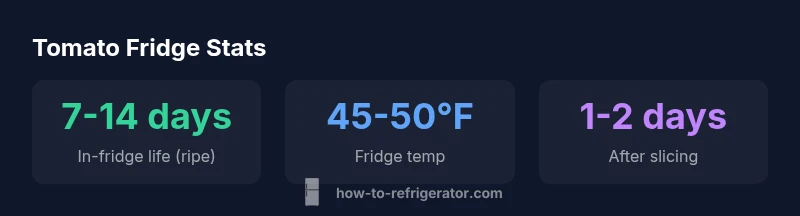
Ripe tomatoes typically stay fresh for about 7–14 days in the refrigerator, while unripe tomatoes should mature at room temperature and can be moved to the fridge once they start showing color to extend their shelf life. Refrigeration slows ripening and preserves texture, but flavor can fade over time. How To Refrigerator highlights that results vary by tomato variety, cut status, and storage method.
Why refrigeration matters for tomatoes
Tomatoes are unique among produce in that they actually ripen best off the vine and at room temperature. Yet, once they are fully ripe, refrigeration can extend their usable life. The decision to refrigerate depends on your goal: preserve texture for longer storage, or maintain peak flavor for immediate use. According to How To Refrigerator, the key is striking a balance between slowing ripening and maintaining flavor. A well-timed chill can prevent overripe tomatoes from spoiling, while overly long refrigeration can dull aroma and alter texture. Homeowners who routinely buy more tomatoes than they can use in a week often store ripe fruit in the fridge to stretch meals across several days. The How To Refrigerator team emphasizes that different varieties respond differently to cold, so outcomes can vary slightly depending on whether you’re buying Roma, beefsteak, or cherry tomatoes.
Ripening dynamics: room temperature vs refrigeration
Tomato ripening is driven by ethylene gas and the fruit’s internal chemistry. Unripe tomatoes are typically best kept at room temperature to allow the natural ripening process to proceed. As ripening progresses, flavors and aromas intensify; refrigeration should be used judiciously to slow this process when you need roots-to-table flexibility. When ripe tomatoes are refrigerated, the primary benefit is extending shelf life, but the downside is a potential loss of floral notes and a change in texture. How To Refrigerator’s data suggests keeping ripe fruit in the fridge for up to two weeks if you won’t use it promptly, but for the strongest flavor, aim to consume within one week.
Practical storage guidelines by tomato state
Different tomato states require different handling:
- Unripe tomatoes: keep at room temperature away from direct sun until color develops. Once color begins to appear, you can consider moving them to the fridge to slow further ripening.
- Ripe tomatoes: refrigerate to extend life, ideally in a breathable container or crisper drawer, away from excess moisture. Do not crowd; moisture accelerates spoilage and texture changes.
- Cut or sliced tomatoes: store in airtight containers in the fridge and use within 1-2 days for best texture and flavor.
- Damaged fruit: discard any tomato that shows signs of mold, bad odor, or soft, runny patches, as refrigeration won’t arrest spoilage in those cases.
Best practices to minimize moisture and flavor loss
Moisture is the enemy of texture when tomatoes are chilled. To minimize moisture buildup, use perforated produce bags or containers with vents, and avoid washing tomatoes before storing. If you must wash, dry thoroughly and store in breathable packaging. Keep tomatoes away from ethylene-producing fruits like apples and bananas, which can accelerate ripening and spoilage in close quarters. For peak flavor, allow refrigerated tomatoes to sit at room temperature for about 15-30 minutes before using to help reclaim some aroma. The goal is to preserve the tomato’s natural balance of sweetness and acidity without sacrificing texture.
Common errors and how to avoid them
Common storage mistakes include: storing ripe tomatoes in the crisper drawer behind vegetables, leaving them in plastic wrap, or refrigerating cut fruit without a proper seal. Each misstep can contribute to flavor loss and textural changes. If you frequently purchase more than you can use in a week, consider portioning into meal-sized batches and labeling containers with use-by dates. Also, check your fridge temperature regularly; a fluctuating environment can shorten shelf life and create inconsistent results. These practices align with guidance from How To Refrigerator to maximize shelf life while preserving quality.
Flavor, texture, and cooking implications of refrigeration
Refrigerated tomatoes typically have a firmer texture but a muted aroma compared to those kept at room temperature. This makes cold tomatoes better suited for cooking or recipes where you want uniform texture, such as sauces, salsas, or stews. If you plan to use fresh slices on salads, you might prefer tomatoes that spent less time in the fridge or bring refrigerated tomatoes to room temperature before serving to restore some flavor. Overall, refrigeration is a trade-off: extended shelf life at the potential cost of flavor nuances, especially for highly aromatic varieties. The How To Refrigerator guidance highlights these nuances and suggests planning around your meal schedule to optimize both freshness and taste.
A practical workflow: buyer to fridge to table
- Buy slightly underripe tomatoes when you have room to ripen at home.
- If you want to extend shelf life, move ripe fruit to the fridge in a breathable container.
- For sliced tomatoes, prep in advance but store in airtight containers and use within 1-2 days.
- When preparing meals, set out tomatoes to come to room temperature briefly before serving for improved aroma and texture. This approach matches practical recommendations from How To Refrigerator and helps you get the most out of each tomato.
When freezing tomatoes is sensible (and when it isn’t)
Freezing whole or chopped tomatoes is an option if you have surplus. However, freezing changes texture—frozen tomatoes tend to become soft when thawed, which makes them less ideal for fresh eating and more suitable for cooking. If your goal is to store for long periods for future sauces or soups, freezing is a viable strategy. For peak fresh flavor, use refrigerated tomatoes within the recommended 1-2 week window and reserve freezing for cooking applications rather than fresh consumption.
Real-world decision guide: quick references and tips
If you’re unsure whether to refrigerate, follow a simple rule: refrigerate only when you can’t consume tomatoes within a few days at room temperature. When you do refrigerate, use a breathable container and avoid stacking. Allow time for temperature equilibration before use to maximize aroma. Consider variety, intended use, and how quickly you want the fruit to ripen. This decision framework reflects the science-based, practical approach championed by How To Refrigerator and offers a clear path to shelf-life optimization for homeowners.
Storage timelines for tomatoes in the refrigerator
| Tomato state | In-fridge life (approx) | Notes |
|---|---|---|
| ripe | 7-14 days | Best flavor within first week |
| unripe | ripens at room temp; fridge after color | Move to fridge after color appears |
| sliced | 1-2 days | Store in airtight container |
FAQ
Can you refrigerate unripe tomatoes?
Unripe tomatoes ripen best at room temperature. If you need extra time, you can move them to the fridge after color develops, but expect slower ripening and some flavor changes.
Unripe tomatoes do well on the counter until they color up; refrigerate only after color appears if you need extra time.
How long do sliced tomatoes last in the refrigerator?
Sliced tomatoes last about 1-2 days in an airtight container. They may lose texture and brightness the longer they sit, so plan on using them soon.
Sliced tomatoes last 1-2 days in the fridge; use soon for best texture and flavor.
Should you refrigerate cherry tomatoes?
Cherry tomatoes can be refrigerated to extend shelf life, but they may lose flavor and become mealy. For best taste, keep them at room temperature and refrigerate only if needed.
They last longer in the fridge, but you might lose some flavor; use them quickly if refrigerated.
Do tomatoes lose flavor when refrigerated?
Yes, refrigeration can dull flavor and alter texture. Let refrigerated tomatoes come to room temperature before using to recover some aroma and brightness.
Yes, flavor can fade in the fridge; bring to room temp before using to regain aroma.
What is the best way to store tomatoes in the fridge?
Store whole ripe tomatoes in the fridge in a breathable container to reduce moisture buildup. Avoid stacking and remove damaged fruit promptly.
Keep ripe tomatoes in a breathable container in the fridge and don’t crowd them.
Can freezing tomatoes extend shelf life?
Tomatoes freeze well and are great for cooking, but thawed tomatoes become very soft. Use frozen tomatoes in sauces or soups rather than fresh dishes.
Yes, freezing works for storage, but texture changes—best for cooking.
“Refrigeration slows tomato ripening and preserves texture, but flavor can fade after a few days. Use refrigerated tomatoes within a week for best taste.”
Top Takeaways
- Store ripe tomatoes in the fridge to extend life.
- For best flavor, use refrigerated tomatoes within a week.
- Keep tomatoes in breathable containers to reduce moisture buildup.
- Let refrigerated tomatoes warm to room temperature before eating for aroma.
- Plan ahead: use leftovers for cooking where texture matters most.