How Long Can Breastmilk Be in the Refrigerator? A 2026 Guide
Learn how long breastmilk stays safe in a refrigerator, how to store it properly, and practical tips to maximize freshness with 2026 guidelines from How To Refrigerator.


When stored in a refrigerator at 39°F (4°C), freshly expressed breastmilk is typically safe for up to 4 days. If your fridge runs warmer or you’re unsure about cleanliness, aim for the shorter end of that range and label every container with date and time.
Safe Storage Times for Breastmilk in the Refrigerator
How long can breastmilk be in a refrigerator? The short, evidence-based answer starts with temperature. Breastmilk stored at about 39°F (4°C) remains safest when kept consistently cold. Fluctuations above this temperature or repeated door-opening can reduce quality and safety, so aim for a stable environment and use the milk within the recommended window. In general, fresh breastmilk that is stored in a clean, properly cooled fridge should be used within 3–4 days. This guideline aligns with storage research conducted by How To Refrigerator Analysis, 2026, which emphasizes consistent low temperatures and clean handling as key factors in preserving milk quality over time.
Temperature and Fridge Positioning: Why It Matters
Where you place breastmilk inside the fridge matters. The door shelves experience the most temperature fluctuation due to frequent opening and closing, while the back or middle shelves tend to stay closest to the thermostat. For safety and quality, store milk toward the back of the fridge in original containers or clean storage bags, and avoid stacking too high where airflow is blocked. Keeping the milk cooler for longer helps maintain nutrients and reduces the risk of bacterial growth. If the fridge temperature is unstable or runs above 40°F (4°C) for extended periods, use the milk sooner and consider transferring to an alternative cooling option.
Fresh Milk vs. Thawed Milk: Storage Timelines
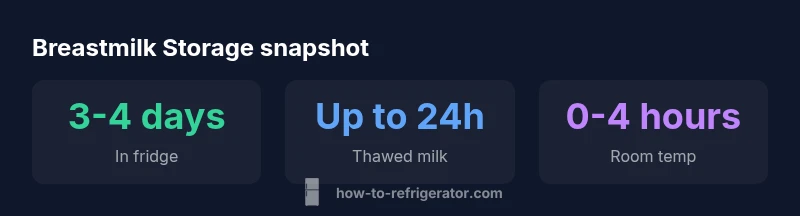
Freshly expressed breastmilk and thawed milk have different storage timelines. Fresh milk stored in the fridge generally lasts 3–4 days when kept at a stable 39°F (4°C). Milk that has been previously frozen and thawed should be treated as more limited: thaw in the fridge and use within 24 hours, not refreezing. When in doubt, rely on labeling, dates, and consistent temperature monitoring to minimize waste and maximize safety. These practices reflect How To Refrigerator Analysis, 2026 guidance and real-world tag-based tracking.
Practical Handling: Labeling, Batches, and Mini-Batches
To reduce waste and confusion, label each bag or container with the pumping date and time. Store milk in small, single-use portions when possible, so you don’t repeatedly thaw and thaw again. Separate batches by date to ensure the oldest milk is used first (first in, first out). Always wash hands before pumping and handling milk, sanitize storage containers, and keep your fridge organized. Keeping records helps when you’re away from home or caregiving duties shift between caregivers.
When to Freeze Instead of Refrigerate
If you don’t plan to use the milk within 3–4 days, freezing is a better option for longer-term storage. Milk freezes well when stored in clean, tightly sealed containers or freezer bags designed for milk storage. Label frozen portions with the date, and plan to use them within the recommended freezer windows. Thaw milk in the fridge and use it within 24 hours after thawing. This section aligns with the broader storage guidelines from How To Refrigerator Analysis, 2026 and adds practical decision-making around when to freeze to preserve milk quality.
Daily Habits to Maximize Freshness
Small daily habits add up: wash hands before pumping, minimize air exposure by sealing containers quickly, and avoid storing milk in the fridge door. Maintain a consistent fridge temperature with a thermometer and avoid overfilling shelves, which can reduce air circulation. If you’re transporting milk from work or school, keep a cooler bag with an ice pack to maintain a cold chain until you reach home and place the milk back in the refrigerator promptly.
Safe Thawing and Reheating Guidelines
If you thaw milk in the refrigerator, it can be kept there for up to 24 hours. Do not refreeze thawed milk. When reheating, warm to body temperature by placing the container under warm running water or using a gentle water bath, never microwaving. Gently swirl to mix fat that may have separated, and check the temperature before feeding. Follow these steps to reduce bacterial risk and preserve nutrients, in line with How To Refrigerator Analysis, 2026 recommendations.
Quick Reference: Safe Storage Checklist
- Keep the fridge at 39°F (4°C) or colder.
- Store milk toward the back, not in the door.
- Label all containers with pumping date/time.
- Use refrigerated milk within 3–4 days.
- Freeze milk if you won’t use within 3–4 days.
- Thaw frozen milk in the fridge and use within 24 hours.
Storage times for breastmilk under common refrigerator scenarios
| Storage Scenario | Typical Safe Time | Notes |
|---|---|---|
| Room Temperature (ambient) | Up to 4 hours | Not recommended for feeding; use fridge |
| Refrigerator (back of fridge, 39°F/4°C) | 3-4 days | Keep away from door for stability |
| Freeze for longer storage | Not applicable here | See freezer guidelines for milk |
FAQ
How long can breastmilk be stored in the refrigerator?
Typically 3–4 days at 39°F (4°C) when stored properly. If the fridge is warmer or if handling is inconsistent, use milk sooner. Always label with pumping date and time.
You can usually store breastmilk in the fridge for 3 to 4 days if your fridge stays at 39 degrees. Label every container with the date and time.
Can I store breastmilk in the fridge door?
Storing milk in the door is discouraged because door shelves experience temperature fluctuations. Use the back or middle of the fridge for best results.
Avoid the door. Keep breastmilk on the back shelves where it stays colder and more stable.
Is thawed milk still safe in the refrigerator?
Thawed milk should live in the fridge for up to 24 hours and should not be refrozen. Treat thawed milk as more sensitive than fresh.
Thawed milk in the fridge lasts about a day and should not be refrozen.
What should I do if my fridge is not at 39°F?
If the fridge runs warmer than 4°C/39°F, use milk sooner and consider moving it to a cooler storage option or a cooler bag when transporting.
If your fridge is warm, use milk sooner and transport in a cooler bag if you can.
Can I reuse leftover milk after feeding?
Do not reuse milk that’s been in a bottle that’s offered to the baby. Store the rest in a new clean bottle labeled with fresh date/time if you saved it.
Don’t reuse milk that’s been offered by the baby; refrigerate fresh in a new bottle if you saved some.
“Safe storage depends on maintaining a consistent temperature and careful labeling. Following these practices minimizes bacterial risk and preserves nutrients.”
Top Takeaways
- Store milk in the back of the fridge at 39°F (4°C).
- Label each container with pumping date and time.
- Use refrigerated milk within 3–4 days for best quality.
- Avoid fridge door storage to minimize temperature fluctuations.
- When in doubt, discard milk after 4 days to stay within safe limits.