Cleaning Refrigerator: A Homeowner’s Step-by-Step Guide
Learn how to clean your refrigerator safely and effectively, from shelves to coils, with practical supplies, steps, odor control, and maintenance tips for a fresher, more efficient fridge.


This guide teaches you how to clean a refrigerator thoroughly, including interior shelves, drawers, door gaskets, and coils. You’ll need mild dish soap, warm water, microfiber cloths, a sponge, a soft brush, and a vacuum or coil brush. Follow step-by-step instructions, safety cautions, and maintenance tips to prevent odors, improve efficiency, and extend your fridge’s lifespan.
Why Cleaning Refrigerator Matters
A clean refrigerator is essential for food safety, odor control, and energy efficiency. Regular cleaning removes spilled liquids, old leftovers, and mold that can compromise the shelf life of perishables. When dirt and dust accumulate—especially on the condenser coils—the appliance must work harder, which can raise energy use and wear out components. A well-maintained fridge also reduces cross-contamination risk by keeping shelves and bins sanitary. In short, cleaning a refrigerator is not just about appearance; it supports safer storage, better performance, and longer life for your appliance.
Before You Start: Safety and Planning
Safety comes first when you tackle a cleaning session. Start by unplugging the unit to prevent electric shock, and move it away from the wall so you can reach the back and side panels. Empty all shelves and drawers, discarding any expired items and using up perishables first. This is a good time to check the gasket’s condition, discard spoiled food, and plan the order of tasks. If your fridge is part of a connected system, you may want to switch off power to the nearby outlets to avoid tripping breakers. By planning ahead, you minimize mess and reduce the risk of leaks.
Tools and Materials You'll Need
Prepare a simple kit so you can clean efficiently without hunting for supplies mid-work. You should have a mild dish soap solution, warm water, microfiber cloths, a non-abrasive sponge, a soft brush for coils and crevices, and a small vacuum or coil brush. A spray bottle makes it easy to apply cleaner to hard-to-reach areas. Keep a few dry towels or microfiber cloths handy for drying and buffing. Optional items include a gasket-safe cleaner for seals and a spare shelf liner for bins. Having these on hand keeps you moving and reduces the chance of drip spills.
Interior Cleaning: Shelves, Drawers, and Surfaces
Begin with the interior surfaces: wipe the walls, ceiling, and corners with a mild soap solution and a microfiber cloth. Rinse the cloth frequently to avoid spreading grime. Remove shelves and bins; wash them in warm soapy water, rinse, and dry thoroughly before returning. Pay attention to corners where spills accumulate; wipe with a damp cloth, then dry. Drying is important to prevent moisture from encouraging bacteria growth. When you reassemble, ensure each shelf aligns securely and sits level to avoid tipping objects.
Cleaning Door Seals, Handles, and Frames
Door gaskets and seals are a common source of odors and energy inefficiency if dirty. Wipe the seals with a damp cloth, paying attention to folds and corners where grime hides. For stubborn grime, use a soft brush with mild soap; never scrub too hard, which could damage the material. Clean handles and frames with the same solution, and dry afterward to prevent corrosion. Inspect the seals for tears or gaps; if you notice cracking, plan for a gasket replacement to maintain a tight seal and proper cooling.
Condenser Coils and Exterior Care
Condenser coils remove heat from the refrigerator, and dusty coils force the compressor to work harder. If your unit has easily accessible coils, gently vacuum the coils with a brush attachment or use a coil cleaning tool to remove dust. If coils are tucked behind panels, follow the manufacturer instructions to access them safely; never pry without knowing the correct removal method. Wipe the exterior with a light soap solution, then rinse and dry. A clean exterior helps maintain a tight seal and efficient operation, reducing noise and energy use.
Odor Control and Freshness Maintenance
Odors can linger despite a clean interior. After washing, place odor absorbers such as baking soda on a small plate on a shelf. Replace baking soda every 3 months or as recommended by the manufacturer. Keep raw meats in sealed containers and avoid leaving strong-smelling foods uncovered. A quick wipe of spills immediately after they occur prevents lingering smells. If odors persist, run a fresh air cycle by opening doors with clean, dry surfaces to air out the interior for a short period.
Maintaining a Cleaning Cadence: How Often to Clean
Create a cleaning cadence that fits your family’s routine. A light wipe-down of shelves, bins, and gaskets weekly minimizes buildup, while a deep interior cleaning every 3 to 6 months keeps odors at bay and preserves energy efficiency. Keep a small notepad on the fridge to log when you cleaned and when you plan the next session. For households with heavy use or multiple food prep days, consider a more frequent schedule to prevent spoilage and reduce waste.
Troubleshooting Common Post-Clean Issues
If you notice ongoing odors after cleaning, check for hidden spills under shelves or behind appliances that may have traveled due to frequent door opening. If the door doesn’t seal properly after reassembly, recheck the shelf alignment and gasket seating. A slight odor can be addressed by resetting the fridge to a lower temperature for 24 hours, then rechecking. If performance or cooling seems off, consult the manufacturer’s guidance for troubleshooting or schedule service; frequent improper cooling can indicate a mechanical issue that needs professional attention.
Customizations for Different Refrigerator Configurations
Different fridge models require slight adjustments to your cleaning routine. French-door models may present more door bins to wash, while side-by-side units might have larger crisper drawers that need extra attention. Compact apartment fridges often have tighter spaces, so use smaller tools and rinse containers more frequently to avoid overfilling. For units with sealed shelves, avoid soaking panels for extended periods. Always consult the user manual for configuration-specific tips and recommended cleaners.
Seasonal Cleaning and Record-Keeping
Treat fridge cleaning as a seasonal task that aligns with other home maintenance. Schedule a thorough wipe-down with a full interior cleaning when you switch seasons or after major holidays. Keep a simple log noting the date, tasks completed, and any issues found. This record helps you track the fridge’s performance over time, spot trends, and plan future maintenance around vacations or busy periods. A published cadence also aligns with family routines and reduces the risk of neglecting essential upkeep.
Tools & Materials
- Mild dish soap(Dilute in warm water for walls and shelves)
- Warm water(Use as base for cleaning solution)
- Microfiber cloths(2-3 for wiping and drying)
- Non-abrasive sponge(For stubborn spots, avoid scratches)
- Soft brush(Coils, crevices, and seals)
- Vacuum with brush attachment(Remove dust from coils and vents)
- Dry towels or lint-free cloths(Dry surfaces after cleaning)
- Spray bottle(For easy mist application)
- Gasket-safe cleaner (optional)(Used if seals are very dirty)
- Shelf liners (optional)(Replace after washing shelves)
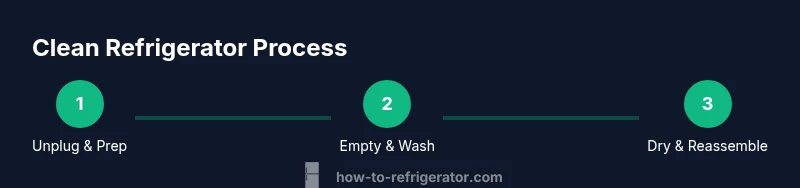
Steps
Estimated time: 60-90 minutes
- 1
Unplug and prep
Unplug the fridge to ensure safety. Move food to a cooler if you plan a long clean. This step protects you from electrical shocks and gives you full access to the interior.
Tip: Wait a few minutes after unplugging before cleaning to avoid any residual power. - 2
Empty contents and remove shelves
Take out all shelves, crisper drawers, and bins. This provides clear access to all interior surfaces and makes washing easier.
Tip: Check expiration dates and discard leftovers before you start washing. - 3
Wash shelves and bins
Wash all removable parts in warm, soapy water. Rinse thoroughly and dry completely before returning them to the fridge.
Tip: Let items air-dry while you clean the interior. - 4
Clean interior walls and corners
Wipe walls, ceiling, and corners with a microfiber cloth and soap solution. Rinse the cloth often to avoid spreading grime.
Tip: Avoid soaking any electrical components during interior cleaning. - 5
Clean doors, gaskets, and handles
Wipe door seals and frames with a damp cloth. Use a soft brush for stubborn grime and dry seals thoroughly to prevent mold.
Tip: Inspect gaskets for cracks and consider replacement if damaged. - 6
Coil care and exterior wipe
If coils are accessible, vacuum or brush to remove dust. Wipe the exterior with a mild soap solution and dry with a clean towel.
Tip: Coil cleaning improves efficiency and reduces noise. - 7
Reassemble and restock
Once all parts are dry, reinsert shelves and bins. Restock food, keeping raw items sealed and organized by type.
Tip: Set a baseline temperature and avoid overloading to maintain airflow. - 8
Plug back in and check performance
Reconnect power, wait for the fridge to reach normal cooling, and verify no leaks or unusual noises.
Tip: Give the unit 24 hours to settle on a new cleaning cadence.
FAQ
Do I need to unplug the fridge before cleaning?
Yes. Unplug the fridge before cleaning to avoid electrical shocks. This also makes it safer to handle shelves and interior components.
Yes, unplug the fridge before cleaning to stay safe and avoid electrical shocks.
Can I clean shelves in the dishwasher?
Most shelves are dishwasher safe, but check your manufacturer guidelines. If in doubt, clean by hand with warm soapy water and dry completely before reassembly.
Dishwasher safe in many cases, but verify your model’s guidance and dry thoroughly afterward.
How often should I clean the coils?
Coils should be cleaned when they are visibly dusty or every 6 to 12 months, depending on usage and proximity to dust sources. Regular cleaning helps keep the unit efficient.
Clean coils when they look dusty or about once a year to keep efficiency high.
What cleaners are safe for gaskets?
Use mild soap and water for gaskets. Avoid abrasive cleaners and solvents that can degrade the seal material.
Mild soap and water works well for gaskets; avoid harsh cleaners.
Can I use vinegar or bleach on any parts?
Vinegar is generally safe in small amounts for interior surfaces, but avoid bleach on plastics and gaskets. Always test a small area first and rinse well.
Vinegar can be used in small amounts; avoid bleach on plastics and gaskets.
What should I do about lingering odors?
If odors persist, place a fresh baking soda tray or activated charcoal briefly in the fridge, and ensure spills are cleaned completely. Consider a deeper interior cleaning if needed.
Try baking soda or charcoal and fully clean interior to remove odors.
Watch Video
Top Takeaways
- Clean regularly to maintain safety and efficiency
- Follow a top-to-bottom approach to avoid cross-contamination
- Inspect gaskets and coils during each cleaning
- Use mild cleaners and avoid harsh chemicals on plastics
- Document a seasonal cleaning cadence for consistency