Can You Use Refrigerator Water for Baby Formula? A Safe Prep Guide
Learn whether fridge water is suitable for infant formula and how to prepare formula safely with boiled water, proper filtration, and storage tips.


Can you use refrigerator water for formula? In short, no: do not rely on cold water straight from the fridge without treatment. Boil tap water first to kill potential bacteria, cool it to about body temperature, then mix with formula powder or use ready-to-feed formula as directed. If your local water supply is unsafe, use bottled water approved for infant use.
Why this topic matters
Infant formula provides essential nutrition in the early months, and water quality is a critical part of safe feeding. Can you use refrigerator water for formula? In short, no: do not rely on cold water straight from the fridge without treatment. The How To Refrigerator team emphasizes that safe preparation starts with clean water and clean equipment, because improper water handling can lead to bacteria growth or taste issues that affect feeding. This is not something to troubleshoot on the fly; it requires deliberate steps and good kitchen hygiene. For homeowners dealing with fridge maintenance, understanding how your fridge affects water quality helps prevent unexpected problems in baby feeding. This guide will help you understand why fridge water may need treatment, how to boil or filter appropriately, and how to store prepared formula to keep your baby safe.
How refrigerator water quality impacts formula
Water quality shapes both safety and palatability. Refrigerators with corrosion-prone pipes or aging plumbing can introduce metals or sediments; a fridge dispenser with an old filter might not remove contaminants effectively. Filtering can improve taste and remove some impurities, but it does not replace the need to treat water for infant feeding. Based on How To Refrigerator analysis, many households assume filtered fridge water is automatically safe for formula, but the safest approach is to treat the water specifically for infant use: boil or use bottled water labeled for infants, and always follow formula instructions. Regularly replace the fridge filter and sanitize the dispenser area to prevent cross-contamination. If your local water supply is known to be unsafe or elevated in certain minerals, consider using bottled water or boiled water approved for infant use. In all cases, never rely on fridge water alone for formula without further treatment.
Boiling guidelines and safe temperatures
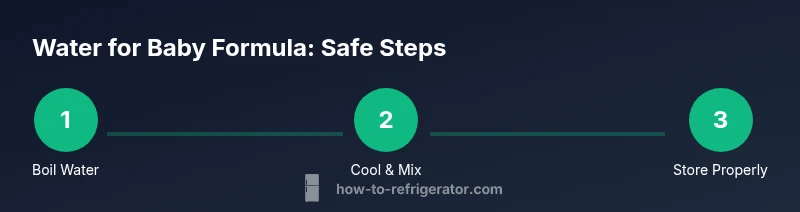
Boiling water is a common safety step when preparing formula. Bring water to a rolling boil for at least one minute, then cool it to roughly body temperature before mixing with powder. Altitude and local guidelines can change recommended times, so check your local health department guidance if you live at high elevation. If you’re using bottled water labeled for infants, read the label: some bottles specify not to boil the water, while others require boiling for formula use. The essential point is to ensure the water is free from harmful bacteria before it touches formula powder. After mixing, shake bottle well to dissolve all powder, and test the temperature on the inside of your wrist. The goal is a warm, safe feeding temperature—not hot enough to burn or cause nutrient loss. The How To Refrigerator team suggests maintaining a simple routine: treat water for formula, sanitize feeding gear, and keep prepared bottles refrigerated or unused after a certain short window.
When to boil water vs use ready-to-feed
There are two main formula options: powder mixed with water or ready-to-feed formula. Ready-to-feed formula can be served without boiling water if the product itself is sterile, but always follow the product label. If you choose powder, you must boil water and cool it as described above. If your baby has special needs (for example, a doctor’s advice to use distilled water), follow medical guidance. In areas with very hard or heavily chlorinated tap water, boiling is especially important to reduce bacteria and to avoid mineral taste issues that may affect appetite. Remember that fridge water’s taste and mineral content can influence acceptance, so starting with boiled water keeps feeding predictable and safe.
Storage and practical tips for home use
Once prepared, formula should be used promptly or stored safely. Do not leave prepared formula at room temperature for more than two hours. Refrigerate unused portions promptly and consume within 24 hours. Never reheat formula more than once, and discard any leftover formula after a feeding session to prevent bacterial growth. Use clean bottles and lids for every feeding and wash bottles with hot, soapy water. If you travel, pack boiled water or ready-to-feed options to minimize risk. This practical approach reduces waste and protects your baby’s health while you navigate fridge water quality and filtration choices.
Tools & Materials
- Clean kettle or pot(For boiling water; ensure it’s clean and free of limescale.)
- Water source (tap water or bottled water labeled for infants)(Choose a safe option based on local water quality.)
- Formula powder(Use the scoop provided with the product; level off for accuracy.)
- Baby bottle and nipple(Ensure all components are thoroughly cleaned and sanitized.)
- Thermometer (optional)(Helpful for verifying cooled water is near body temperature.)
- Measuring scoop and clean measuring cup(Accurate measurements prevent under/over-concentration.)
- Bottle brush(Useful for thorough cleaning after feeding.)
Steps
Estimated time: 15-25 minutes
- 1
Wash hands and sanitize feeding gear
Begin by washing your hands with soap for at least 20 seconds. Thoroughly wash and sanitize the bottle, nipple, cap, and any utensils you'll touch during preparation. Cleanliness reduces contamination risk before handling formula.
Tip: Air-dry sterilized components on a clean rack before use. - 2
Boil water for safety
Fill a clean kettle or pot with water and bring to a rolling boil. Boil for at least one minute to kill potential bacteria present in the water or pipes. This step is essential if your water source is uncertain.
Tip: Use a fresh batch of boiled water for each feeding when possible. - 3
Cool boiled water to safe temperature
Allow the boiled water to cool to roughly body temperature (about 37°C/98.6°F) before mixing with formula powder. You can test by feeling the water on the inside of your wrist.
Tip: If you don’t have a thermometer, ensure water is lukewarm, not hot. - 4
Add formula powder to water
Pour the cooled water into the cleaned bottle, then add the formula powder according to the scoop provided. Level the scoop with a clean edge to avoid over-concentration or under-dilution.
Tip: Do not add powder to hot water or adjust scoop size without following the label. - 5
Mix thoroughly and test temperature
Cap the bottle and shake vigorously until the powder is fully dissolved. Test a drop on your wrist to ensure it’s comfortably warm, not hot.
Tip: Tighten the cap securely to prevent leaks while shaking. - 6
Feed promptly or store safely
Feed your baby promptly after preparation. If you have leftovers, refrigerate within two hours and discard after 24 hours. Never reheat leftovers more than once.
Tip: Label stored bottles with time and date to avoid confusion.
FAQ
Is fridge water safe for infant formula without boiling?
No. Most guidelines recommend boiling water or using water labeled safe for infants when preparing formula. Boiling helps kill bacteria that could be present in the water or piping.
No. Boil water or choose infant-safe water for formula preparation.
Can ready-to-feed formula be prepared with cold refrigerator water?
Ready-to-feed formulas are typically sterile and may require no boiling, but always follow the product label for handling and serving recommendations.
Usually you follow the label; check if boiling is required for that product.
How often should fridge filters be changed when using for formula?
Change fridge filters according to the manufacturer’s schedule to maintain water quality. A clogged filter can reduce filtration efficiency and affect taste.
Change the filter as recommended by the manufacturer.
What if local water quality is poor?
If your water supply is unsafe, consider bottled water labeled safe for infants or boiled water from a reliable source until you confirm safety.
If water safety is in doubt, use infant-safe bottled or boiled water.
Can I reuse boiled water for multiple feeds?
Boiled water can be reused within the same preparation session but should not be stored for long periods; discard unused portions after a feeding.
Use boiled water for each feeding batch and discard leftovers.
What are signs that water quality is affecting feeding?
Unusual taste or odor, persistent gas, fussiness after feeding, or inconsistent stool patterns can indicate water quality or formula issues. If in doubt, switch to a trusted water source.
Look for odd tastes or smells and discuss with a pediatrician if problems persist.
Watch Video
Top Takeaways
- Boil water for formula to minimize bacteria risk.
- Use clean, sanitized feeding gear at every step.
- Follow exact scoop measurements for proper formula concentration.
- Store prepared formula safely and discard leftovers after feeding.