Which Refrigerator Brand Lasts the Longest? An Analytical Guide to Longevity
A data-driven comparison of refrigerator longevity, revealing how to pick models with robust durability, repairability, and service networks for lasting performance.


Which refrigerator brand lasts the longest is not a single winner. Durability hinges on model design, maintenance, and access to service. In practice, brands with robust parts availability, proven compressor reliability, and longer warranties tend to outlast budget models. This comparison analyzes longevity signals and practical maintenance tips to help homeowners pick a fridge that will endure years of daily use.
Why longevity matters for refrigerators
The decision to buy a refrigerator that lasts longer affects monthly costs, waste, and daily convenience. For homeowners, the value of longevity isn't only about a higher upfront investment; it's about reliable performance over years, fewer service calls, and lower total cost of ownership. According to How To Refrigerator, longevity isn't a single metric; it reflects build quality, component durability, serviceability, and how often the unit is used and accessed. When a fridge endures, it preserves food safely, reduces energy waste, and keeps households productive. A model that lasts longer also tends to maintain performance longer—cooling consistency, even temperatures, and effective defrost cycles—reducing food spoilage and the risk of breakdowns during peak seasons. Yet long life requires responsible maintenance and timely repairs. Even the best brands can falter if owners neglect door seals, clean condenser coils, or overload the system. This article guides homeowners through an evidence-based approach to identify models with the strongest longevity signals.
What actually determines a fridge's lifespan
Fridge lifespan isn't decided by color, size, or fancy features alone. At the core, it depends on mechanical reliability, refrigerant system health, and the quality of seals and insulation. A durable compressor and condenser assembly, corrosion-resistant components, and robust door gaskets contribute significantly to long-term operation. Manufacturing quality controls, warranty length, and the availability of genuine replacement parts also play a critical role. The lifetime of accessories such as shelves, crisper bins, and hinges matters, because wear points recur with daily use. For certain brands, service-network density translates into faster, more affordable repairs, which extends practical life because minor issues are addressed before they escalate. Consumers should consider not just the sticker price but the expected repair burden over time. A model with strong repairability and high-quality internals can outlast a cheaper appliance that suffers repeated failures. In short, longevity is a function of engineering, serviceability, and user care.
Key longevity signals to look for when buying
When evaluating models for durability, homeowners should look beyond glossy features and consider repairability, warranty terms, and component quality. A durable fridge typically features a robust compressor with a proven track record, accessible service information, and parts that are readily available through the manufacturer or authorized partners. Check for a long, clearly stated warranty on the sealed system and the compressor, as this often correlates with confidence in long-term reliability. The quality of seals, doors, and hinges matters because frequent door openings can wear these parts down. Condenser coils should be accessible for cleaning, and corrosion-resistant interiors extend life in humid kitchens. Finally, energy efficiency matters in the long run: models that maintain stable temperatures with lower workload often experience less thermal stress, potentially extending overall life. The goal is to identify brands offering durable architecture paired with strong after-sales support.
How to interpret longevity claims from manufacturers
Manufacturers often advertise endurance with terms like warranty length or expected lifespan. It's important to distinguish marketing language from actual performance data. Look for independent testing, third-party certifications, and real-world customer feedback. Warranty terms on the sealed refrigerating system and compressors are particularly telling of long-term confidence. Verify that the claimed durability aligns with service network density and accessibility to genuine parts. Beware of inflated claims that emphasize features while glossing over repairability or component quality. A balanced interpretation also considers energy performance — a model that keeps temperatures steady with a modest energy draw is less likely to experience thermal stress that wears components prematurely.
Maintenance habits that extend fridge life
Longevity is not only about hardware; it hinges on how well you maintain the appliance. Regular cleaning of condenser coils improves efficiency and reduces motor strain. Check door seals for gaps and replace worn gaskets to prevent air leaks. Keep temperatures around 37-40°F for the fresh compartment and 0°F for the freezer to minimize compressor workload. Avoid overloading shelves, which can strain hinges and doors. Ensure the appliance is level to prevent unsatisfactory door seals. Replace water filters as recommended, clean the drip pan if applicable, and schedule periodic professional service to address minor issues before they become major problems. Implementing these practices can significantly extend a fridge’s usable life.
The role of usage patterns and environment
The environment where a fridge operates influences its lifespan as much as brand quality. Kitchens with high ambient temperatures or poor ventilation can cause the compressor to work harder, increasing wear. Heavy daily use, frequent door opening, and placing the unit near heat sources (ovens, dishwashers) accelerate aging of seals and insulation. Proper spacing around the unit enables airflow, reducing heat buildup. The way you organize the interior also matters: heavy, uneven loads can stress shelves and door hinges. If you install the unit in a garage or non-climate-controlled space, you may see different thermal cycling, which can affect performance. Being mindful of location, use patterns, and ventilation can meaningfully extend its life.
A framework for comparing brands (reliability, repairability, value)
When comparing brands for longevity, use a simple framework: reliability signals (track record of failures and recalls), repairability (availability of parts, service access, and ease of component replacement), and value (total cost of ownership including energy use and maintenance). Rate each brand on these dimensions, then cross-check with warranty length and service network strength. Also consider the brand’s approach to spares: some manufacturers provide longer-term parts availability even after product discontinuation, which can be a critical factor for older units. This framework helps homeowners separate marketing from practical durability. In addition, look for community feedback on longevity and real-world user experiences.
Common myths about longevity vs price
Many buyers assume that the most expensive fridge lasts the longest. While higher-end models often include more durable components and robust warranties, price alone does not guarantee longevity. A mid-range model with a solid compressor, accessible parts, and good service coverage can outperform a flagship model with fragile internals and a weak repair network. Similarly, the presence of high-tech features does not inherently translate to longer life; simple, trustworthy designs often endure longer because fewer complex subsystems can fail. Focus on foundational durability signals—compressor quality, seals, insulation, and repairability—rather than marketing gloss.
The value of service networks and local support
A strong service network is a quiet predictor of longevity. When parts are readily available and technicians are familiar with a brand’s architecture, problems get resolved quickly, reducing the risk of cascading failures. Local technicians who understand common failure modes and have access to replacement compressors and sealed-system parts can save homeowners both time and money. This is why serviceability is a core longevity signal. The best brands invest in nationwide networks, provide clear diagnostic guides, and maintain long-term parts availability even for older models. For homeowners, prioritizing service access often yields longer, more reliable performance in the real world.
Practical decision steps for homeowners
To choose a long-lasting refrigerator, start with your capacity needs and energy goals, then evaluate reliability signals and service options. Step one: set a practical capacity and layout that matches your family’s usage. Step two: review warranty terms for the compressor and sealed system, along with service network coverage in your area. Step three: check the availability of genuine replacement parts and the ease of DIY maintenance. Step four: read independent reviews and customer feedback about long-term performance and repair experiences. Step five: compare total cost of ownership, including energy usage, maintenance, and expected replacement timelines. Finally, talk to a technician or homeowner forum to uncover real-world longevity insights.
How How To Refrigerator evaluates longevity (methods)
How To Refrigerator employs a structured analysis framework that considers component quality, serviceability, warranty terms, and field performance. Drawing from How To Refrigerator Analysis, 2026, we synthesize expert guidance, service network data, and user feedback to form practical recommendations. Rather than chasing sensational marketing claims, we emphasize durable construction and maintainability. Our approach also accounts for usage patterns and environmental factors that influence wear and tear. This methodology helps homeowners derive a reliable sense of which refrigerator brand lasts the longest in real-world scenarios.
Expert tips from the How To Refrigerator Team
The How To Refrigerator Team notes that longevity is a product of both design and upkeep. Prioritize models that offer easy access to parts, a long warranty, and a broad service network. Regular maintenance is not optional; it is a key lever for extending life. In practice, a well-maintained fridge of solid build can outperform a newer, feature-rich model with poor service support. Our team recommends focusing on durability fundamentals first and treating maintenance as an ongoing investment in long-term value.
Comparison
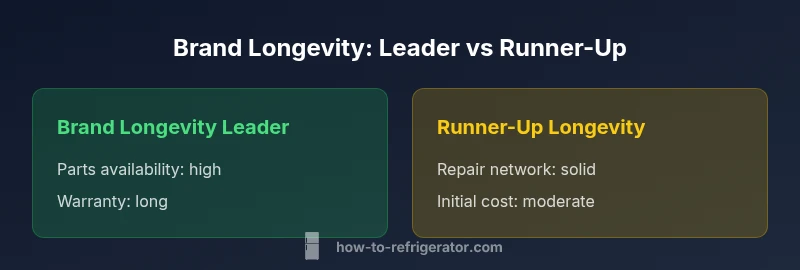
| Feature | Brand Longevity Leader | Runner-Up Longevity |
|---|---|---|
| Repairability / Parts Availability | High: broad service network and genuine parts readily accessible | Moderate: decent support, but parts may require longer lead times |
| Warranty Coverage (core components) | Longer typical coverage on sealed system and compressor | Standard coverage with reasonable terms |
| Condenser/Compressor Quality | Proven, durable compressor with robust coils | Reliable but less proven long-term component durability |
| Energy Efficiency Impact on Longevity | Good efficiency with stable temperatures reduces wear | Solid efficiency but potential trade-offs in long-term maintenance |
| Total Cost of Ownership Signals | Lower lifetime cost when maintenance is proactive and network is strong | Moderate cost with adequate maintenance |
Strengths
- Helps buyers focus on repairability and service access
- Encourages choosing models with strong warranties
- Highlights long-term value beyond upfront price
- Promotes proactive maintenance to extend life
Cons
- May deprioritize features that influence short-term satisfaction
- Long-term focus can be challenging to quantify for consumers
- Availability of parts varies by region
Long-term longevity favors models with strong service networks and durable components
Choose a model with robust repairability and a long warranty. Prioritize maintenance to maximize lifespan and overall value.
FAQ
What factors influence refrigerator longevity the most?
Longevity is driven by the compressor and sealing system, parts availability for repairs, service network strength, and how consistently temperatures are maintained. Durability is also affected by usage patterns and environmental conditions. Look for models with durable construction and strong warranty coverage.
Key longevity factors are the compressor quality, door seals, service network, and how you use and maintain the fridge. Focus on these to choose a durable model.
Do more expensive refrigerators last longer?
Price can correlate with higher-quality components and better warranties, but it is not a guarantee of longer life. Compare engineering, serviceability, and warranty terms rather than relying on cost alone. A mid-priced model with strong support can outperform a premium unit with weak service.
Higher price doesn't always mean longer life; focus on components, service, and warranty instead.
Is energy efficiency related to lifespan?
Energy-efficient models typically operate with lower cooling load, which can reduce wear on the compressor over time. However, efficiency alone does not ensure longevity; overall build quality and maintenance matter just as much.
Energy efficiency helps with running cost but isn't a guarantee of longer life; build quality matters too.
How important is a long warranty for longevity?
A long warranty signals confidence in durability and provides a safety net for major failures. It can be a practical proxy for the expected reliability of core components, especially the sealed system and compressor. Pair warranty length with service network quality for best longevity outcomes.
Long warranties help, especially if the service network is strong and parts are available.
Can maintenance extend a fridge's life?
Yes. Regular cleaning, seal checks, condenser coil maintenance, and balanced loading reduce thermal stress and mechanical wear. Proactive maintenance can meaningfully extend lifespan and improve energy efficiency.
Regular maintenance really extends life and keeps energy use steady.
When should I repair vs replace?
If a repair is minor, affordable, and preserves core functions, repairing is sensible. For frequent failures, high repair costs, or the end of a guaranteed warranty, replacement can offer better long-term value.
Repair if the fix is affordable and the unit is otherwise reliable; replace if repairs pile up.
Top Takeaways
- Prioritize repairability and service networks
- Choose longer warranty coverage when available
- Assess intrinsic durability signals, not just price
- Maintain the fridge regularly to maximize life
- Factor total cost of ownership into the decision