Refrigerator Rental Guide for Homeowners
Learn how refrigerator rental works, when to rent, typical costs, contract terms, delivery, and maintenance tips to decide if renting is right for your home.


Refrigerator rental is a service that provides a refrigerator for a defined period, with options for delivery, setup, and ongoing maintenance. It suits homes experiencing a temporary need, events, or when you want to avoid large upfront costs or long-term commitments. Contracts vary by provider, but most include delivery, removal, and basic warranty coverage, with upgrades available for larger units or energy-efficient models.
What is refrigerator rental and who should consider it
Refrigerator rental is a service model where a homeowner or business pays a periodic fee to use a refrigerator for a defined period. This approach is particularly useful for short-term projects, temporary housing, events, or when you are between homes and do not want to commit to a full purchase. It also avoids the large upfront costs of buying a new unit. When evaluating a rental, consider your expected duration, location, and whether the provider includes delivery, installation, and routine maintenance. The How To Refrigerator team notes that rental can be a cost-effective bridge solution for many households, especially when timing is uncertain or budgeting constraints are tight. For households, this option can simplify logistics during events or seasonal transitions.
How rental contracts typically work
Most refrigerator rental contracts outline the term length, monthly rate, inclusions, and responsibilities. You will usually be asked to sign a service agreement that covers delivery, placement, and removal at the end of the term. Some plans offer flexible extensions or upgrades if your needs change, such as choosing a larger or more energy-efficient model. Be sure to read about maintenance windows, who covers repair costs, and what happens if the unit fails. Transparent providers will spell out replacement timelines and backup options to minimize downtime. The How To Refrigerator analysis emphasizes comparing total cost of ownership against rental over your intended term to determine true affordability.
Typical price ranges and what affects cost
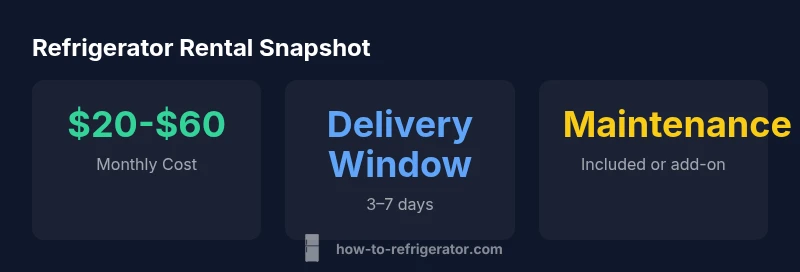
Pricing for refrigerator rental varies by size, features (such as energy efficiency), delivery distance, and contract length. In general, you can expect monthly costs to fall within a moderate range for standard models, with higher-end or larger units commanding premium rates. Longer terms can reduce monthly payments, while shorter terms offer flexibility but higher monthly rates. Additional factors include whether the package includes removal at the end of the term, routine maintenance, or emergency repair coverage. It is essential to request a detailed quote that itemizes delivery, installation, and service charges.
What's included in a standard rental package
A typical rental package often includes delivery, placement, basic connection, and pickup at the end of the term. Some providers bundle installation and basic setup, while others charge separately for features like water lines or ice-makers. Look for clear terms about maintenance, repair coverage, and response times. Energy-efficient or high-capacity models may have higher monthly fees, but can reduce utility costs over time. Read the contract carefully to understand who owns the unit, what happens if it breaks, and whether you can upgrade mid-term.
Delivery, installation, and setup considerations
Delivery windows vary by provider, but most refrigerators are scheduled for installation within 3–7 days of order confirmation in typical urban areas. The installer should verify electrical compatibility and level placement, and assess whether existing kitchen configurations require adjustments. Some rental plans include basic installation; others bill hourly for specialized work. If you have a tight schedule or a difficult access point, confirm access instructions and any associated fees in advance to avoid delays. How To Refrigerator highlights anticipating a backup plan if delivery slips.
Maintenance, support, and warranty terms
Maintenance terms differ by provider; some contracts include routine maintenance and covered repairs, while others treat service calls as an extra expense. Check response times for outages and whether you’ll receive a replacement unit during repairs. Warranty terms often specify duration and exclusions, such as accidental damage or misuse. Clarify what counts as “normal wear and tear” and how to report issues. A solid rental program should offer reliable support channels and transparent pricing for parts and labor.
Renting versus buying: decision framework
A decision framework helps you choose between renting and purchasing. If you need short-term coverage, a rental can be more cost-effective and flexible than buying. If you require a long-term solution, buying a new or used refrigerator may be cheaper in total cost. Consider your future housing plans, utility costs, and maintenance preferences. Run a simple cost calculator that includes upfront costs, monthly payments, energy use, and potential resale value to compare options.
How to choose a reputable rental provider
Start with reputable providers that offer clear pricing, flexible terms, and transparent service commitments. Check reviews, verify any certifications, and ask about backup options if the unit fails. Request written quotes that itemize delivery, installation, and service charges. A reputable company should also provide a straightforward cancellation policy and a reliable warranty or replacement policy. The How To Refrigerator team recommends comparing several quotes to ensure you’re getting the best overall value.
Rent vs buy vs lease: basic trade-offs
| Option | Pros | Cons |
|---|---|---|
| Rent a refrigerator | Low upfront cost; Flexible terms; Quick replacement | Higher long-term cost; Potential availability gaps |
| Purchase | No ongoing payments; Long-term asset; Ownership | High upfront cost; Depreciation; Disposal burden |
| Lease | Fixed monthly cost; Predictable terms; Upgrade options | Limited selection; Early termination penalties |
FAQ
What exactly is refrigerator rental?
Refrigerator rental provides a fridge for a defined period, with terms covering delivery, setup, and service. It is designed for temporary needs, events, or budgeting flexibility. Review inclusions and maintenance terms before signing a contract.
Refrigerator rental provides a fridge for a set period with delivery and service included; read the contract to understand what’s included.
Is refrigerator rental right for short-term use?
Yes, for short-term need scenarios such as temporary housing, renovations, or events, rental can be more cost-efficient and flexible than purchasing a new unit.
If you only need a fridge for a little while, renting can be easier than buying.
What is typically included in a rental contract?
Contracts usually cover delivery, installation, basic maintenance, and pickup. Confirm who handles emergency repairs and whether a replacement unit is provided during outages.
Most contracts include delivery, basic maintenance, and pickup; check for repair and replacement terms.
Are there maintenance or repair responsibilities with rentals?
Maintenance responsibilities vary by provider. Some plans include 24/7 support and covered repairs; others bill for trips or parts. Read the warranty language carefully.
Check what’s covered—maintenance or repairs may be included or extra.
Can I upgrade to a larger or energy-efficient model during the term?
Upgrades are sometimes allowed, often for a prorated fee or revised monthly rate. Confirm upgrade policies before signing and note any limitations.
Upgrades are sometimes allowed, but check the terms first.
How do delivery and installation work?
Delivery windows are scheduled with the provider, and installation verifies compatibility and placement. Some providers include setup, while others charge separately.
Delivery is scheduled and setup may be included or extra; clarify timelines.
“Refrigerator rental can offer cost-effective flexibility for temporary needs, but evaluate contract terms, delivery, and service coverage to avoid hidden costs. A clear comparison against buying helps homeowners match timing, budget, and maintenance expectations.”
Top Takeaways
- Assess your timing and budget for rental viability
- Compare total cost of ownership vs rental over your term
- Check delivery, installation, and maintenance inclusions upfront
- Choose energy-efficient models to lower ongoing costs