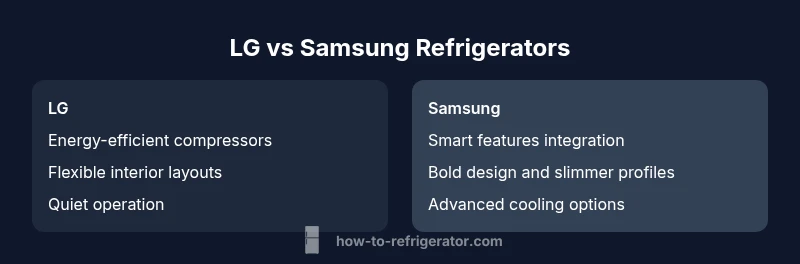
LG vs Samsung Refrigerators: An Objective Comparison
A data-driven, objective comparison of LG and Samsung refrigerators. Learn about energy efficiency, design, features, price, warranty, and real-world performance to decide which brand fits your home.


Refrigerator lg vs samsung shows that LG generally offers stronger energy efficiency and a quieter operation, while Samsung often leads in smart features and innovative styling. For most households, choose LG for reliability and long-term value, or pick Samsung if you prioritize connected features and flexible interior design. Your final pick depends on budget, space, and how you value tech vs efficiency.
Key differences you should care about in the LG vs Samsung fridge debate
When evaluating refrigerator lg vs samsung, homeowners typically weigh energy efficiency, interior layout, and the balance between smart features and upfront cost. The How To Refrigerator team notes that these brands often target similar capacity ranges but approach efficiency and electronics differently. LG often emphasizes quieter operation, smoother compressors, and energy-saving modes in mid-to-high end models. Samsung leans into design flexibility (sliding shelves, tall boy compartments), faster cooling technology, and integrated smart connectivity. For a typical family, the choice comes down to how you value long-term savings versus tech-driven convenience. In this guide, we’ll compare cooling performance, design options, warranty coverage, and total cost of ownership to help you decide which brand aligns with your home and budget.
Design and Build: Size, configuration, and aesthetics
LG and Samsung refrigerators share common configurations such as French door and bottom-freezer layouts, but they diverge in interior design and exterior finishes. LG tends to offer robust shelving systems, diversified door bins, and finishes that mute fingerprints, which helps maintain a clean look in busy kitchens. Samsung often emphasizes sleeker profiles and bold styling, with features like taller doors and distinctive handles that may complement modern, minimalist kitchens. When choosing, consider width, depth, and door swing directions to ensure proper clearance in your kitchen. Also think about material finish, sheen level, and resilience to fingerprints and smudges. While aesthetics matter, durability and ease of cleaning should remain a top priority, especially in households with kids or frequent entertaining.
Cooling technology and energy efficiency
Cooling performance and energy use are central to the LG vs Samsung decision. LG frequently deploys inverter-style compressors and multiple air channels that aim to maintain stable temperatures with quiet operation. Samsung often highlights advanced cooling technologies and precise temperature controls that support rapid chilling and consistent humidity management. In Energy Star contexts, both brands perform well in mid- to high-end models, though real-world efficiency depends on layout, door openings, and user habits. In practice, you’ll notice LG models running quieter and with lower energy surges during peak loads, while Samsung units may offer faster pre-cool times and flexible compartments. For households seeking lower monthly energy costs and predictable cooling, LG often presents a modest edge.
Smart features and connectivity
Smart features are a frequent deciding factor. LG’s smart ecosystem (often branded as ThinQ) emphasizes app-based control, diagnostics, and remote monitoring. Samsung emphasizes its SmartThings platform and integrated connectivity that can pair with other smart home devices. If you rely on voice assistants or want proactive maintenance alerts, both brands have compelling options, though you’ll experience varying levels of app reliability and feature maturity across generations. It’s wise to test the mobile apps in-store, noting how easy it is to adjust temps, monitor energy use, or locate a misplaced ice maker tray. Technology should simplify daily routines, not complicate them.
Reliability and warranty considerations
Reliability remains a crucial factor in choosing between LG and Samsung. In general terms, both brands offer solid long-term value with standard manufacturer warranties that cover parts and labor, plus extended coverage options available through dealers and extended plans. In practice, the perceived reliability often correlates with model generation and care. A consistent maintenance routine—filter replacement, door seal checks, and defrost drain maintenance—helps maximize lifespan for either brand. Consumers should carefully review warranty specifics for their chosen model and local service coverage, since regional terms can vary significantly.
Price, value, and total cost of ownership
Price ranges for mid-range LG refrigerators typically run in a broad spectrum, while Samsung models span a similar band but can command a premium for certain smart features and design choices. Expect upfront costs to reflect capacity, door configuration, and the presence of advanced cooling or connectivity. Long-term value factors include energy consumption, repair frequency, spare parts availability, and resale value. How To Refrigerator Analysis, 2026 suggests that the total cost of ownership for LG often trends toward lower long-term energy costs, while Samsung may offer greater perceived value for tech enthusiasts who plan to upgrade devices regularly.
Real-world use cases: matching households to brands
For apartment living with limited space, compact or slimline configurations from either brand could be ideal, but Samsung’s design quirks (like slimmer door lines) may better suit narrow kitchens. For growing families who require flexible storage, LG’s configurable shelving and larger interior volumes can provide practical advantages. If you value smart home integrations and innovative design, Samsung might be the better pick; if you prioritize quiet operation, energy savings, and straightforward reliability, LG is often the wiser long-term choice. Both brands perform well when properly maintained.
Maintenance, defrost drains, and ice maker considerations
Maintenance steps such as regular filter replacement, cleaning condenser coils, and inspecting door seals are essential regardless of brand. LG’s designs often emphasize accessibility of shelves and bins, which can simplify daily upkeep. Samsung units may feature more active ice maker options and flexible ice storage, which require periodic checks for clogs or mineral buildup in water lines. Keeping up with manufacturer recommendations for defrost drain clearing and ice-maker maintenance helps prevent costly repairs and keeps performance steady over time.
Trade-offs and a practical decision framework
The main trade-off is tech-forward features versus reliability and energy efficiency. If your priority is a quiet, efficient fridge with fewer potential points of failure, LG is typically favorable. If you want cutting-edge design and broader smart home integration, Samsung can deliver more satisfaction with higher upfront features. Your decision should factor in kitchen space, budget, preferred features, and your tolerance for app-based controls versus traditional mechanical controls.
Buying checklist and next steps
Create a shortlist of models that fit your kitchen dimensions and capacity needs. Check the exact energy ratings, interior layouts, and door configurations. Visit a retailer to compare in-hand feel, especially for door swing and handle ergonomics. Read warranty details for your region, and consider future service availability. Finally, use our comparison table and FAQ to confirm which model aligns best with your home, budget, and lifestyle.
Comparison
| Feature | LG Refrigerator | Samsung Refrigerator |
|---|---|---|
| Energy Efficiency | Excellent | Very Good |
| Cooling Performance | Consistent cooling with multiple air channels | Rapid chill with precise temp control |
| Smart Features | LG ThinQ app and diagnostics | SmartThings ecosystem integration |
| Interior Configurability | Flexible shelves and bin options | Innovative compartments and adjustable shelves |
| Design/Finish Options | Fingerprint-resistant options | Sleeker profiles with bold styling |
| Typical Price Range | $1,000-$3,000 | $1,100-$3,200 |
| Warranty Focus | Standard coverage with model variations | Standard coverage with model variations |
| Best For | Energy-conscious families and quiet operation | Tech-forward users who want smart features |
Strengths
- Strong long-term energy efficiency across mid-to-high models
- Reliable cooling performance with straightforward maintenance
- Wide service networks and readily available parts
- Balanced price-to-feature value in many mid-range models
Cons
- Smart features may require newer models or subscriptions
- Some high-end Samsung models command a premium
- Interface and app experiences can vary by generation
LG generally offers better long-term value and energy efficiency; Samsung excels in smart features and design variety
If your priority is lower energy costs and quiet operation with straightforward reliability, LG is the safer bet. If you want cutting-edge features and bold design, Samsung is the better pick. Match your choice to space, budget, and how much you value connectivity versus efficiency.
FAQ
Are LG refrigerators more energy-efficient than Samsung models overall?
In general, LG appliances are known for strong energy efficiency in many mid-range to high-end models. Samsung also offers efficient cooling but may push more features that can affect idle energy use. Check ENERGY STAR ratings for specific models and compare annual energy consumption labels.
LG tends to be more energy-efficient in many models, but always compare the exact ENERGY STAR rating for the model you’re considering.
Which brand has better smart features and connectivity?
Samsung typically emphasizes smart connectivity and ecosystem integration with its SmartThings platform, while LG offers solid smart features through ThinQ. Your experience will depend on app stability and compatibility with other devices in your smart home.
Samsung usually leads in smart features; LG provides strong app-based control as well.
What about warranty coverage for LG vs Samsung refrigerators?
Both brands offer standard warranties on refrigerators, with variations by model and region. Review the exact terms for parts and labor, and consider extended warranty options if you want longer protection.
Warranty terms vary by model and region; check the specifics before buying.
Are there notable differences in interior layouts that affect usability?
LG tends to prioritize flexible shelving and bins for versatile storage, while Samsung emphasizes modular compartments and sometimes taller doors. Both brands offer high-capacity options, so map the layout to your storage needs.
LG focuses on flexible storage; Samsung on modular, designer-friendly interiors.
Is maintenance the same for both brands, or does one require more frequent upkeep?
Maintenance basics—filters, seals, coils, and defrost drains—apply to both brands. Some features, like advanced water filtration or ice systems, may require periodic checks. Follow model-specific maintenance guides to minimize issues.
Maintenance basics are similar for both, but some features need regular checks.
Which brand is better for small apartments?
Both brands offer compact configurations; the choice should hinge on space, door swing, and storage needs. Samsung’s slimmer profiles may suit tight layouts, while LG’s predictable layouts can maximize efficiency.
In small spaces, check doorway clearance and interior layout to choose the best fit for you.
Top Takeaways
- Prioritize energy efficiency for long-term savings
- Choose LG for reliability and straightforward maintenance
- Opt for Samsung if you want the latest smart features and design variety
- Assess your kitchen space before buying to avoid clearance issues