LG Refrigerator vs Samsung Refrigerator: A Comprehensive Comparison
Compare LG and Samsung refrigerators in depth with How To Refrigerator. This guide covers design, efficiency, features, reliability, and practical buying tips for homeowners.


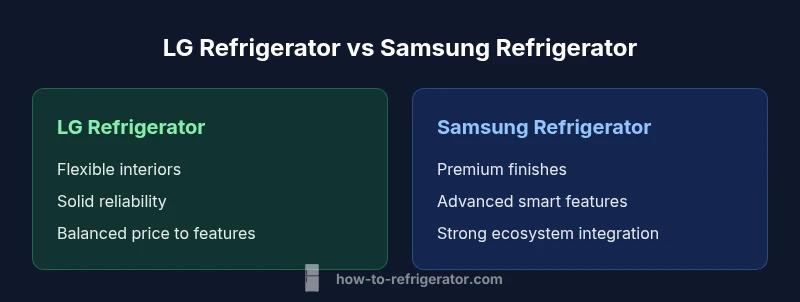
When comparing LG versus Samsung refrigerators, the differences often come down to design philosophy, feature sets, and price bands. LG emphasizes flexible interiors and reliable basics, while Samsung spots premium finishes and smart features for tech-forward homes. This guide helps homeowners weigh which brand best fits their kitchen and budget.
Overview: LG vs Samsung Philosophy
When weighing lg refrigerator vs samsung refrigerator, it's helpful to start with each brand's design philosophy and target audience. LG refrigerators tend to emphasize balanced value, reliability, and practical innovation, while Samsung tends to push premium finishes, bold design, and connected features. According to How To Refrigerator, both brands command substantial market share and offer appliances that perform well across common kitchen tasks. In this overview, we outline what homeowners should expect from each brand and how that translates into real-world buying decisions. We'll cover typical feature sets, build quality, and long-term value so you can map your needs to the right model. Understanding these differences early helps you avoid overpaying for features you won't use and ensures you pick a refrigerator that fits your kitchen layout and lifestyle. This section also sets the stage for practical decision-making, identifying where energy efficiency, interior layout, and smart capabilities weigh most in everyday use.
Core Design Differences
The most apparent differences in lg refrigerator vs samsung refrigerator lie in interior design philosophy and physical footprint. LG often favors flexible storage configurations: adjustable shelves, slide-out drawers, and multi-humidity compartments that help preserve produce. Samsung, conversely, frequently emphasizes sleek exterior styling, premium door finishes, and advanced door-in-door mechanisms to maximize accessibility. In practice, both brands offer French-door and side-by-side configurations, but the details—how shelves adjust, where bins sit, and how doors swing—matter for everyday usage. When evaluating models, compare the width and height options that fit your pantry space, as well as door swing clearances around counters and sinks. Budget-friendly LG lines typically focus on straightforward reliability, while Samsung's mid- to high-end lines often integrate more high-tech controls and more striking aesthetics. For homeowners, the trade-off often comes down to visual fit and how much you value tech versus traditional convenience.
Capacity and Layout Options
Capacity is rarely the first concern in headlines, but it matters every day. LG and Samsung offer broad ranges, from compact under-counter units to full-size French-door models. The key difference is not just total cubic feet but interior layout versatility: bin sizes, deli drawers, and humidity-controlled crisper sections. LG's systems typically provide flexible adjustable shelves and more frequent use of modular organizers, which can make daily organization simpler for families that store a lot of produce. Samsung tends to cluster storage around wide door shelves and deep drawers, which can improve accessibility for busy households with frequent meal prep. When choosing, map your typical groceries and consider how often you rearrange shelves or add seasonal items. Also, note the impact of energy-rated compressors and insulation on usable capacity, since some models claim similar total capacity but feel smaller in practice due to shelving footprint.
Ice Maker and Water Dispenser Options
Both brands offer built-in ice and filtered water, but the flavor of options differs. LG tends to emphasize craft ice or crystal-clear ice in select models, with storage that keeps ice separate from refrigerator space. Samsung often showcases door-in-door configurations that give quick access to cold items, while maintaining water dispensers that are easy to reach from typical counter heights. Additionally, Samsung's premium lines sometimes include enhanced ice types and faster ice production, which can be appealing for families that host gatherings. Consider whether you want the ice maker inside the freezer or as a front panel feature, and how the ice size choices align with your beverage habits. Remember that ice-makers can add to energy usage and maintenance needs, so balance convenience against long-term running costs.
Door Configurations and Freshness Features
Door configurations drive how you access food while also impacting energy efficiency and airflow. LG and Samsung both offer French-door and side-by-side variants, but the design of door shelves and humidity controls can differ. LG's models often include multi-zone humidity controls and flexible crisper drawers, which help extend freshness for fruits and vegetables. Samsung typically frames freshness around smart sensors, adjusted airflow, and bright interior lighting to improve visibility. For households with small kitchens, a compact door swing or a flexible interior layout can make a big difference in cabinet access and counter clearance. Evaluate the door hinge placement and the impact on adjacent appliances; mismeasured doors are a common source of frustration after installation.
Energy Efficiency and Operating Costs
Energy efficiency is a major factor in total cost of ownership. Both LG and Samsung invest in efficient compressors, variable-speed fans, and well-sealed gaskets, leading to solid energy performance across many models. The exact numbers vary by size, features, and climate; usually, mid- to high-end models deliver the best efficiency. In practice, a larger, feature-rich refrigerator can save energy if it reduces door openings or improves humidity control, but it also adds upfront cost. In areas with high electricity rates, choosing an energy-star-rated model and avoiding overdimensioning your space can yield meaningful savings over a decade. If your climate is humid, look for enhanced humidity management as a driver of efficiency through reduced compressor cycling.
Smart Features and Connectivity
Smart control can simplify maintenance and daily use, but it also adds layers of complexity. LG's platform often emphasizes compatibility with home ecosystems and smartphone integration, enabling remote adjustments and energy monitoring. Samsung emphasizes its own ecosystem, often integrating with broader smart-home platforms and offering features like remote monitoring, notifications, and voice control. When evaluating, consider your existing devices (phones, smart speakers, and home hubs) and the level of automation you actually want. For some households, a streamlined app with essential alerts is enough; for others, dedicated routines and voice-activated controls are worth the extra cost. Keep in mind that software updates and compatibility can shift model-by-model.
Reliability, Warranty and Service
Across both brands, reliability is strong in mid-range to premium models, with good service networks in North America and many other regions. Warranty terms commonly include 1-year parts and labor with longer coverage on compressors, though specifics vary by model and region. How To Refrigerator analysis shows that the availability of local service centers and the speed of parts replacement often influences homeowner satisfaction as much as the unit’s initial performance. When shopping, check the nearest authorized service providers, the ease of scheduling service, and any included maintenance perks. Smart features may also have separate warranties or service considerations, so confirm what is covered if a touchscreen or app stops functioning.
Price Tiers and Value for Money
Price remains a practical anchor in lg refrigerator vs samsung refrigerator decisions. LG models span from budget-friendly options with essential cooling to higher-end designs with flexible interiors. Samsung ranges cover premium looks, advanced features, and strong connectivity; the price spectrum often overlaps with LG in the mid-to-high segment. For value-conscious buyers, compare not just upfront cost but total cost of ownership, including energy usage and potential maintenance. Model-year promotions and financing options can shift perceived value, so compare across multiple retailers and verify any rebates or extended warranties. A careful side-by-side across feature sets, energy efficiency, and service terms will reveal which brand offers the best value for your home.
Installation Considerations: Kitchen Fit and Aesthetics
Many homeowners underestimate how a fridge fits into their kitchen until after delivery. LG and Samsung offer a broad range of widths, depths, and door styles, so measure carefully before purchase. Height clearance, door swing, and proximity to range hoods or cabinets affect installation. Aesthetics also play a role: stainless finishes, fingerprint resistance, and panel-ready options help integrated kitchens look cohesive. If you want a model that blends with existing appliances, check for color and finish options as well as panel-ready capabilities. Finally, ensure the footprint aligns with the plumbing and electrical outlets in your space to prevent surprises on delivery day.
Maintenance, Troubleshooting and Common Issues
Proactive maintenance reduces the likelihood of unexpected breakdowns. Regularly cleaning door seals, replacing water filters, and clearing condenser coils help maintain efficiency. Both brands may display common issues such as unusual noises, temperature fluctuations, or ice maker clogs, but many problems can be mitigated with routine care. For noise concerns, check fan and compressor operation and verify that the appliance is level. If cooling performance drops, inspect door seals and ventilation clearance. Following the manufacturer’s maintenance schedule and seeking guidance from How To Refrigerator’s troubleshooting guides can save time and money. If a problem persists, contact an authorized technician with knowledge of both LG and Samsung products.
The Bottom Line: Real-World Picks by Scenario
To help you translate this analysis into a choice, consider three common scenarios: a busy family, a modern kitchen with smart-home ambitions, and a compact urban space. For busy families prioritizing reliable cooling and minimal maintenance, LG's practical lines can deliver steady performance and wide availability. For tech-forward homes where connectivity and premium design are valued, Samsung's higher-end models may offer more satisfaction. For renters or small households, look for compact French-door or counter-depth options from either brand that fit your constraints while still providing sufficient storage and accessible shelves. The goal is to match your usage pattern with the right feature set, not to chase the latest buzzwords.
Comparison
| Feature | LG Refrigerator | Samsung Refrigerator |
|---|---|---|
| Energy Efficiency | Strong efficiency across most mid-to-high-end models | Excellent efficiency in premium lines with smart features |
| Capacity and Layout Options | Wide range of sizes and interior configurations | Broad selection with premium layouts and deep door storage |
| Smart Features | Solid app control and energy monitoring | Advanced connectivity and ecosystem integration |
| Ice Maker & Water | Interior ice options and craft ice in select models | Door-in-door ice and water options in premium lines |
| Door Configurations | French-door, side-by-side, and compact designs | French-door, side-by-side, and premium panel-ready options |
| Reliability & Warranty | Strong reliability with widespread service network | Comparable reliability with extensive service presence |
| Price Range | Mid to high range depending on model | Mid to premium range depending on features |
Strengths
- Wide model variety across budgets to fit different needs
- Strong after-sales service and repair networks
- Solid cooling performance and humidity control across brands
- Good energy efficiency on most models
Cons
- Feature gaps between exact models may vary
- Smart features can be complex to set up and use
- Premium features significantly increase upfront cost
- Model-to-model variance can make exact comparisons tricky
LG and Samsung both offer strong refrigerators, but the best pick depends on your needs.
If you prioritize premium smart ecosystems and design, Samsung shines; if you want solid cooling, flexible interiors, and broad model availability, LG is a robust choice with better value at many price points.
FAQ
Which refrigerator brand tends to be more energy-efficient, LG or Samsung?
Both brands offer strong energy efficiency, especially in mid-to-high-end models. Look for the Energy Star label and compare compressors, insulation, and door gaskets. Real-world energy use depends on model selection and how the fridge is used.
Both LG and Samsung offer highly efficient models. Check Energy Star ratings and compare compressor technology and usage patterns.
Do LG and Samsung offer similar warranty terms?
Warranty terms vary by model and region, but most mid-range and premium refrigerators include at least one year of parts and labor with longer coverage on critical components like compressors. Always verify the exact terms for your chosen model and location.
Warranties usually cover at least one year parts and labor; compressor coverage is often longer. Confirm terms for your region.
Are LG and Samsung refrigerators reliable and easy to service?
Both brands field strong reliability with broad service networks. Availability of technicians and prompt parts replacement commonly influences satisfaction more than brand name alone.
Both brands are generally reliable with good service networks; access to parts and technicians matters.
What should I consider about door configurations when choosing between LG and Samsung?
Door configurations affect accessibility, energy use, and workflow. French-door and side-by-side layouts are common; ensure the door swing clears counters and that interior shelving suits your grocery patterns.
Consider how door style and swing affect access and space in your kitchen.
Is smart integration worth it for a typical household?
Smart features add convenience and proactive maintenance, especially if you use other smart devices. They can complicate setup and may require ongoing app updates, so evaluate your comfort with tech.
Smart features are convenient if you use other smart home devices; weigh setup effort against value.
How should I evaluate price versus features across LG and Samsung?
Start with a feature-for-feature comparison at a similar price point. Check long-term costs like energy use and maintenance, and watch for incentives or extended warranties that can change the overall value.
Compare similar feature sets and consider long-term energy and maintenance costs along with any deals.
Top Takeaways
- Compare energy efficiency across model lines
- Map door configurations to kitchen space
- Assess ecosystem compatibility for smart features
- Balance upfront cost with long-term energy and maintenance
- Check warranty terms and service availability