Largest Capacity Refrigerator: How to Pick the Best Big-Storage Model
Explore how to choose the largest capacity refrigerator for your kitchen, including capacity ranges, layouts, energy considerations, and maintenance tips to maximize storage and efficiency.


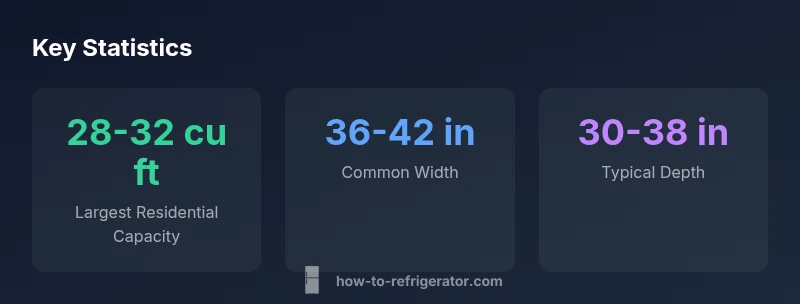
On average, the largest residential refrigerators top out at about 28–32 cubic feet of capacity. French-door with bottom-freezer models typically maximize usable space, followed by counter-depth designs that fit tighter kitchens. When choosing, evaluate interior layout, door swing, and installation clearance in addition to external dimensions and energy efficiency. Size should align with family size, grocery habits, and your available space to avoid overcapacity or wasted energy.
What counts as the largest capacity refrigerator?
When homeowners seek the largest capacity refrigerator, they typically think in terms of total interior space measured in cubic feet, not just exterior size. In real kitchens, the usable storage depends on interior layout, shelf adjustability, door storage, and how well the unit fits your cabinet footprint. According to How To Refrigerator, the largest residential models generally hover in the 28–32 cubic feet range, with some configurations edging up to 34 cu ft in premium lines. The practical limit often comes from installation space, air flow, and energy efficiency requirements. For families that shop weekly and store bulk items, capacity is valuable, but it must be balanced against the footprint and the kitchen’s workflow. Size should align with your grocery habits, apartment constraints, and whether you prefer a more generous freezer or refrigerator compartment.
How capacity translates to storage space
Capacity is more than a single number. It’s about how shelves, bins, and door racks are arranged. A 30 cu ft model can feel spacious if it has flexible shelving, tall bottle storage, and wide pantry drawers. Conversely, two shelves that can’t adapt to tall containers will underutilize even a high cu ft rating. How To Refrigerator’s analysis emphasizes interior geometry: deeper shelves at the back, adjustable dividers, and door racks that maximize bulky items like milk or juice. For practical planning, map your weekly groceries and compare how many gallon jugs, 2-liter bottles, and deli containers you typically store. The UX of the interior—how you move around a full fridge—often matters more than the total cu ft alone.
Configurations that maximize usable space
Large models come in several layouts, each with pros and cons. French-door models with bottom freezers are popular for maximizing refrigerator space and accessible shelves. Counter-depth French-door units fit flush with cabinetry, reducing footprint while still offering generous interior volume. Side-by-side configurations can provide wide shelves for tall items but are sometimes less efficient for freezer space. For the largest capacity, consider a combination of wide doors, deep shelves, and door-in-door features that minimize cold air loss. Remember to compare not just capacity figures, but how each model’s interior geometry fits your family’s shopping and cooking habits.
Measuring for fit: dimensions matter
Before buying the largest capacity refrigerator, measure the space carefully. Start with width (allow for clearance on each side), height (note any ceiling or trim constraints), and depth (including handles). Don’t forget to account for door swing and the space required for air circulation behind the unit. Check the installation clearance from the back of the fridge to the wall and ensure you can access water lines or ice maker without bending or re-routing plumbing. If your kitchen has tight corridors or a tight doorway, you may need a counter-depth or shallower model to avoid delivery issues. Always verify the actual cabinet opening dimensions and door clearance in the manufacturer’s spec sheet.
Energy efficiency and performance in large models
Higher capacity does not automatically imply higher energy bills. Efficiency depends on insulation, compressor design, and feature set like adaptive defrost and variable-speed fans. Energy Star-rated large-capacity models can offer a favorable balance between storage and consumption, especially when paired with regular maintenance. How To Refrigerator notes that big units with inefficient insulation can waste energy through door leaks or poorly sealed gaskets. Look for models with LED lighting, smart sensors, and well-engineered door seals. If you routinely stock bulk items, prioritize a model with efficient zones and smart temperature controls to minimize energy use while keeping produce and frozen goods in peak condition.
Practical tips to optimize space and organization
- Use full-width shelves to accommodate tall bottles and containers.
- Install adjustable dividers to create flexible zones for meats, dairy, and produce.
- Use clear bins for visibility and stackable organizers for vertical space.
- Label shelves and use consistent storage containers to reduce waste and over-purchasing.
- Regularly audit your fridge contents and rotate items to prevent spoilage and reduce energy spikes associated with overstuffing.
Budgeting and long-term costs of big fridges
Large-capacity fridges span a wide price range depending on finish, features, and brand. While higher capacity is appealing, it’s important to balance upfront cost with energy efficiency and reliability. How To Refrigerator recommends prioritizing core features—reliable cooling, good door seals, and interior layout—over premium touches that don’t add practical value for your household. Expect that installation and delivery may also influence total cost. When planning, consider warranties and service options, as these can affect long-term ownership costs more than initial price alone.
Real-world maintenance for large capacity fridges
To keep a large fridge running efficiently, focus on routine maintenance:
- Clean condenser coils every 6–12 months to maintain airflow.
- Inspect door seals and replace worn gaskets to prevent cold air leaks.
- Monitor temperature settings and adjust for seasonal changes.
- Organize shelves to allow airflow around all foods.
- Schedule annual service checks for refrigerant and compressor health. A well-maintained unit preserves capacity and reduces costly repairs.
Final checks before purchase
Before committing to the largest capacity refrigerator, do a final reality check:
- Confirm interior layout matches your storage needs (produce, meats, beverages, and freezer items).
- Verify installation clearances, including door swing and water line access.
- Compare Energy Star ratings and expected annual operating costs.
- Check warranty coverage and service options in your region.
- Consider resale value and compatibility with your kitchen’s design to ensure the investment pays off in everyday use.
Residential large-capacity refrigerator configurations
| Model Type | Typical Capacity (cu ft) | Dimensions (W × D × H) | Door Configuration |
|---|---|---|---|
| French-door w/ bottom freezer | 28-32 cu ft | 36-42 in W × 30-38 in D × 68-70 in H | French doors + bottom freezer |
| Counter-depth French-door | 25-28 cu ft | 36-40 in W × 28-32 in D × 68-70 in H | French doors (counter-depth) |
| Side-by-side | 22-30 cu ft | 34-40 in W × 30-34 in D × 66-70 in H | Side-by-side |
FAQ
What qualifies as the largest capacity for a residential refrigerator?
For most homes, the largest residential models range around 28–32 cubic feet, with some premium variants reaching up to 34 cu ft. The key is how the interior is organized rather than the total cu ft alone. Consider your family’s groceries and storage patterns when weighing these numbers.
Largest residential models are typically in the 28–32 cubic feet range; focus on interior layout and fit for your family.
Do bigger fridges always use more energy?
Not always. Energy use depends on insulation, compressor design, and how efficiently the interior is organized. An Energy Star-rated, larger model with good seals can outperform a smaller, poorly insulated unit.
Bigger doesn’t necessarily mean more energy if the fridge is efficient and well-sealed.
What measurements should I prioritize when planning space?
Prioritize width, height, depth, plus clearance for door swing and ventilation. Don’t forget space for water lines and surrounding cabinetry. Always verify model-specific installation requirements before purchasing.
Measure your space for width, height, depth, and door clearance before buying.
Should a large fridge be chosen based on family size alone?
No. Consider grocery habits, meal prep, and storage patterns. A family that buys bulk may benefit more from capacity, while a smaller household may gain little from extra cu ft.
Think about how you shop and cook, not just how many people you have.
What maintenance steps help preserve capacity?
Keep coils clean, seals tight, and temperatures stable. Regular audits of contents prevent overstuffing and ensure airflow remains unobstructed inside.
Keep the coils clean and seals tight for best performance.
“A high-capacity model delivers storage, but only if the interior geometry, seals, and energy efficiency work in harmony with your kitchen workflow.”
Top Takeaways
- Choose interior layout first, then total cu ft.
- French-door layouts maximize usable space.
- Measure for fit; door swing matters as much as capacity.
- Energy efficiency matters more with large volumes.
- Plan maintenance to protect long-term performance.