How Much Is a Samsung Refrigerator? A 2026 Pricing Guide
Explore prices for Samsung refrigerators in 2026, with model-type ranges, extra costs, and budgeting tips. Learn how to compare options, catch deals, and plan for delivery, warranty, and energy savings.


Why Price Varies Across Samsung Refrigerator Lineups
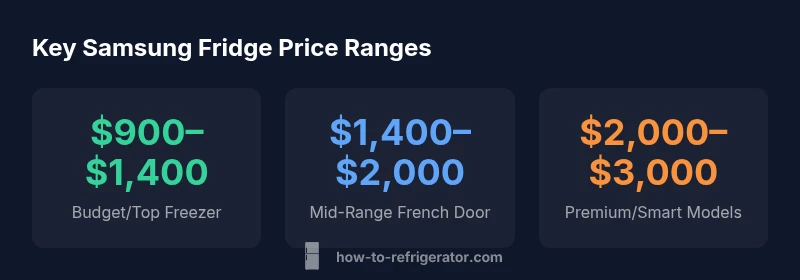
According to How To Refrigerator, price is not a single number but a spectrum determined by model family, capacity, and technology. The question how much is a samsung refrigerator often yields different answers depending on size, doors, and features. Lower-cost Samsung fridges focus on essential cooling and basic energy efficiency, while premium French-door or smart-enabled models incorporate advanced ice systems, Wi‑Fi connectivity, and extended warranties. In 2026, buyers should expect price bands that reflect these tiers and the cost of installation and hauling. Regional promotions and retailer discounts can also move a given model into a higher or lower price tier, so shoppers should check multiple sources before purchasing. The big takeaway is that you’re choosing a value tier, not a single price.
This article uses broad ranges to help you budget realistically, then narrows the focus to model types and features that most homeowners care about.
Price Ranges by Model Type
Samsung refrigerators come in several door configurations, and each tends to sit in a different price band. A general guide by model type can help you bracket your budget before you shop:
- French Door (Counter-Depth): typical price range around $2,000–$3,000, with premium finishes and advanced ice systems that justify higher upfront costs.
- French Door (Standard Width): commonly $1,400–$2,700, offering large capacity, high energy efficiency, and smart features at mid-to-upper-mid price points.
- Side-by-Side: often $1,200–$2,400, valued for water/ice dispensers and flexible shelving, sometimes with fewer premium finishes.
- Top Freezer: usually $900–$1,400, presenting a budget-friendly option with solid reliability and compact footprints.
- Bottom Freezer: roughly $1,300–$2,200, balancing capacity and access with a mid-range price tag.
Notes: regional promotions, retailer discounts, and model year changes can shift these bands. When you see a price edge, check what features are included (ice maker, smart controls, door-in-door) to compare value rather than price alone.
Additional Costs to Consider (Delivery, Install, Warranties)
The sticker price is only part of the total. Delivery, installation, water line kits, and hauling away an old unit can add to the bottom line. Expect delivery charges that vary by region and service level, sometimes bundled with setup. Installation complexity—especially for built-in or counter-depth models—can push costs higher. Warranties vary by retailer and model; extended warranty options are common but add to upfront cost. When budgeting, include a cushion for these extras, typically 5–15% of the base price, depending on your locale and chosen services. Financing options may also influence your out-of-pocket today versus over time.
How to Compare Prices Without Sacrificing Quality
To avoid buyer’s remorse, use a structured comparison approach:
- List your must-have features (ice maker, water dispenser, smart controls, energy efficiency).
- Filter by model type to keep apples-to-apples comparisons.
- Check labor and delivery charges alongside the sticker price.
- Compare warranty terms and service coverage across retailers.
- Look for seasonal promotions and bundled offers (delivery + installation, or extended warranties).
- Read user reviews focused on reliability and after-sales support, not just upfront price.
By focusing on total cost of ownership rather than the lowest price, you get better long-term value. This means considering energy usage, potential repair costs, and the cost of replacing accessories like water filters over time.
Where to Find Deals and Timing Trends in 2026
Deal timing can significantly affect the total you pay for a Samsung fridge. Major holidays and end-of-quarter promotions often feature price cuts or bundled services. Shopping during off-peak seasons—when demand is lower and retailers are eager to clear inventory—can yield additional savings. Signing up for retailer newsletters and price-tracking alerts helps you catch drops on your preferred model and configuration. If you have flexibility on model year, last year’s stock may come with meaningful discounts, especially as new models launch. For energy-conscious buyers, identify models with Energy Star certification, which can translate into long-term operating savings that offset a higher upfront price.
What Affects Your Total Cost: Energy Star, Features, Size
Your total cost isn’t just the price tag. Consider:
- Energy efficiency: Energy Star-rated models may cost more upfront but save on electricity over time.
- Features: Water/ice dispensers, smart connectivity, camera displays, and gourmet ice options raise price but can add convenience.
- Capacity and footprint: Larger capacities or counter-depth models command higher prices; if space and needs align, a smaller footprint may be more economical.
- Finish and design: Stainless steel vs. paneled finishes can shift the price a bit depending on brand finishes and retailer.
- Availability: Local stock and regional demand influence price and delivery costs.
Evaluating these factors helps you determine when a higher upfront price pays back through energy savings, maintenance costs, and convenience.
Financing, Warranties, and Return Policies
If you prefer to spread payments, financing options are often available through retailers or lenders. Always read warranty terms carefully—coverage for the compressor, sealed system, and parts can vary—so you’re protected beyond the manufacturer’s basics. Return policies differ by retailer; know the window for returns, restocking fees, and whether installation charges are refundable. In many cases, a longer warranty or service plan can offer peace of mind when buying a larger appliance like a Samsung refrigerator. Compare these terms across at least two retailers to ensure you’re getting a fair deal.
Quick Budget Calculator Example
Use a simple model to estimate total cost:
- Base price (mid-range French Door): $2,000
- Delivery and installation: $120–$180
- Water line kit (if needed): $20–$60
- Taxes (regional): 6%–9%
- Optional extended warranty: $120–$250
Example calculation (mid-range, average region, no promotions): base price $2,000 + $150 delivery + $40 water line + 8% tax on base price ($160) + $185 warranty = $2,535 total. In practice, your total will vary with local tax rates, chosen installation options, and any ongoing promos. Always run a personalized quote with your preferred retailer to lock in precise numbers.
Practical Next Steps for Your Budget
- Define your must-haves and nice-to-haves before browsing.
- Check multiple retailers for price matching and bundled offers.
- Schedule delivery and installation when promotions are ending to maximize savings.
- Consider an Energy Star model if long-term operating costs matter to you.
- Use the total-cost-of-ownership approach, not just the upfront price, to decide.