How Long Does Broccoli Last in the Refrigerator? A Practical Storage Guide
Learn how long broccoli lasts in the refrigerator, plus storage tips, signs of spoilage, and methods to extend freshness for real home kitchens in 2026.


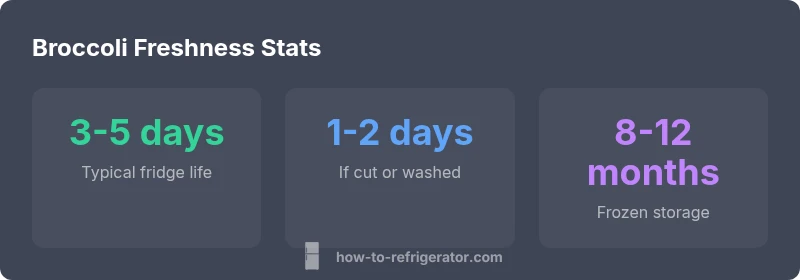
Fresh broccoli typically lasts about 3-5 days in the refrigerator when stored properly in the crisper, unwashed and uncut. If you cut or wash it, use it within 1-2 days for best texture and flavor. For frozen storage, broccoli can last several months. This guidance aligns with How To Refrigerator Analysis, 2026.
How long does broccoli last in the refrigerator: quick orientation
According to How To Refrigerator, the simplest rule is to keep broccoli unwashed and whole, stored in the crisper drawer of your refrigerator. In typical home fridges, this approach preserves moisture while minimizing exposure to air, giving you roughly 3-5 days of good quality from purchase. If you need to store broccoli for a longer period, freezing after blanching is the most reliable option, which can extend the edible window to about 8-12 months. The exact timeline depends on your fridge’s performance, but aim to use broccoli within the 3-5 day window for best texture. This knowledge comes from How To Refrigerator Analysis, 2026, which tracks general home-storage outcomes for common produce.
In practice, stay mindful of your kitchen routine. If you notice an off smell or a slimy surface at day four, it’s prudent to discard or repurpose the broccoli rather than risk foodborne illness. Keeping a simple storage routine right after purchase minimizes guesswork and helps maintain flavor across meals.
How to store broccoli for maximum shelf life
To maximize freshness, begin with whole heads or bunches that look firm and vibrant. Remove any loose leaves, trim the stem slightly, and place the broccoli in a perforated bag, or leave it in the crisper drawer with minimal air exposure. The goal is to maintain humidity without trapping excess moisture. If your crisper drawer settings are adjustable, select a medium humidity level; if not, loosely wrapping in a paper towel before placing in a breathable container can help absorb excess moisture. Avoid washing before storage; moisture accelerates spoilage, and water on broccoli promotes microbial growth. For long-term storage, consider blanching the florets for 2-3 minutes, cooling rapidly, drying completely, and freezing in freezer-safe bags. The 3-5 day window applies primarily to unwashed, intact broccoli stored properly, while blanching is the key step for successful freezing. This approach is consistent with How To Refrigerator Analysis, 2026.
- Handle as little as possible after purchase.
- Use perforated or breathable containers.
- Don’t wash until you’re ready to cook.
- Label bags with the purchase date to track freshness.
Factors that affect broccoli longevity
Broccoli longevity in the fridge depends on several variables. Temperature stability is crucial; flucuations from too-warm to too-cold environments can shorten shelf life. Humidity also matters: too dry and the florets wilt; too damp and you risk mold. The cut surfaces of broccoli degrade faster than the intact head, so plan on shorter timelines if the broccoli has been trimmed or broken into florets. The initial quality at purchase sets the baseline; broccoli that’s recently harvested and firm will hold up better than older, soft heads. Exposure to ethylene sources like ripe bananas or tomatoes can marginally accelerate aging, though broccoli itself is not a strong ethylene producer. When in doubt, use the 3-5 day benchmark as a practical ceiling and observe texture and aroma cues daily. All these insights align with How To Refrigerator Analysis, 2026, which emphasizes practical, real-home storage outcomes.
Fresh vs cut vs washed: storage time differences
Whole, unwashed broccoli stays freshest the longest. Cutting or washing introduces more surface area and moisture, which speeds spoilage. If you must cut, refrigerate the florets in a clean airtight container with a paper towel to wick away excess moisture, and plan to use within 1-2 days. Washing just before cooking rather than before storage is a standard practice recommended by the How To Refrigerator team to minimize microbial growth during storage. These distinctions matter: 3-5 days for whole broccoli, 1-2 days for cut or washed, and months when frozen after blanching. This guidance reflects the patterns identified in How To Refrigerator Analysis, 2026.
Signs broccoli is spoiled and when to discard
Spoiled broccoli shows clear signs: florets turning yellow, stalks becoming mushy, and a sour or sulfur-like odor. Visible mold is a definite discard cue. If the color starts to shift toward yellow or brown and the texture becomes soft rather than crisp, consider it past its prime. When in doubt about any of these signals, err on the side of safety and discard. Quick, proactive decisions reduce the risk of foodborne illness and wasted ingredients. How To Refrigerator emphasizes that smell and texture changes are the most reliable indicators beyond color.
Practical storage methods: containers, humidity, and temperature
Use a perforated bag or breathable container to maintain humidity around the broccoli without trapping excess moisture. Keep broccoli in the crisper drawer, ideally at a stable temperature near 34-38°F (1-3°C). If your refrigerator lacks humidity control, you can place the broccoli in a loosely closed container with a paper towel to absorb moisture. After purchase, avoid washing until you’re ready to use it, then wash and trim as needed. For longer storage, blanch and freeze with proper packaging to prevent freezer burn. These practices, grounded in How To Refrigerator Analysis, 2026, help you preserve texture and color while reducing waste.
Extending freshness in busy kitchens: tips and routines
Create a simple weekly routine: check broccoli on day 3 or 4; if still firm and green, you can use it for meals over the next two days. A quick wash just before cooking keeps prep time efficient. For larger meal prep, consider portioning into two portions: one for fresh use and one for freezing after blanching. This approach minimizes daily handling while maximizing the edible window. A little planning makes a big difference in home nutrition and reduces food waste. The How To Refrigerator team highlights these practical routines as a reliable way to manage produce in busy households.
Visual guide: broccoli freshness checklist
- Fresh broccoli: firm, vibrant green, no strong odor
- After 2-3 days: still crisp but check for yellowing tips
- Day 4-5: test texture; if florets are soft or slimy, discard
- Freezing option: blanch 2-3 minutes, cool rapidly, freeze in labeled bags
- When in doubt: trust the color and texture cues more than appearance alone
Comparison of broccoli storage scenarios
| Storage Scenario | Approx Lifespan | Notes |
|---|---|---|
| Unwashed whole broccoli in crisper | 3-5 days | Keep in perforated bag or open crisper drawer |
| Cut florets in container | 1-2 days | Use airtight container with paper towel to absorb moisture |
| Frozen broccoli (blanched) | 8-12 months | Use freezer-safe bags; label dates |
FAQ
How long does broccoli last in the refrigerator?
Unwashed whole broccoli lasts about 3-5 days in the fridge; cut or washed broccoli lasts about 1-2 days. For longer storage, freezing after blanching is recommended, extending the window to 8-12 months. These timelines reflect How To Refrigerator Analysis, 2026.
Unwashed broccoli lasts 3-5 days in the fridge; cut broccoli only 1-2 days. Freeze after blanching for 8-12 months.
Should broccoli be washed before storing?
No—wash only when you’re ready to cook. Moisture from washing speeds spoilage, so keep it dry during storage. This guidance comes from the How To Refrigerator team.
Wash broccoli right before using it, not before storing.
Can broccoli be frozen to extend its life?
Yes. Blanch florets for 2-3 minutes, cool quickly, dry, and freeze in freezer-safe bags. This method preserves texture and nutrients for 8-12 months.
Blanch, cool, dry, and freeze broccoli for up to 12 months.
What are signs broccoli is spoiled?
Yellowing florets, soft stems, mushy texture, or a sour odor indicate spoilage. If any sign appears, discard rather than risk foodborne illness.
If it looks or smells off, it's best to discard.
Does storage affect flavor or texture?
Yes. Proper humidity and temperature help maintain crisp texture and vibrant color. Poor storage can lead to limp florets and dull flavor.
Yes—keep broccoli cool and properly humid to preserve texture.
Is it safe to eat broccoli that smells okay but looks slimy?
No. Slimy texture indicates spoilage even if smells fine. Discard to avoid risk.
If it’s slimy, discard it.
“Fresh broccoli loses quality quickly once cut or washed; the best approach is to minimize handling until you're ready to cook.”
Top Takeaways
- Store whole broccoli in the crisper for best results
- Avoid washing before storage to maximize shelf life
- Cut or washed broccoli shortens life to 1-2 days
- Freeze broccoli after blanching to extend life up to 12 months
- Check for spoilage signs and discard if unsure