Discount Refrigerators: Find the Best Deals Without Compromising Quality
Learn how to spot discount refrigerators, compare energy efficiency, verify warranties, and avoid scams. A homeowner-focused guide to getting reliable value on discounted fridges in 2026 for smart buying.


By the end of this guide, you will confidently identify, assess, and buy discount refrigerators without sacrificing reliability. You’ll learn how to compare energy efficiency, verify warranty terms, and avoid common scams. Before you start, know your budget, required size, and preferred features, then use checks and timelines to lock in a safe, value-packed purchase.
What qualifies as discount refrigerators?
In retail and online marketplaces, discount refrigerators come in several forms and understanding each helps you compare value rather than just price. The term discount usually refers to models offered at a lower price than the current standard lineup for reasons such as overstock, end-of-series, minor cosmetic blemishes, open-box sales, or factory seconds. In most cases, these units are full-function refrigerators that meet standard safety and performance requirements; the difference is in the price and in the available warranty length. When evaluating discount refrigerators, homeowners should look for several indicators of value: correct size for the space, energy efficiency, reliable cooling performance, and clear information about delivery, installation, and after-sales support. Beware of ad copy that promises unusually low prices without transparent conditions. It is worth asking for the exact model number and the energy guide label to verify whether the unit meets your needs. Remember that discount does not always mean a bargain—sometimes a deep discount is tied to older compressor technology or limited service availability. By focusing on core requirements and verifying key specifications, you can select discount refrigerators that still deliver safe, dependable cooling for your home. According to How To Refrigerator, discount refrigerators can still offer reliable cooling when you focus on essential specs and warranty terms.
Understanding discount terms and models
Discounted refrigerators come in several recognizable categories. Open box or floor model units are sold at reduced prices because they were displayed in-store or briefly used. Refurbished or rebuilt units are repaired to factory standards, then sold at a discount. Scratch-and-dent models carry cosmetic flaws but retain full cooling systems and warranties, though some retailers limit return windows. Discontinued models are available while inventory lasts and can offer substantial savings, especially for buyers who know the exact dimensions they need. Factory seconds are produced when a tiny imperfection exists and are often sold at lower prices with some warranty adjustments. When you see a discount label, always verify the exact model number, confirm the compressor type, and check the rated energy consumption. Open communication with the seller about the unit’s history is essential to avoid surprises. How To Refrigerator analysis shows that it is possible to find discount refrigerators with energy efficiency close to standard models, especially when shopping with reputable retailers in 2026.
Energy efficiency and performance to compare
The most important performance criteria remain consistent across discount refrigerators. Look for an energy efficiency rating and an Energy Star label where applicable, as these indicate lower annual operating costs and better overall efficiency. Compare the interior layout, shelf adjustability, and door seals, which affect temperature stability and frost management. Frost-free or automatic defrost features reduce freezer maintenance, but they can add cost; weigh this against long-term energy savings. Check the compressor type; inverter/compressor-driven units often offer smoother temperature control and quieter operation, which adds value beyond the initial discount. Capacity should align with your household needs—too small a unit will run constantly and waste energy; too large will not be cost-effective in a smaller kitchen. Finally, assess long-term reliability by reading warranty terms and service options that accompany discounted models.
Where to find discount refrigerators
Discount refrigerators show up in multiple venues. Brick-and-mortar retailers often clear older stock at end-of-series events, while online marketplaces may feature open-box, refurbished, or refurbished-like inventory. Manufacturer outlets and factory-direct sites can offer slight overstock discounts with verified warranties. Local classifieds or community marketplaces can also present opportunities, but they require thorough inspection and a safety check. When shopping, balance the allure of a low sticker price with practical considerations like delivery feasibility, fit through doorways, and service availability in your area. To minimize risk, stick to retailers with clear return policies and transparent product histories.
Warranty, service, and return policies for discounted units
Discounted refrigerators frequently come with modified warranty terms compared to brand-new units. Some offers include the original manufacturer warranty with limited duration or restricted coverage, while others provide a retailer-specific warranty or a short return window. Always confirm what is covered, for how long, and whether in-home service is included or assumed to be the buyer’s responsibility. If a unit is refurbished or open-box, request written documentation detailing any repairs performed and the exact components replaced. Ensure you understand the process for getting service or parts if something fails; a lack of service options defeats the purpose of saving money. It is worth budgeting for potential delivery issues or installation fees that may not be included in the sale price. How To Refrigerator analysis shows that understanding warranty limitations is essential when purchasing discount refrigerators, especially in 2026.
How to inspect online listings and in-store units
Start with a careful visual inspection. Check for dents, scratches, and any seal gaps around the doors. Open and close doors to test the seal and ensure they latch securely. Inspect shelves, crisper drawers, and racks for cracks or warping. Ask for the condenser coils to be accessible for a quick external check and listen for unusual noises when the unit runs. In online listings, compare the product’s model number with the official specification sheet and energy guide. If possible, request a video walkthrough or live demo; this can reveal hidden defects that photos miss. For in-store visits, bring a tape measure and a flashlight to verify that exterior dimensions and interior capacity meet your space and storage needs.
Testing cooling performance and setup after purchase
If you can test the unit before taking it home, observe the temperature indicators and listen for steady operation. When in doubt, set the fresh food compartment to about 37°F (3°C) and the freezer to 0°F (-18°C) and allow the unit to stabilize for 24–48 hours before filling it completely. Use an appliance thermometer to verify interior temperatures at multiple shelves and door bins. Keep door openings to a minimum during the initial run-in period to prevent temperature fluctuations from skewing results. After installation, monitor for consistent performance and verify that the unit maintains the set temperatures, especially during peak usage times. If you notice persistent temperature drift, contact the retailer or manufacturer promptly.
Budgeting for delivery, installation, and extra accessories
Discount refrigerators may require delivery, installation, and sometimes basic leveling or door-removal preparation. Some retailers include basic delivery, while others charge separate fees for haul-away, installation, or angle-adjusted positioning to fit through doorways. Plan for potential accessories such as anti-tip brackets, anti-vibration pads, or extra shelving that may be needed to maximize storage space. Consider the total cost of ownership, including possible energy savings from a newer, higher-efficiency model, which can offset the upfront discount over time. If your space has tight clearances or irregular door widths, measure carefully and confirm with the seller that the unit will fit without modification.
Common pitfalls and red flags to avoid
Avoid discount refrigerators sold with no clear model number, missing serial numbers, or vague warranty terms. Extraordinary low prices can indicate hidden issues such as cosmetic damage masked by photos, recycled components, or limited service availability. Be wary of online sellers who push very short return windows or refuse to provide energy data and compliance certificates. Also be cautious of refurbished units that aren’t clearly labeled as such or where the refurbishing work isn’t documented. Always ask for a written return policy, a copy of the energy guide label, and a straightforward warranty statement before completing the purchase. If something seems too good to be true, it probably is, and taking extra time to verify can save money and frustration later. For added confidence, compare several listings and read customer reviews to spot patterns of problems.
Tools & Materials
- Screwdriver set (Philips #2 and flathead)(Essential for securing panels and brackets on the unit during inspection or at installation.)
- Measuring tape(At least 12 feet (3.6 meters) to confirm clearance and fit through doorways.)
- Pencil/marker(For marking measurements and spaces in your kitchen.)
- Digital appliance thermometer(Probe thermometer to verify interior temps in both compartments.)
- Notebook and pen(Record model numbers, measurements, and notes from listings.)
- Flashlight(Bright light for peering into corners and behind shelves.)
- Work gloves(Protection when handling cold metal and sharp edges.)
Steps
Estimated time: 2-6 hours
- 1
Define needs and budget
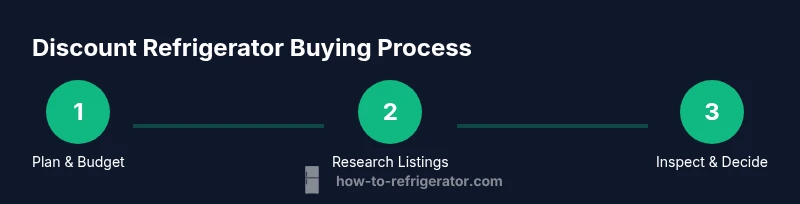
Clarify the fridge size, capacity, and layout your kitchen requires. Write a target budget range and list must have features (like adjustable shelves or a frost-free freezer). This upfront planning prevents impulse buys and makes price comparisons meaningful. Pro tip: set a hard maximum price and stick to it, regardless of a discount label.
Tip: Document your space measurements and feature priorities before browsing. - 2
Research discount refrigerators
Search across retailers for discount refrigerators that match your size and energy criteria. Gather model numbers, energy guides, and warranty terms to compare apples-to-apples. If a listing lacks energy data, treat it as an immediate red flag and request it before proceeding.
Tip: Prefer models with clear energy consumption data and a visible serial number. - 3
Inspect listings or units
In-store, examine doors for misalignment, seals for leaks, and shelves for cracks. Online, compare product photos with the energy guide and verify the model number against manufacturer specs. Request a video or in-store demo if available.
Tip: Ask to see the back of the unit or access panels to check coils and general condition. - 4
Check warranty and delivery terms
Read the exact warranty length and what it covers. Confirm who bears delivery and installation costs and whether haul-away is included. If the unit is refurbished or open-box, request a written refurbishment report and any replaced parts.
Tip: Document warranty details and saving receipts for future claims. - 5
Test performance when possible
If you can power the unit, monitor temperatures for 24–48 hours and observe stability during door openings. Use an appliance thermometer to confirm temperatures, and verify cooling performance across shelves and drawers.
Tip: Record temperatures at multiple points to detect uneven cooling early. - 6
Finalize purchase and plan installation
Choose the listing with the best balance of price, condition, warranty, and delivery. Schedule delivery with clear access instructions, ensure your space can accommodate the unit, and prepare for installation or professional service if required.
Tip: Have measurements ready for the delivery team to prevent entry delays.
FAQ
Are discount refrigerators reliable?
Discount refrigerators can be reliable when purchased from reputable retailers and inspected thoroughly. Verify the model number, energy guide, and warranty terms before buying. If a traditional warranty is offered and the unit shows no obvious defects, it can perform like a standard model.
Discount refrigerators can be reliable if you buy from reputable sellers and verify the model, energy data, and warranty terms.
What is the difference between open-box and refurbished appliances?
Open-box items are typically unused or lightly used with returned packaging, while refurbished units have undergone professional service to restore function. Refurbished items may carry shorter warranties. Always request a refurbishment report and confirm the supplier’s warranty.
Open-box is usually light use with a return; refurbished means it has been serviced and may have limited warranty.
Should I avoid discount refrigerators with damaged packaging?
Damaged packaging can indicate mishandling, but not always a fault with the unit. Inspect the door seals, interior, and exterior for damage regardless of the packaging. If the item is otherwise solid and has a clear warranty, it may still be a good value.
Damaged packaging deserves inspection; check the unit itself for hidden issues and confirm warranty terms.
How do warranties work on discounted units?
Warranty terms on discounted units vary. Some carry manufacturer warranties with extensions, others offer retailer-only coverage, and some may be shortened. Always confirm what is covered, duration, and whether in-home service is included.
Warranty varies; verify coverage and duration before purchase.
Is it safe to buy discount refrigerators online?
Online shopping can be safe when you buy from reputable retailers with clear return policies and visible model numbers. Read the listing carefully, compare with official specs, and request proof of energy data and warranty. If in doubt, contact support before purchase.
Online can be safe with reputable sellers and clear specs; confirm energy data and warranty first.
Watch Video
Top Takeaways
- Define needs before shopping
- Verify energy efficiency and warranty
- Evaluate delivery and installation costs
- Avoid red flags and scams
- Shop across retailers for true value