Counter Depth Refrigerator vs Standard: Which Fits Your Kitchen in 2026?
A detailed comparison of counter depth versus standard-depth refrigerators, covering footprint, capacity, costs, design fit, and practical tips to help homeowners choose the best option for their kitchen in 2026.


For most kitchens, counter depth refrigerators offer a sleek built-in look but trade some usable capacity and a higher price for premium aesthetics. Standard-depth models maximize interior space and generally cost less, with easier availability. If you want a flush, premium design and have a smaller footprint, counter depth is appealing; if you prioritize capacity and value, choose standard depth.
What is a counter depth refrigerator?
A counter depth refrigerator is designed to sit nearly flush with your cabinetry, creating a sleek, built-in appearance that blends with surrounding furniture. These units are typically shallower than standard-depth models, which means they don’t protrude far into your kitchen. The reduced depth helps preserve sightlines in compact layouts and can contribute to a more cohesive, high-end look. However, that shallower depth often comes with trade-offs in usable interior space, especially in the fridge compartment. If you’re planning a kitchen renovation or want a seamless, professional finish, counter depth refrigerators are a strong aesthetic choice. How To Refrigerator notes that the visual impact of a counter depth model is one of its primary selling points, especially in open-concept layouts where the refrigerator is a visible design feature. Still, you should evaluate interior layout and door swing clearance to ensure practical usability in real kitchens.
What is a standard-depth refrigerator?
Standard-depth refrigerators extend deeper than countertop height, typically aligning with a traditional cabinet height and depth. These units usually offer more usable interior space and a wider selection of configurations and features. The extra depth can enable larger crisper drawers and more freezer capacity in some models, which makes them a practical option for families or households that stock large amounts of groceries. While they don’t deliver the flush, built-in look of counter depth, standard-depth fridges tend to be more forgiving for storage needs and can be easier to install in existing kitchens. How To Refrigerator highlights that availability and cost generally favor standard-depth options, particularly when seeking high capacity for the budget.
Design and footprint differences
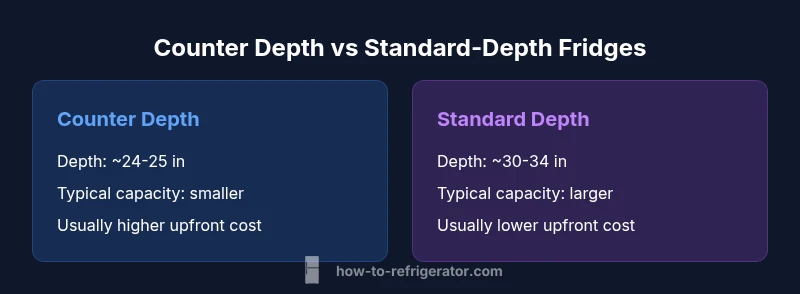
The most obvious difference is depth. Counter depth models are around 24-25 inches deep (without handles), whereas standard-depth models commonly run around 30-34 inches. This depth gap translates into how much of the fridge protrudes from the surrounding cabinetry and how door swings interact with adjacent counters. Counter depth units often require careful cabinet integration and sometimes custom panels to achieve a seamless look. In contrast, standard-depth refrigerators are more forgiving from a installation perspective because their size aligns with a broader range of kitchen layouts. How To Refrigerator emphasizes planning for your cabinet depth and wall clearance to avoid obstructed doors or restricted airflow.
Capacity, shelves, and interior layout
Interior space is the silent differentiator between these two designs. Counter depth fridges typically offer less usable space in both the fridge and freezer compartments, with design compromises needed to maintain width and height that match cabinetry. Shelf configurations in counter depth models can be efficient but may require creative organization to maximize small sections like tall bottles or wide deli trays. Standard-depth units, while bulkier, usually provide larger refrigeration areas, more adjustable shelves, and sometimes better freezer organization. When evaluating, compare actual usable capacity in cubic feet and assess how your family shops and cooks to decide which layout better suits your routines.
Energy efficiency and operating costs
Both counter depth and standard-depth refrigerators can achieve high energy efficiency, especially in ENERGY STAR-rated models. The efficiency difference often comes from door openings, insulation, and compressor design rather than depth alone. In many cases, counter depth models have similar energy performance to comparable standard-depth units, but their smaller interior volume can slightly influence overall energy use per cubic foot. If energy costs are a priority, compare ENERGY STAR ratings and estimated annual energy consumption on the model pages. How To Refrigerator notes that efficiency standards have continued to improve across categories, benefiting both formats.
Price, availability, and warranty considerations
Counter depth refrigerators generally carry a price premium relative to comparably equipped standard-depth models, driven by cabinetry integration, specialized dimensions, and design considerations. Availability can be more limited for counter depth designs, and customers may encounter longer lead times or installation-specific requirements. Warranty terms are typically similar across both formats when comparing equivalent brands and models, but the installation process for counter depth units — including cabinet panels, trim, and alignment — may affect labor costs. If budget is a primary concern, weigh the total cost of ownership, including potential installation add-ons, against the long-term storage needs.
Installation, kitchen integration, and space planning
Installing a counter depth refrigerator often requires precise measurements and potential cabinet modifications to achieve a flush look. It may need custom panels, trim kits, or adjacent cabinet adjustments. Standard-depth units usually fit more readily into existing kitchens with minimal modifications. In both cases, ensure there is sufficient airflow around the back and sides, consider venting requirements, and verify door swing clearance with nearby appliances or islands. How To Refrigerator urges homeowners to take exact measurements of width, height, and depth before selecting a model, and to account for door clearance and hinge orientation in the plan.
Real-world usability: daily life with each type
In everyday use, counter depth models can feel more cramped for tall or bulky items and may require more careful organization of groceries. Access to the back corners of shelves can be less convenient due to tighter interiors. Standard-depth refrigerators typically offer easier access to shelves, more generous door storage, and more forgiving layouts for bulky items. For families that prepare meals, stock large quantities, or rely on wide storage containers, standard-depth units may reduce friction. In contrast, counter depth units excel in kitchens where aesthetics and seamless cabinet integration take priority and where the user adapts to a slightly different storage approach.
Small kitchens, apartments, and design constraints
Counter depth refrigerators are particularly popular in apartments, condos, and small kitchens where space is at a premium or where a built-in look is desired. The slimmer profile helps preserve traffic flow and sightlines in tight spaces. In such settings, you should also consider door swing clearances and potential need for panel upgrades to maintain a cohesive finish. If you’re in a rental or a space with fixed cabinetry, standard-depth models might offer easier compatibility and cheaper transfer or replacement should you move.
How to measure space and plan a replacement
Start with a precise measurement of the fridge opening: width, height, and depth from the wall to the door edge. Add clearance for door swing and ventilation. Compare these measurements to the appliance’s depth rating (with hinges and doors in mind), and verify if you need panels or trim to achieve a built-in look. For counter depth, ensure adjacent cabinetry aligns to avoid gaps or misalignment with countertops. For standard-depth, confirm nearby counters won’t impede door operation. Create a simple dimension map and bring it to showrooms or online listings to quickly rule out incompatible options.
Authoritative sources and further reading
For design guidance and energy considerations, consult official sources such as ENERGY STAR and the U.S. Department of Energy. These resources provide standards, efficiency data, and model availability that can help you compare counter depth versus standard-depth refrigerators in a structured way. How To Refrigerator references these sources to support practical decision-making and to help homeowners understand the trade-offs involved.
Comparison
| Feature | counter depth refrigerator | standard-depth refrigerator |
|---|---|---|
| Overall depth (with doors closed) | about 24-25 inches | about 30-34 inches |
| Usable fridge capacity | smaller interior footprint; potentially less usable fridge space | larger interior space; more flexible storage |
| Price range | higher upfront cost (premium cabinetry integration) | lower upfront cost (more models and deals) |
| Best for | a flush, built-in look and small to medium kitchens | budget-conscious buyers who need more capacity |
| Energy efficiency | comparable to similar capacity models; depth is not the primary driver | comparable efficiency; identical energy standards apply |
| Installation considerations | may require cabinet work and paneling for seamless look | simpler installation in existing kitchens |
| Door swing and clearance | must account for cabinet alignment and possible panel integration | more forgiving clearance in typical layouts |
| Availability and variety | more limited options in counter depth; specialized dimensions | broader model selection with standard depth |
Strengths
- Sleek, built-in look that blends with cabinetry
- Better alignment with countertop height for open kitchens
- Easier to integrate into new kitchen designs and renovations
- Often supports higher-end finishes and panels for premium aesthetics
Cons
- Reduced usable interior capacity in fridge and freezer sections
- Higher upfront cost and potential installation complexities
- Limited model availability and longer lead times
- Potential for tricky door clearance and ventilation requirements
Counter depth wins for aesthetics in tight spaces; standard depth wins for capacity and value
If your priority is a flush, showroom-worthy kitchen with a premium look, counter depth is the best choice. If you need the most storage and lower upfront costs, standard depth is the safer, more versatile option.
FAQ
What is a counter depth refrigerator and how is it different from standard depth?
A counter depth refrigerator sits closer to cabinet depth for a built-in look, usually around 24-25 inches deep. Standard depth extends farther (around 30-34 inches) for more interior space. The trade-off is aesthetics versus capacity and potential installation considerations.
Counter depth fridges sit flush with cabinetry for a seamless look, while standard depth offers more space. The choice hinges on aesthetics and storage needs.
How much wider or deeper is a standard-depth fridge compared to counter depth?
Standard-depth models are typically about 5-10 inches deeper than counter depth units. This extra depth translates into more storage space but a less flush appearance.
Standard-depth fridges are noticeably deeper, offering more space but sticking out from cabinets.
Do counter depth refrigerators use more energy than standard-depth models?
Energy use depends on model efficiency rather than depth alone. Both types can meet ENERGY STAR standards; compare specs for annual energy consumption to assess operating costs.
Energy use depends on the model's efficiency; check ENERGY STAR ratings for apples-to-apples comparisons.
Is installation easier with a standard-depth fridge?
Yes, standard-depth fridges generally fit into existing kitchens with fewer cabinet modifications and special panels. Counter depth installations may require cabinetry adjustments to achieve a flush look.
Standard depth is usually easier to install without cabinet changes.
Which option is better for small kitchens or apartments?
Counter depth can be advantageous in tight spaces by preserving sightlines and reducing protrusion. Ensure enough cabinet depth to avoid a cramped kitchen; in some layouts, standard depth may still be more practical.
In small kitchens, counter depth often looks cleaner, but space planning matters.
What should I consider beyond depth when choosing a fridge?
Consider interior layout, shelf adjustability, door style, energy efficiency, warranty, and after-sale service. A balanced model with flexible shelving and reliable parts availability often outweighs cosmetic differences.
Look at interior layout, energy efficiency, and service plans, not just depth.
Are there common design compromises with counter depth models?
Yes, compromises can include slightly smaller fridge capacity, higher price, and potential limitations on door configurations. Many buyers offset this with panel-ready designs for a custom look.
Expect a small capacity hit and possible higher price, with a customizable look possible.
How should I plan a budget for a new fridge in 2026?
Set a budget that includes the base price, installation costs, and potential cabinetry updates. Compare total costs across counter depth and standard-depth options while prioritizing features you use daily.
Budget for purchase plus installation and any cabinet changes, then compare total costs.
Top Takeaways
- Assess space and cabinetry before choosing depth
- Prioritize interior layout over exterior appearance for daily use
- Compare total cost of ownership, including installation
- Check energy ratings to avoid hidden operating costs
- Consider your kitchen design goals and lifestyle needs