Counter Depth Refrigerator vs Built-In: Which to Pick
Compare counter depth refrigerators with built-in models to decide which fits your kitchen layout, budget, and style. Practical trade-offs and expert guidance from How To Refrigerator.


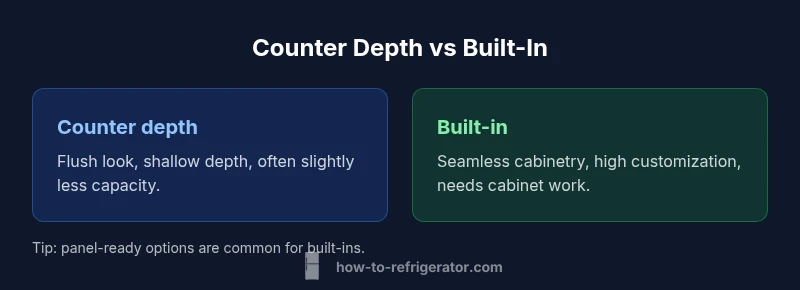
In the debate between counter depth refrigerator vs built in, space, aesthetics, and installation practicality drive the decision. Counter depth models sit nearly flush with countertops and offer a sleek, integrated look with slightly less interior space. Built-in units blend fully with cabinetry, often providing more customization and a seamless enclosure, but requiring precise measurements and potentially more cabinetry work. Choose based on kitchen layout, budget, and how strongly you value a flush, integrated appearance.
What counter depth refrigerator vs built in mean
When homeowners compare counter depth refrigerator vs built in, they are weighing how the unit will fit into their kitchen both physically and visually. A counter depth refrigerator is designed to sit close to the same depth as your counters, creating a nearly seamless line that many find attractive in open-plan spaces. It typically sacrifices a bit of internal space to achieve that shallower profile. Built-in refrigerators, by contrast, are designed to disappear behind cabinetry. They are frequently panel-ready, allowing doors to be finished to match surrounding cabinets, but they demand exact measurements and careful cabinet alignment. For most families, the decision hinges on whether you prioritize aesthetics and integration or interior capacity and installation flexibility.Throughout this guide we will repeatedly reference counter depth refrigerator vs built in to emphasize the core tradeoffs between flush aesthetics and cabinetry integration.
Space planning and kitchen geometry matters when comparing counter depth refrigerator vs built in
Depth impacts how your fridge sits in relation to counters, island seating, and traffic flow. Counter depth units are usually 24 to 27 inches deep overall, keeping a shallow footprint that reduces the chance of encroaching on dining or work zones. Built-in refrigerators, while often similar in external depth, require a dedicated cavity and finishing panels that align with the rest of the kitchen. The result is a more integrated look but a more complex renovation or installation. When you map your kitchen you should also account for toe kicks, upper cabinet clearance, and door swing space. If your kitchen has tight corners or a high-traffic walkway, the choice between counter depth and built-in can influence daily usability and cleanup.
Interior capacity and shelf design significantly influence how counter depth refrigerator vs built in perform in real life
Interior layout is a major differentiator. Counter depth refrigerators tend to offer slightly less gross capacity due to thecompressive engineering needed for a shallower shell, yet many models provide highly usable interior layouts with adjustable shelves and versatile door bins. Built-in models can maximize usable space through deep drawers, tall pantry shelves, and configurable humidity controls. For households that store large platters, tall beverage bottles, or frequent bulk purchases, verify shelf heights, bin depths, and the ability to remove shelves for custom configuration. Remember that what matters most is actual usable space for your groceries, not just nominal capacity.
Aesthetics and cabinetry integration redefine the look of your kitchen when choosing between counter depth refrigerator vs built in
The visual impact of these choices is substantial. Counter depth units present a clean, modern profile that harmonizes with standard cabinetry yet still allows for panel options in some lines. Built-in refrigerators shine in high-end renovations where the appliance is fully concealed behind cabinet doors or panels that match the rest of the kitchen. Panel integration requires precise alignment and can influence hardware choices, hinge placements, and door swing. Lighting and finish consistency between the fridge fronts and surrounding cabinetry contribute to a cohesive room feel. Think about the overall design language of your space and how much you value a true built-in look versus a polished but slightly standalone unit.
Installation considerations and cabinetry requirements for counter depth vs built in installations
This area often determines the feasibility of your plan. Counter depth models typically fit in existing kitchens with minor adjustments and standard electrical connections, making them easier to install without major cabinetry changes. Built-in systems, however, usually require a custom cabinet enclosure, precise cabinet cutouts, and careful venting considerations. If you choose built-in, allocate time and budget for cabinetry work and professional installation. A mismeasured cavity can lead to door misalignment, air leaks, or improper sealing. Always confirm ventilation clearance and ensure floor leveling before final installation to prevent future alignment issues.
Performance, energy efficiency, and temperature control in counter depth refrigerator vs built in
Depth does not automatically determine performance. Both options can deliver stable temperatures and efficient cooling if sized correctly for your household. Look for energy star ratings, compressor type, and multi-zone cooling features. Built-ins may offer more advanced temperature control options and humidity management due to tighter enclosure design, while counter depth units can deliver excellent performance in standard configurations. Ensure consistent airflow and avoid overloading the fridge to maintain even cooling across shelves.
Cost, value, and warranty considerations across counter depth vs built in
Understanding total cost is essential. Counter depth refrigerators usually cost less upfront than premium built-ins, but high-end panel-ready counter depth units can approach built-in pricing when panels and custom finishes are included. The cost difference also reflects installation complexity, cabinetry modifications, and potential future renovations. Warranty terms are generally similar for both categories, but built-ins with custom panels may require specialized service providers. When evaluating value, weigh long term resale appeal against initial investment and installation effort. If you prioritize a dramatic kitchen upgrade and seamless integration, built-in offers strong value; if you value affordability and ease of installation, counter depth is often the smarter choice.
Maintenance and common issues for counter depth refrigerator vs built in installations
Maintenance workflows overlap but access differs. Counter depth units are typically easier to service because they stand on standard floors and usually leave more room for service technicians to navigate. Built-ins, by contrast, can be harder to access behind panels, though service can be more straightforward when you work with cabinetry professionals who understand panel integration. Regular maintenance steps apply to both: test seals, clean condenser coils if accessible, check defrost drains, and monitor humidity controls. If you encounter persistent issues, rely on model-specific guidance from trusted sources and consider scheduling professional help when panel and cabinetry interactions come into play.
Decision framework and a quick-start checklist for choosing between counter depth and built-in
To streamline your decision, use a simple framework: assess space constraints, prioritize either flush aesthetics or full cabinetry integration, compare interior layouts and shelf adjustability, and analyze total cost including installation. Quick-start checklist: measure cavity depth and door swing clearance; confirm panel compatibility if you want a built-in look; verify ventilation requirements; compare energy efficiency and warranty coverage; plan for installation lead times. A practical decision tree can help you decide between counter depth and built-in by putting your priorities first—space and cost or design integration and value.
Comparison
| Feature | Counter depth refrigerator | Built-in refrigerator |
|---|---|---|
| Depth range (approx.) | 24-27 inches | 24-27 inches (cabinet-depth) |
| Aesthetics | Flush with counter, minimal cabinetry integration | Seamless cabinetry integration with panels |
| Installation complexity | Easier in existing kitchens | Requires custom cabinetry and precise installation |
| Interior capacity | Slightly less usable space due to depth | Potentially larger usable space with deeper cabinetry |
| Panel options | Panel-ready options available but limited by depth | Full panel customization available |
| Cost range | $1500-$4000 (model-dependent) | $2500-$7000+ (built-in with panels) |
| Warranty/Servicing | Standard warranties | May require specialty service for panels |
Strengths
- Flush appearance with standard countertops
- Better space utilization in smaller kitchens
- Wide selection of finish and panel options
- Lower installation complexity for counter depth
Cons
- Counter depth often sacrifices interior capacity
- Built-in requires cabinetry work and higher upfront cost
- Potential service challenges for panel repairs
- Ventilation and alignment complexities for built-ins
Built-in refrigerators win on cabinetry integration and customization; counter depth is best for space-conscious kitchens seeking a flush look.
If you prioritize seamless cabinetry and panel customization, choose built-in. If you value tighter spaces and easier installation, counter depth is the practical pick. Consider your budget and how the appliance fits into long-term kitchen plans.
FAQ
What is the main difference between counter depth and built-in refrigerators?
The main difference is depth and integration. Counter depth refrigerators sit flush with counters and offer a sleek look with slightly less interior space, while built-in models are designed to disappear behind cabinetry and can be panel-ready for seamless integration.
Counter depth refrigerators sit flush with your counters for a sleek look, but usually have a bit less interior space. Built-ins disappear behind cabinetry and can be panel-ready for a seamless kitchen, but require precise installation.
Do built-in refrigerators require custom cabinetry?
Yes, built-in refrigerators typically require a dedicated cabinet enclosure, precise measurements, and panel compatibility to achieve a truly integrated look.
Yes. Built-in fridges usually need a custom cabinet enclosure and precise measurements to look right behind panels.
Which is more expensive, counter depth or built-in?
In general, built-ins can be more expensive due to cabinetry work and panel customization, but high-end counter depth units with panels can approach built-in prices depending on options.
Built-ins often cost more due to cabinetry and panels, but high-end counter depth units with panels can be pricey too.
Can I convert a counter depth to built-in after purchase?
Conversion is not simple. It typically requires changing cabinetry or creating a new enclosure, so it is best to decide on one path before installation.
Conversion is difficult. It usually needs cabinet changes, so pick the approach upfront.
What maintenance differences exist between the two?
Maintenance tasks are similar, but built-ins can be harder to service due to paneling. Regular seals, coils, and drainage checks apply to both regardless of depth.
Maintenance is similar, but built-ins may be trickier to access behind panels. Keep seals, coils, and drainage in good shape.
What features matter most when choosing between these options?
Look for energy efficiency, consistent temperature control, adjustable shelves, humidity control, and panel compatibility if you want a built-in look. Also consider ventilation clearance and installation lead times.
Prioritize energy efficiency, stable temperature, adjustable shelves, humidity control, and panel compatibility for built-ins.
Top Takeaways
- Measure space accurately before deciding
- Prioritize cabinetry integration for a premium look
- Expect capacity trade-offs with depth choices
- Panel-ready options enhance built-in aesthetics
- Consult a professional for precise installation