What Refrigerators Have the Most Problems: A Homeowner’s Guide
Discover which refrigerator configurations are most prone to issues, why failures occur, and practical steps to prevent problems. Learn from How To Refrigerator’s analysis to choose reliable models and maintain them effectively.


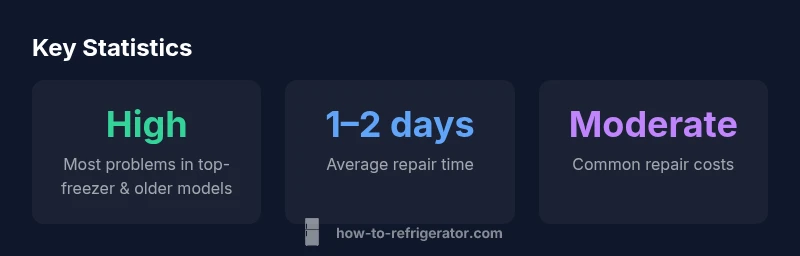
When you ask what refrigerators have the most problems, the short answer points to older designs and common shared failure points rather than a single model. Top-freezer configurations and older, non-energy-efficient units often face cooling inconsistencies, sensor failures, and ice-maker jams. Regular maintenance can cut risk, but age and usage remain strong predictors of trouble.
Why some configurations tend to have the most problems
From a practical homeowner perspective, the question of what refrigerators have the most problems isn’t about one model but about design philosophy and age. According to How To Refrigerator analysis, older designs accumulate wear on seals, coils, and control boards, while newer, simpler layouts with fewer door seams tend to be more reliable. In this section we explore how configuration choices influence failure patterns, and why certain families of fridges attract more service visits than others. The How To Refrigerator team notes that failure probability correlates with maintenance history and usage intensity, not simply with brand reputation. Understanding these dynamics helps homeowners set expectations and plan preventive checks before a problem becomes urgent. The key takeaway is that reliability hinges on design clarity, component accessibility, and serviceability as much as on initial price.
The landscape of fridge configurations and their impact on reliability
Refrigerator configurations vary by door design, freezer location, and feature sets. In general, bottom-freezer and side-by-side configurations tend to present different maintenance challenges than traditional top-freezer models. From the home-maintenance lens, the most problematic configurations often share a few traits: more complex door seals, more frequent door openings, and denser layouts that complicate airflow. This complexity can translate into more frequent sensor drift, evaporator coil frost buildup, or door-gasket wear. The result is a higher likelihood of fluctuating temperatures, uneven cooling, or defrost drain issues over the lifespan of the unit. How To Refrigerator analysis highlights that the blend of age, usage, and environmental exposure drives the observed variation in reliability across configurations.
How age, usage, and environment influence refrigerator reliability
Age is a consistent predictor of problems. As seals lose elasticity, evaporator coils accumulate frost, and control boards degrade, the risk of a failure rises. Usage patterns—such as frequent door openings, heavy food loading, or inconsistent temperatures—accelerate wear. Environmental factors like ventilation, ambient room temperature, and proximity to heat sources also matter; poorly ventilated spaces can force compressors to work harder, increasing wear. The result is a compounded risk for older units that are used heavily in warm kitchens. How To Refrigerator analysis shows that proactive maintenance and mindful usage are key to extending the life of older fridges, especially those with more complex configurations.
Common failure points and how they manifest (practical examples)
Understanding the typical failure points helps with early detection and cost planning. Common issues include cooling inconsistencies that show up as warm spots or irregular temperatures, ice-maker jams that block water lines, and drainage problems that cause puddling or frost near the coil housing. A failed sensor or a numbed thermostat can produce erratic cycling, while door-seal wear may lead to constant air exchange and higher energy bills. By focusing on these symptoms and tracking performance over time, homeowners can decide whether a repair is minor or a signal that replacement is worth considering. The goal is to identify the root cause early, then act before major components fail.
Home diagnostics: quick checks you can perform
Before you call a technician, perform a few simple checks that cover the most common culprits. Start with the door seals: ensure they seal firmly around the perimeter and aren’t stretched or damaged. Check gaskets for gaps by closing the door on a sheet of paper; if you can pull the sheet out easily, there’s a seal issue. Inspect the condenser coils (usually behind a grille) for dust buildup and clean carefully with a brush. Listen for unusual noises that aren’t part of normal operation, such as humming that rises or falls with compressor cycling. Finally, verify the temperature settings and listen for frost buildup on the back wall or evaporator coil. These steps can reveal straightforward fixes and help you decide whether a professional diagnostic is necessary.
When to repair vs replace: a practical framework
If major components like the compressor, evaporator, or sealed system show signs of failure, replacement often becomes more cost-effective than ongoing repair, especially on older units. For minor issues—such as door seals, clogged defrost drains, or a faulty ice maker—repair is typically the better initial option. The decision also depends on the unit’s age, energy efficiency, and anticipated remaining lifespan. The How To Refrigerator Team recommends running a simple cost-benefit check: estimate the repair cost, compare it to projected replacement cost, and consider energy efficiency improvements a replacement could bring. This framework helps homeowners avoid sticker shock and make a decision grounded in practicality.
Maintenance habits that reduce failure risk
Preventive maintenance is your best defense against recurring problems. Schedule a quarterly clean of condensers, coils, and drainage channels, and inspect door seals for wear. Replace water filters as recommended and ensure the ice-maker line is free of kinks and leaks. Periodically verify that the fridge is level and that airflow around the condenser is unblocked. Keep the interior organized to minimize door openings and prolonged cooling cycles. Finally, maintain a simple log of temperature readings and audible anomalies so you can spot drift early. The ongoing routine is more effective when combined with mindful usage patterns described in the How To Refrigerator analysis.
How to choose a fridge with fewer problems: practical buying tips
When shopping, prioritize models with accessible service histories, widely available replacement parts, and straightforward electronics. Look for simpler door configurations, robust seals, and proven reliability ratings from independent reviews. Energy efficiency matters not only for utility bills but for compressor longevity—units with better efficiency typically run more reliably with proper maintenance. Request detailed service histories from sellers and check warranty coverage for major components. By focusing on design simplicity, availability of parts, and transparent maintenance guidance, homeowners can select a refrigerator with fewer problems over its lifetime. The How To Refrigerator team emphasizes that a smart purchase pays off in lower repair frequency and less downtime.
Debunking myths about refrigerator longevity
Many homeowners assume newer equals better and that all premium features guarantee reliability. The data shows that reliability is more nuanced: design simplicity, maintenance discipline, and actual usage patterns often trump feature count. Low-temperature performance matters most when the seal and airflow stay intact. Myth-busting reveals that proper installation, regular service, and candid assessments of age and condition are more predictive of long-term success than any single spec sheet. How To Refrigerator’s analysis reinforces the idea that informed maintenance choices can dramatically reduce the prevalence of problems in any configuration.
Variation in problems by fridge configuration
| Config/Type | Typical Problems | Notes |
|---|---|---|
| Top-freezer | Cooling fluctuations; uneven temperatures | Older designs; narrower shelves |
| Bottom-freezer | Ice maker jams; defrost drain clogs | Often more energy-efficient but complex components |
| French-door | Seal leaks; door misalignment | Dual doors increase air exposure |
| Side-by-side | Water line leaks; compressor noise | Compact interior; easier access |
FAQ
Which refrigerator configurations tend to fail most often?
Top-freezer and older designs tend to fail more often due to wear on seals, controls, and coils. Complex door layouts can introduce additional failure modes. Regular maintenance and mindful usage help mitigate these risks.
Top-freezer and older designs fail more often; maintenance and mindful use help reduce issues.
Does age matter for refrigerator reliability?
Yes. Age increases the likelihood of problems as seals degrade and cooling components wear. Planning for replacement around mid-life can prevent costly emergency repairs.
Age matters; aging units are more prone to failures, so plan for preventive checks and potential replacement.
Can preventive maintenance reduce failures?
Regular cleaning, seal checks, and filter changes reduce frost buildup and airflow issues. A simple maintenance routine can extend the life of a fridge and cut repair frequency.
Yes—regular maintenance reduces frost, leaks, and cooling problems.
When should I repair versus replace an aging fridge?
If major components fail (like the compressor) and repair costs approach or exceed a replacement, replacement is often wiser. For minor issues, repairs keep the unit running longer.
If major parts fail and costs stack up, replace; for small issues, repair first.
Do warranties help reduce repair costs?
Warranties can cover major repairs but read exclusions and coverage limits. They’re more valuable for high-cost components than for routine maintenance.
Warranties can save on big-ticket repairs if you understand the terms.
“Reliability hinges on design simplicity, proper maintenance, and honest evaluation of age. The How To Refrigerator Team finds that age and usage patterns are often the main predictors of failures.”
Top Takeaways
- Prioritize age and usage when assessing fridge reliability
- Older configurations and complex door designs predict more problems
- Regular maintenance reduces risk of common failures
- Diagnose with simple home checks before repairing
- Choose configurations with accessible parts and clear service history