Warranty Refrigerator: Navigate Coverage and Claims
Learn how warranty refrigerator coverage works, what’s included, how to file claims, and tips to maximize protection for your fridge. A homeowner-friendly guide from How To Refrigerator.


Warranty refrigerator coverage typically includes defects in materials or workmanship for a set period from purchase, often covering the compressor, sealed system, and certain parts. It usually requires registration and proof of purchase. To file a claim, gather model/serial numbers, service records, and contact the manufacturer or retailer within the warranty window. This guide helps homeowners navigate the process confidently.
What is a warranty refrigerator and why it matters
A warranty refrigerator is a fridge that comes with a manufacturer’s warranty or an extended protection plan that promises repair or replacement of defective parts within a defined period. For homeowners, understanding this coverage matters because it can dramatically reduce out-of-pocket repair costs and extend the life of a high-value appliance. According to How To Refrigerator, warranty refrigerator coverage typically includes defects in materials or workmanship and usually focuses on major components such as the compressor, sealed system, condenser, evaporator, and internal electrical controls. In practice, the specifics vary by brand and by the level of protection you purchased, so always read the terms for your exact model. Beyond the mechanical benefits, a warranty refrigerator can influence maintenance decisions. Regular servicing or adherence to scheduled maintenance can keep your coverage valid and minimize surprises when a claim is needed. Most manufacturers require proof of purchase and timely registration to activate protection; some extended plans demand yearly updates or periodic inspections. For homeowners, the practical value lies in knowing what is covered, how to request a repair, and what steps to take if the warranty terms seem unclear. This guide will walk you through typical coverage, common exclusions, and the best practices to ensure you get the maximum benefit from your warranty refrigerator.
Types of Refrigerator Warranties
Warranties for refrigerators come in several forms, each with different coverage periods and scopes. The most common are the manufacturer’s factory warranty, retailer warranties, and extended warranty plans purchased separately. A factory warranty typically covers parts and labor for a limited time, often including major components like the compressor and sealed refrigeration system. Retailer warranties may offer additional terms or longer coverage for specific models, sometimes bundled with appliance delivery. Extended warranties, purchased from third parties or credit card providers, extend protection beyond the manufacturer’s term and can include extras such as on-site service or replacement options. Understanding which type applies to your unit is essential because it affects where you should seek service, what costs you may still incur, and how to submit a claim. When choosing coverage, compare deductible amounts, service networks, and whether accidental damage or user-caused wear is included. How To Refrigerator recommends documenting the purchase and activation steps for each warranty you hold so that you can act quickly if an issue arises.
What is typically covered under refrigerator warranties
Most warranty refrigerator plans focus on defects in materials or workmanship and provide coverage for the major cooling components and essential parts. Typical inclusions include the compressor and sealed refrigeration system, condenser coils, evaporator, refrigerant charge (in some cases), thermostat or temperature sensors, and cooling fans. Some plans extend to water lines, ice-makers, and dispenser components, while others exclude cosmetic damage or routine wear and tear. Coverage generally applies to sudden failures that occur under normal operation and may require diagnosis by an authorized technician. It is common for coverage to exclude damage caused by improper installation, accidental damage, power surges, or neglect, so keep careful records of installation and maintenance. Knowing which parts are covered helps you prioritize claims and avoid paying out of pocket for components that the warranty clearly covers. Always review the exact wording of your policy to confirm what is included for your model and serial number.
Common exclusions and limitations
Warranty terms almost always include exclusions that can surprise homeowners. Common limits include coverage ending after a certain period, exclusions for improper installation, damage from accidents or misuse, power fluctuations, and environmental factors such as excessive humidity. Some plans exclude labor charges or limit the number of service visits per year. Manufacturers may require maintenance work at prescribed intervals to keep coverage active, so document your service history. Additionally, certain refrigerant-related issues or sealed-system failures might have special requirements, such as only being covered if serviced by an authorized technician. Understanding these exclusions upfront helps you set realistic expectations and avoid disputes when filing a claim. If your issue falls under a gray area, contact the warranty provider for explicit clarification before proceeding with any repair visit.
How to check warranty status
To determine if your refrigerator is still under warranty, locate the model and serial numbers on the appliance label or inside the door frame, then compare them against the original purchase documents and warranty card. Check the purchase date to establish the warranty window, especially for major components that often have longer coverage. If you registered the product, log into the manufacturer’s portal or call their support line to confirm activation. Some warranties are transferable to a new owner, while others are not, so review the terms if you recently bought or sold the home. Keep copies of all correspondence, service reports, and proof of installation or maintenance. If you can’t locate an activation, contact customer service with your model number and serial to verify eligibility. Knowing status helps you plan next steps and prevents wasted attempts on out-of-date claims.
How to file a warranty claim: step-by-step overview
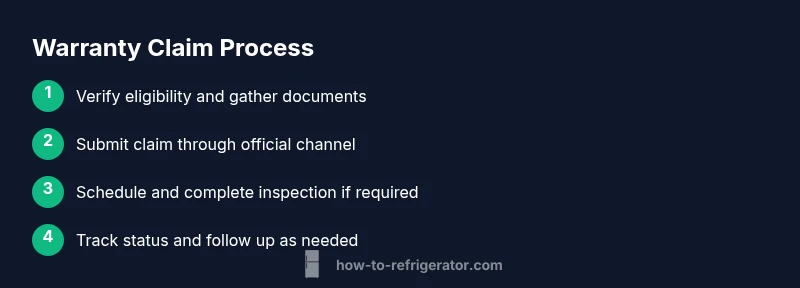
Filing a warranty claim involves a precise process designed to ensure you receive authorized service without delay. Start by gathering essential documents: proof of purchase, model and serial numbers, the warranty terms, and any prior service records. Next, identify the correct channel to submit the claim—manufacturer portal, retailer support line, or a dedicated warranty administrator. Provide a clear description of the issue, when it started, and any steps you’ve already taken. Attach photographic evidence if possible. After submission, you may be asked to schedule an inspection or service visit, and a technician will assess whether the problem is covered. If approved, service will be scheduled, and you'll either pay a deductible or nothing at all, depending on the plan. If denied, request a written explanation, review the specific exclusions, and consider escalation avenues such as consumer protection resources or a second opinion from an authorized technician. Keeping all records organized ensures smoother processing and a stronger case if you need to appeal.
Dealing with retailer vs manufacturer warranties
The distinction between manufacturer warranties and retailer warranties can be subtle but important. Manufacturer warranties typically cover defects in materials and workmanship for the product itself, regardless of where it was purchased, and may require service through authorized channels. Retailer warranties may be more limited in scope or time but can include additional protection offered at the point of sale, sometimes with simplified claim processes. If a problem occurs early, start with the retailer if the purchase is recent, as they may offer a quick fix or replacement under their store policy. For ongoing or major issues, contact the manufacturer to leverage longer-term coverage and access their service network. Always verify which party owns the warranty, the terms, and the transferability if you’re reselling or gifting the appliance. How To Refrigerator recommends keeping track of both types, so you know exactly where to turn when a problem arises.
Tips to maximize warranty value and avoid issues
Maximize warranty value with proactive maintenance and careful record-keeping. Schedule regular professional tune-ups or follow manufacturer maintenance guides to keep coverage active. Register the product promptly after purchase and keep proof of purchase, model, serial, and warranty documents in a secure location. Document every service interaction, including dates, names, and what was done. If you suspect a potential issue, report it early to ensure timely diagnostic coverage. Avoid unauthenticated service providers and only use authorized technicians to prevent voiding coverage. If you encounter a denial, request a detailed reason and gather any supporting documentation, including photos and diagnostic reports. Finally, know your consumer rights and consider escalation channels if a claim seems improperly processed. By staying organized and informed, you can get the most from a warranty refrigerator and avoid paying for repairs that should be covered.
Practical next steps and maintenance to keep coverage valid
With warranty refrigerator coverage in mind, practical next steps focus on proactive maintenance and clear records. Create a central digital folder with all purchase receipts, model/serial numbers, activation confirmations, and maintenance logs. Set reminders for annual inspections or service as recommended by the manufacturer. When issues arise, document symptoms thoroughly and contact the warranty provider promptly through official channels. If you upgrade or replace the appliance, review how the warranty transfers to new owners or how to cancel the policy. Finally, keep spare parts lists and contact information for authorized service providers handy. A well-maintained unit and organized paperwork make warranty coverage smoother and more reliable.
Authority sources and next steps
For further guidance on warranty rights and consumer protections, consult established resources from consumer protection agencies and reputable organizations. Always verify the credibility of any warranty offer and ensure you understand the scope and limitations before committing. The following sources provide high-level guidance on warranties and appliance protections:
- https://www.ftc.gov/business-guidance/warranties
- https://www.consumer.ftc.gov/articles/0069-warranties
- https://www.energy.gov/eere/buildings/articles/understanding-appliance-warranties
Remember that every warranty has unique terms, so tailor your approach to your specific policy. How To Refrigerator remains a practical guide to help homeowners navigate these protections and secure the repairs their warranty refrigerator coverage should support.
Tools & Materials
- Proof of purchase (receipt or invoice)(Purchase date, model, store listed)
- Model and serial number(Label location varies by model)
- Warranty documentation(Printed terms or digital copy)
- Manufacturer/retailer contact information(Phone, email, or portal URL)
- Notes and photos of the issue(Clear pictures or short video helps diagnosis)
- Manual or service history(Useful for references and maintenance history)
- Pen and notebook or digital notes(Document interactions and dates)
Steps
Estimated time: 2-6 weeks
- 1
Verify warranty eligibility
Check purchase date, model, and serial to confirm the warranty window and what components are covered. Review any activation requirements. If you’re unsure, contact the manufacturer’s support line for explicit confirmation.
Tip: Have your model and serial handy when you call. - 2
Gather required documents
Collect proof of purchase, warranty terms, model/serial numbers, and any prior service records. Create a dedicated folder (physical or digital) for easy access during the claim process.
Tip: Scan and save documents as PDFs for quick upload. - 3
Document the issue with evidence
Describe symptoms, timelines, and frequency of the problem. Take clear photos or short videos showing the malfunction and any error messages or unusual sounds.
Tip: Timestamp photos and note the date/time of the issue. - 4
Identify the correct claim channel
Use the manufacturer’s portal, official phone line, or the retailer’s warranty department to start the claim. Avoid third-party services that aren’t listed in the warranty terms.
Tip: Use official channels to protect coverage and ensure proper processing. - 5
Submit the claim with complete details
Enter all required information accurately, attach supporting documents, and provide a precise description of the problem. Double-check serial numbers and dates before submission.
Tip: Prepare a concise, factual summary of the issue. - 6
Schedule service or inspection if required
If the warranty requires a technician visit, coordinate a suitable time and ensure access to the refrigerator. Confirm whether the visit is covered under the warranty terms.
Tip: Clear space around the fridge and have power and water lines unobstructed. - 7
Prepare for the service appointment
Be present for the diagnostic visit, provide all requested documentation, and note the technician’s findings. Take notes on proposed repairs and any parts that will be replaced.
Tip: Ask for a written diagnostic report. - 8
Track progress and respond promptly
Monitor the claim status and respond to any requests quickly. Keep all records, including service reports and replacement part details.
Tip: Set calendar reminders to check status weekly. - 9
Escalate if denied or unresolved
Request a written explanation for denials, understand specific exclusions, and use escalation options if needed, such as consumer protection channels or mediation.
Tip: Document all communications and keep a calm, factual tone.
FAQ
What counts as eligibility for a refrigerator warranty?
Eligibility hinges on the warranty window, model/serial number, and activation. Read the terms carefully, and confirm that the issue aligns with covered defects rather than accidents or misuse. If in doubt, contact the provider for a definitive determination.
Eligibility depends on the warranty period, model, and activation. Check the terms or contact the provider for a clear determination.
How long do warranty repairs typically take?
Repair timelines vary by provider and location. Some repairs can be scheduled within a week, while other cases may take several weeks if a parts delay occurs or a technician must travel long distances.
Timelines vary; expect anywhere from a week to several weeks depending on parts and scheduling.
Do I need to register my refrigerator to keep the warranty active?
Registration is often required to activate manufacturer coverage. Some plans auto-activate with proof of purchase, while others require online or phone registration soon after delivery.
Registration is commonly required to activate coverage; check your terms or contact support to confirm.
What should I do if my claim is denied?
Ask for a written explanation of the denial and review the specific exclusions. Consider escalating to a supervisor or consumer protection agency if you believe the denial is unjustified.
If denied, request written reasons and consider escalation if you think the denial is unfounded.
Can I file a claim after the warranty period ends?
Generally, no. Most warranties require the defect to occur within the covered period. Some extended warranties may offer limited post-expiry options, depending on the terms.
Usually claims are only during the warranty period, but some extended plans may offer limited options after expiry.
What is the difference between manufacturer and retailer warranties?
Manufacturer warranties cover defects in materials or workmanship across brands, while retailer warranties are offered by the seller and may include additional terms. Transferability and claim channels can differ, so read both carefully.
Manufacturer warranties cover defects; retailer warranties may have extra terms. Check both for transferability and how to file.
Watch Video
Top Takeaways
- Know exactly what your warranty refrigerator covers.
- Keep proof of purchase and serial numbers organized.
- Act promptly and use official channels for claims.
- Document everything and track claim status.
- Escalate calmly if a claim is denied.