Using a Commercial Refrigerator at Home: Practical Guide
Discover how to use a commercial refrigerator safely at home. This comprehensive guide covers setup, temperature control, defrosting, door seals, and maintenance tips for reliable cooling in residential spaces.


You will learn how to safely use a commercial refrigerator in a home setting, maximize energy efficiency, and troubleshoot common issues. Before you start, gather the owner's manual, a digital thermometer, a timer, and basic tools. This guide covers daily operation, temperature checks, defrosting, door seals, space planning, and essential safety precautions to protect both people and food.
Why Homeowners Benefit from Understanding Commercial Refrigerators
For many households, a commercial refrigerator looks like overkill. Yet, when you know how to use commercial refrigerator equipment safely, you unlock benefits in reliability, food safety, and peak performance. This section explains why a heavy-duty unit can be a smart addition to a home kitchen, especially for households that store bulk groceries, entertain often, or operate under tight temperature control requirements. A commercial refrigerator is built to hold larger capacities, maintain more consistent airflow, and endure frequent door openings without overheating. Understanding the differences helps you plan placement, ventilation, and energy use without sacrificing convenience. According to How To Refrigerator, homeowners who approach a commercial unit with a clear plan tend to experience fewer temperature fluctuations, better organization, and fewer surprises at the end of the month. We’ll cover how to translate commercial-grade features into practical, safe behavior at home, including how to interpret the control panel, adjust shelves, and monitor performance with simple tools. In 2026, the market offers models designed for residential spaces, but the fundamentals of safe operation remain the same. This knowledge reduces guesswork and supports responsible maintenance.
Key Differences Between Commercial and Residential Refrigerators
Knowing the differences helps you use commercial refrigeration equipment correctly in a home setting. Commercial units are often larger, with higher-capacity shelves, more robust airflow systems, and more complex controls than typical household models. They may include heavy-duty door seals, forced-air cooling, and time-based defrost cycles that influence how you store foods, organize space, and plan cleaning. Safety features like audible alarms for door propping and temperature deviations are common in commercial units, so you should familiarize yourself with any indicators on the control panel. For homeowners, this knowledge translates into better placement, ensuring vents aren’t blocked by bulky containers, and setting expectations about energy use. How To Refrigerator analysis shows that consistent temperature checks and routine defrosting help maintain food safety and energy efficiency, especially when repurposing a commercial unit for home use. Always consult the owner’s manual for your specific model, since configurations vary by brand and model year.
Safe Setup and Initial Inspection
Before plugging in a commercial refrigerator, perform a safety-focused setup that protects people and food. Start by turning off power, moving the unit away from walls, and confirming there is adequate clearance for air intake and exhaust. Inspect door gaskets for cracks or deformation, verify that drain lines are clear, and check that the unit is level. If you notice any loose panels or exposed wiring, do not operate the appliance until a qualified technician assessments it. Keep a dedicated space in your kitchen for the unit that is dry, ventilated, and away from direct heat sources. After the physical checks, reconnect power and monitor the initial startup for even cooling, ensuring the fan and condenser are free of dust. This first pass sets the baseline for safe operation and reliable performance.
Temperature Management: Keeping Food Safe
Operational temperature control is the backbone of safe food storage. Always follow the manufacturer’s recommended temperature range for your unit and verify it with a calibrated thermometer. Place the thermometer in the warmest shelf area away from vents to obtain a realistic reading. Avoid frequent door openings and do not store hot foods directly inside; cold items should be cooled to proper temperature before placement. If you notice temperature fluctuations, check for airflow blockages, misaligned shelves, or a dirty condenser coil. In many cases, a simple fan or intake clearance can stabilize temperatures quickly. Regular testing helps you maintain consistent cooling, which is essential for preserving freshness and meeting food-safety standards. This approach makes it possible to use a commercial refrigerator effectively in a home kitchen without compromising safety or energy efficiency.
Defrosting and Drainage: Practical Maintenance
Defrosting practices influence both food quality and unit longevity. Some commercial refrigerators use automatic defrost, while others require manual defrost cycles. If your unit uses a drain system, ensure the drain pan and hose are clear, and wipe away any buildup around the defrost drain to prevent clogs. Never pour boiling water into drains; wait for ice to melt gradually and collect run-off with towels. Regularly inspect the condensate drain for obstructions and clean it with a small brush or pipe cleaner. Proper defrosting reduces frost buildup on coils, improves airflow, and maintains efficiency. Include a quick weekly check in your maintenance routine to confirm the defrost cycle is functioning as intended and that drainage components are leak-free.
Energy Efficiency and Running Costs
Energy efficiency matters when running a commercial refrigerator in a home environment. Keep the unit well-ventilated, avoid storing foods directly against doors, and organize items to prevent airflow blockages. Check door seals regularly for wear and replace worn gaskets promptly to avoid cold air leaks. Use clearly labeled storage zones and avoid overloading shelves, which can trap heat and force the compressor to work harder. When practical, position the unit to minimize sunlight exposure and adjacent heat sources. A well-maintained unit with clean coils and proper sealing will consume less energy and remain reliable over time. In addition to routine maintenance, consider energy-saving tips like scheduling defrost checks and setting a stable temperature that minimizes cycling.
Troubleshooting Common Issues
Despite best efforts, issues can arise with commercial refrigerators in home settings. Common symptoms include not cooling adequately, excessive frost, unusual noises, or condensation leaks. Start with simple checks: verify power, confirm that the thermostat is set correctly, and inspect for obstructed vents or blocked shelves. If cooling is insufficient, inspect condenser coils for dirt and dust, listen for compressor noise, and check door seals for leaks. For frost buildup, review defrost settings and ensure the drainage system is clear. For leaks, check hoses and drain pans for cracks. If symptoms persist after these checks, consult the manual for model-specific diagnostics or contact a qualified technician. Remember to document any recurring problems to help with troubleshooting future issues.
Space Planning and Organization for a Home Kitchen
A commercial refrigerator can fit into a home kitchen with smart planning. Start by measuring the footprint, door swing, and clearance needed for easy access. Place the unit where it won’t block pathways or interfere with natural traffic flow. Use uniform shelving to maximize space, group like items together, and label shelves to simplify inventory. Avoid overpacking, which reduces airflow and increases energy use. Consider adding external storage for bulk items and long-term storage containers to minimize openings. Thoughtful organization reduces waste and makes it easier to maintain safe temperatures, especially when you are hosting gatherings or stocking up on groceries.
Preventive Maintenance Schedule and Safety Reminders
Create a simple, repeatable maintenance calendar for your commercial refrigerator. Schedule monthly cleanings of gaskets, coils, and fans, quarterly checks of defrost and drainage systems, and an annual professional inspection if the unit is older or heavily used. Safety reminders include never bypassing electrical safety protocols, keeping liquids away from electrical components, and ensuring the unit is level to prevent spills. When handling refrigerants or making major repairs, always rely on trained technicians due to safety and regulatory concerns. A consistent maintenance plan protects food safety, extends appliance life, and reduces energy waste over time.
Tools & Materials
- Owner's manual(Model-specific guidance; keep accessible for quick reference)
- Digital thermometer(Calibrated; place away from vents to read true temps)
- Calibrated timer(Track defrost cycles and maintenance tasks)
- Flat-head screwdriver(For minor panel adjustments or vent cleaning)
- Soft cloths(Wipe condensation and spills; avoid abrasive cleaners)
- Buckets or towels(Contain spills during defrosting and cleaning)
- Replacement door seals(Have on hand for wear-related leaks)
- Multimeter(Optional safety check for electrical components)
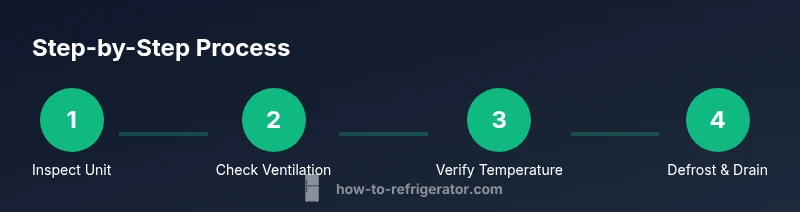
Steps
Estimated time: Total time: 60-90 minutes for setup and initial checks; ongoing maintenance adds 30-60 minutes per month
- 1
Unplug and prepare
Power down the unit and move items away from the doors. Confirm there is enough space around the unit for airflow. This helps prevent accidental shocks and sets a safe baseline for inspection.
Tip: Always unplug before touching electrical components; use a non-conductive mat if available. - 2
Check clearance and ventilation
Ensure at least a few inches of space on all sides and behind the refrigerator. Poor clearance can cause overheating and reduce efficiency.
Tip: Use a level to confirm the unit sits evenly; sloped placement can cause door misalignment. - 3
Inspect door seals
Carefully examine gaskets for cracks or tears. Replace damaged seals to prevent cold air leaks and improve energy efficiency.
Tip: Clean the seals with warm soapy water; avoid solvents that may degrade rubber. - 4
Plug in and run initial test
Reconnect power and listen for the compressor; check that the fans run and the unit begins cooling. Note any unusual noises or vibrations.
Tip: Record the startup time and any odd sounds to reference later. - 5
Verify temperature with thermometer
Place a thermometer on a middle shelf away from vents and monitor readings for 24 hours. Ensure readings stay within the manufacturer’s range.
Tip: If readings drift, check for airflow blockages and relevel the unit. - 6
Assess airflow and organization
Avoid blocking vents with taller items; use uniform shelving to promote airflow and even cooling.
Tip: Label zones (produce, dairy, meats) to minimize door openings and temperature fluctuations. - 7
Perform defrosting and drainage check
If manual defrost is required, remove visible ice, collect melt water, and clear the drain. Ensure the drain pan is clean and dry.
Tip: Never use sharp tools to remove ice; use a plastic scraper to avoid coil damage. - 8
Document settings and schedule
Keep a simple maintenance log noting temperatures, defrost dates, and any issues. This aids future troubleshooting and service calls.
Tip: Set reminders for routine checks to stay on track. - 9
Know when to call for service
If cooling is inconsistent after checks, or you suspect refrigerant or electrical faults, contact a qualified technician. Do not attempt major repairs yourself.
Tip: Use the owner's manual’s trouble-shooting section and model-specific guidance to decide whether to call a pro.
FAQ
Can I use a commercial refrigerator in a small home kitchen?
Yes, provided you have adequate space, proper ventilation, and follow the owner's manual for safe operation. Ensure electrical supply meets the unit's requirements and that the installation adheres to local safety guidelines.
Yes, you can use a commercial refrigerator at home if you have enough space, proper ventilation, and follow the manual for safety.
What temperature should I set for safe food storage?
Set the unit to the manufacturer’s recommended range and verify with a calibrated thermometer. Avoid relying on intuition; continuous monitoring helps prevent spoilage.
Follow the manufacturer's range and check with a thermometer to keep food safe.
Is it energy efficient to run a commercial fridge in a home?
Energy efficiency depends on ventilation, door seals, and proper loading. Regular maintenance and careful placement can reduce energy waste and keep operating costs reasonable.
Maintenance and good placement help keep energy use reasonable.
How often should I defrost a commercial refrigerator?
Follow the defrost schedule in your manual. If frost builds up quickly, inspect drainage and ensure vents are not blocked to maintain efficient cooling.
Check the defrost schedule in the manual and watch for frost buildup.
What if the door seal is worn or leaking?
Replace worn gaskets promptly to prevent cold air loss. Clean seals regularly and ensure doors close firmly.
Replace damaged seals and keep them clean for a tight seal.
When should I call a technician?
If the unit fails to cool after basic checks, shows refrigerant signs, or has electrical concerns, contact a qualified technician rather than attempting repairs yourself.
Call a professional if cooling doesn’t improve after checks.
Watch Video
Top Takeaways
- Inspect and plan before use to ensure safe operation
- Maintain consistent temperatures with thermometer checks
- Protect airflow by proper shelving and spacing
- Regular defrost and drain maintenance prevent frost buildup
- Know when to call a professional for complex issues