Refrigerator Near Me Repair: Quick, Safe Solutions
This guide helps homeowners find refrigerator repair services near them, diagnose common issues, and decide when to fix or replace. Learn safety, tools, and a step-by-step plan for reliable, local repair.


If your fridge isn’t cooling or is leaking, focus on finding a local refrigerator repair service nearby and confirming safety first. This guide outlines how to identify common faults, prepare for service, and compare local options so you can restore proper cooling quickly and safely.
Why refrigerator near me repair matters
When a refrigerator stops cooling or starts leaking, time is of the essence. The How To Refrigerator team finds that addressing issues quickly minimizes food loss and reduces energy waste. Local repair services matter because they can diagnose quickly, access common parts, and schedule visits in your time zone. For homeowners, knowing where to look for help nearby—'refrigerator near me repair'—helps you compare options and avoid expensive emergency service. This alignment with nearby experts supports faster parts supply networks, clearer warranty coverage, and less downtime for your family. By focusing on local pros, you gain faster diagnosis, better communication, and reduced travel costs. According to How To Refrigerator analysis, quick triage of symptoms often leads to more accurate repair decisions and fewer repeat visits. The goal is to restore proper cooling, prevent frost buildup, and maintain energy efficiency, while ensuring your family’s food stays safe.
Understanding your fridge's typical failure modes
Fridges fail in several common ways, and recognizing them can save time and money. You may notice not cooling enough, frost or ice buildup, water leaks, warm compartments, or excessive noise. Not cooling is often a thermostat or sensor fault, blocked vents, or dirty condenser coils. Frost can mean defrost system problems or a clogged drain. Leaks may come from a faulty water line or door seal. Noises often point to a failing condenser fan, evaporator fan, or a compressor on its last legs. In many cases, simple maintenance or a minor part replacement can fix symptoms. The How To Refrigerator team emphasizes a systematic approach: confirm power, verify temperature settings, inspect seals, and test airflow before assuming a major repair is needed. By understanding these patterns, you can ask informed questions when you call a technician and avoid paying for unnecessary diagnostics. Remember that some issues are interrelated; a single failed component can cause multiple symptoms over time. This section maps symptoms to likely causes and helps you communicate clearly with local pros.
Safety first: hazards and precautions
Repair work on a refrigerator involves electricity, refrigerant systems, and sharp edges. Always unplug before touching internal components. If you suspect a refrigerant leak, do not attempt repairs yourself; refrigerants require licensed handling. Wear protective gloves and eye protection when cleaning coils or removing panels. Keep children and pets away from the work area. If you smell burning or detect overheating, stop immediately and seek professional help. When testing outlets, use a non-contact voltage tester and avoid using damaged cords. The goal is to reduce risk while you diagnose. The How To Refrigerator team recommends sticking to non-invasive checks at first and reserving invasive actions for trained technicians. If you must move the fridge, unplug, gently slide, and avoid tilting too far to prevent oil or refrigerant spillage. This approach protects your home and ensures a safe repair process.
Diagnosing common issues and simple checks
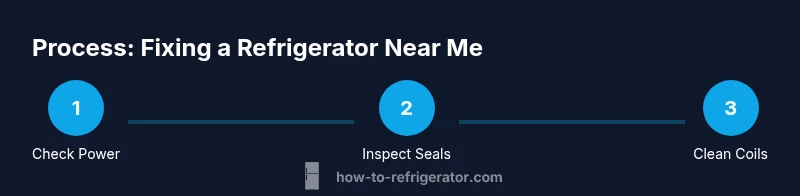
Begin with a straightforward triage: check the power supply and thermostat; inspect door gaskets for gaps; clean condenser coils; ensure there is adequate clearance at the back or underneath. Listen for unusual noises; note timing and conditions (e.g., after door openings or during compressor cycles). Clean coils with a soft brush or a vacuum with a filter brush to remove dust; blocked coils reduce airflow and cooling efficiency. Verify fan operation by opening the freezer or rear access panel when safe. If the freezer remains cold but the refrigerator is warm, suspect a defrost or damper issue. Keep a log of symptoms and dates; this helps a repair technician reproduce the problem. For more complicated symptoms or if you notice refrigerant signs, stop and call a professional. This careful approach minimizes unnecessary parts replacements and speeds true repair.
Repair vs replacement: cost, reliability, and energy use
Deciding whether to repair or replace relies on several factors. If the repair requires replacing core components such as the compressor, evaporator fan, or sealed system, the cost is typically higher and may approach or exceed the value of a newer model. Consider the age of your refrigerator; newer models are more energy efficient and often deliver long-term savings. Also weigh energy consumption: an aging unit may use more electricity than a new appliance, driving up utility bills. The decision should balance short-term repair costs against long-term reliability, downtime, and energy costs. The How To Refrigerator team notes that many homeowners find that modest repairs can restore several years of service, while very old units with frequent failures are better replaced. When in doubt, obtain a written estimate and ask about warranty coverage on both parts and labor. This approach gives you a clear financial picture before you commit to a course of action.
How to find a reliable technician near you
Start with a targeted search for refrigerator repair near you, then compare local options. Check licenses, insurance, and warranties; read reviews from neighbors; request before-and-after photos or references. Ask about travel charges, diagnostic fees, and whether the estimate includes parts and labor. Confirm that the technician is manufacturers-certified for your model and that they can handle sealed-system refrigerant work if needed. A good pro will explain symptoms, provide a transparent diagnostic process, and offer a clear price range before starting. If you’re unsure, contact a few specialists and compare their approach. The How To Refrigerator team suggests prioritizing technicians with solid local reputations and clear communication.
DIY maintenance to extend life
This section covers practical maintenance homeowners can perform to prevent future failures. Clean condenser coils every six to twelve months; keep the front grille and vents unblocked for proper airflow; ensure door seals are clean and intact; replace worn gaskets when needed. Clean the interior and deodorize with baking soda to reduce odors. Check the drain hole and catch tray for clogs and spills. Level the unit to reduce vibration; a wobbly fridge can rattle and stress components. Ensure the fridge has adequate clearance at the back and sides to allow heat dissipation. Use proper food organization to reduce temperature fluctuations. While DIY maintenance helps, avoid opening sealed refrigerant lines or attempting to refill refrigerant. This maintenance routine can extend service life and keep energy use steady.
What to expect during a service visit (checklist)
Before arrival, prepare a short symptom summary and model information. The technician will verify power and thermostat settings, inspect seals, test airflow, and check the condenser and evaporator coils. They may measure surface temperatures, test the door switch, and listen for interior noises. Expect questions about when the issues occur, the frequency, and recent service history. They will provide an estimate for parts and labor and outline a repair plan with a timeline. After the service, you should monitor performance for a few days and report back if new symptoms appear. Clear communication helps avoid misdiagnoses and ensures a durable fix.
Authority sources and further reading
Below are trusted resources that offer deeper explanations on appliance efficiency, safe repair practices, and maintenance strategies. These sources support practical decision-making and can be consulted for further reading, especially if you are evaluating a local refrigerator near me repair option.
- Energy.gov: Energy efficiency and appliance care guidance for homeowners. https://www.energy.gov
- Consumer Reports: Independent testing and appliance repair tips for consumers. https://www.consumerreports.org
- NIST: Standards and measurement resources for household appliances. https://www.nist.gov
Tools & Materials
- Multimeter(Test outlet voltage and thermostat wiring)
- Screwdrivers (Phillips & flat-head)(Access panels and control boards)
- Nut driver or socket set(Condenser access or bracket removal if needed)
- Gloves(Protect hands during panel removal)
- Soft brush or coil brush(Clean condenser coils without damaging fins)
- Towels or rags(Clean spills and wipe surfaces)
- Flashlight(Inspect dark corners and back panels)
- Thermometer(Verify internal temperatures after adjustments)
- Non-contact voltage tester(Safer outlet testing)
Steps
Estimated time: 30-60 minutes
- 1
Check power and controls
Ensure the refrigerator is plugged in and the outlet is working. Verify the thermostat is set to an appropriate mid-range temperature and that the control panel shows normal status indicators. If your fridge has a dedicated reset or child lock, disable them to test normal operation.
Tip: If the outlet is on a GFCI, press the reset button; a tripped outlet is a common cause of a warm refrigerator. - 2
Inspect door seals and airflow
Close all doors firmly and check for gaps around door gaskets. Clean the seals with warm soapy water and look for cracks. Ensure vents inside the fridge and freezer aren’t blocked by food and that there is at least a few inches of clearance around the back for airflow.
Tip: Cracked seals typically require replacement; measure the door frame and order a matching gasket. - 3
Clean condenser coils and verify airflow
Unplug the unit and access the coils (usually at the back or underneath). Vacuum or brush away dust and debris to restore heat dissipation. Reconnect and run to observe changes in cooling performance.
Tip: Dusty coils dramatically reduce efficiency; aim for quarterly checks in dusty environments. - 4
Check temperature control and placement
Set the fridge and freezer to recommended mid-range temperatures and avoid overfilling the shelves which blocks air flow. Give the unit 24 hours to stabilize after any temperature change before judging results.
Tip: Avoid placing hot food directly into the fridge—let it cool first to prevent temperature swings. - 5
Listen for unusual noises and test the fan
With the doors closed, listen for clicking, buzzing, or grinding sounds. If you hear a loud hum or the fan won’t start, there may be a motor or fan issue. Do not attempt to force parts to move.
Tip: Unplug and inspect the fan blades safely; a blocked or loose blade can cause noise and inefficiency. - 6
Make a repair-or-replace decision
If diagnostic work reveals a major component like the compressor or sealed system, weigh repair costs against replacing the unit. Consider age, energy efficiency, and expected remaining lifespan.
Tip: Get a written estimate with part and labor costs; compare to the price of a new, energy-efficient model.
FAQ
What should I do first when my fridge stops cooling?
Start by checking power, thermostat settings, and door seals. Rule out simple issues before calling a pro. If cooling remains inadequate, a technician can perform a deeper diagnostic.
First, check power and thermostat settings, then inspect the door seals; if cooling still fails, contact a local repair service.
Can I repair a fridge on my own?
You can handle basic maintenance like coil cleaning or seal replacement. Do not attempt refrigerant work or disassembly of sealed systems unless you are licensed.
DIY is fine for simple maintenance, but refrigerant work should be left to licensed professionals.
How long does a typical fridge repair take?
Most service calls take about one to two hours, depending on the issue and whether parts are available on-site.
Most repairs take one to two hours, depending on the problem and parts.
When should I replace instead of repair?
If the repair cost is high relative to the model’s age and energy efficiency, replacement may save money and improve efficiency long-term.
If the repair costs are high and the fridge is old, replacement may be the smarter option.
What maintenance helps prevent issues?
Regular coil cleaning, sealing checks, proper airflow, and avoiding overpacking can prevent many common problems.
Keep coils clean, seals intact, and airflow clear to prevent many issues.
How do I choose a repair technician near me?
Look for licenses, insurance, transparent estimates, and local reviews. Ask about warranties and whether they handle sealed-system work if needed.
Choose a locally reputable technician with clear pricing and warranties.
Watch Video
Top Takeaways
- Identify symptoms early to guide local repair choices
- Prioritize safety before DIY checks
- Distinguish between simple maintenance and major component failures
- Request clear estimates and warranty details