Garage-Ready Refrigerator and Freezer Guide: Practical Tips
Learn how to choose, install, and maintain a refrigerator and freezer for garage use. This guide covers garage-rated models, placement, safety, and energy efficiency for reliable performance year-round.


Goal: Learn to select and set up a refrigerator and freezer for garage use, with clear steps for space planning, electrical needs, ventilation, and basic maintenance. This quick answer previews a full guide that emphasizes garage-rated performance, safe installation, and long-term reliability, so you can avoid outages and food spoilage caused by extreme garage temperatures.
Why a Garage-Grade Setup Matters
In many homes, a dedicated fridge-freezer combo sits in the kitchen, but a growing number of homeowners move a refrigerator and freezer for garage into the garage to support overflow food storage, drinks, or raw materials for a workshop. If you rely on a standard indoor unit in a garage, you may see fluctuating performance as the ambient temperature swings between summer heat and winter chill. The How To Refrigerator team emphasizes that a garage environment creates distinct stresses: wider temperature swings, higher humidity, dust, and occasional exposure to gasoline or outdoor cleaners. The result is more load on the compressor, faster dust accumulation on condenser coils, and potential frost or defrost problems if the unit isn’t built for those conditions. Selecting the right model, placing it properly, and following a simple maintenance routine will dramatically improve reliability and energy efficiency. The keyword here is garage-ready: look for rating language that indicates operation across a broader ambient range, and beware devices that are marketed as “kitchen only.” When you understand how these units are designed to handle garage use, you’ll avoid unnecessary repairs and wasted energy.
According to How To Refrigerator, homeowners who plan ahead save time and money by choosing a unit with robust insulation and a defrost strategy that fits garage duty. A properly sized fridge and freezer for garage use will help you keep bulk groceries cold without overworking the compressor during peak summer heat or damp winter nights. Beyond the appliance itself, think about the surrounding space: a level floor, protection from direct sunlight, and unobstructed airflow are essential. In the garage, it’s easy to underestimate the importance of clearance, so allocate space on all sides; at least a couple of inches of air around the back and sides helps coils vent heat and run more efficiently. Ultimately, the goal is to minimize temperature fluctuations inside the cabinet while keeping electrical safety straightforward for routine maintenance. In this guide you’ll find a practical framework for assessing, buying, placing, and caring for a fridge-freezer combo that’s built to thrive in garage conditions.
note():null},
Tools & Materials
- Measuring tape(For space planning and clearance around the unit)
- Level(Ensure the floor is level to reduce vibration and compressor wear)
- Screwdriver set(For mounting shelves or brackets as needed during placement)
- Cordless drill or driver(Helpful for mounting anti-tip brackets or securing panels)
- Silicone sealant(Seal gaps to manage moisture and drafts)
- Anti-vibration pads or mats(Reduce movement on concrete floors and protect the unit from shocks)
- Garage thermometer/hygrometer(Monitor ambient temperature and humidity around the unit)
- Dolly or moving straps(Assist safely moving the fridge into position)
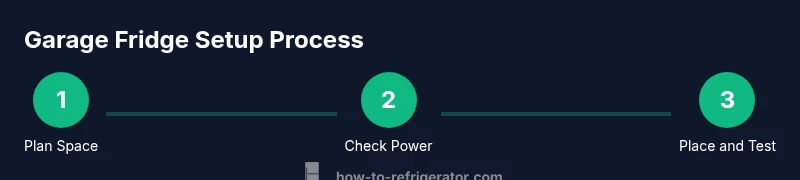
Steps
Estimated time: 2-3 hours
- 1
Measure and plan space
Start by measuring the intended footprint and door clearance. Check that the route to the garage is clear, and plan for at least 2 inches of airflow on all sides. Confirm that the floor is level and capable of supporting the fridge’s weight. If you use the unit near a heat source, consider moving it or adding shade.
Tip: Use a marker to outline the unit’s footprint on the floor to visualize clearance. - 2
Check electrical readiness
Verify there is a dedicated 120V circuit with appropriate amperage for a garage appliance. Avoid plugging into multi-outlet strips or shared circuits that power other heavy devices. If needed, arrange a GFCI outlet per local code and test with a simple appliance to confirm stability.
Tip: A surge protector labeled for outdoor/garage use can add protection, but ensure it doesn’t trip the circuit. - 3
Choose garage-rated model
Select a refrigerator and freezer explicitly rated for garage or ambient temperatures. Look for an ‘ambient temperature’ spec, not just the standard indoor rating. Check for heavy insulation, a robust defrost system, and a motor designed for variable temperatures.
Tip: Ignore purely kitchen-only claims; garage-rated units are designed for wider operating ranges. - 4
Unbox and inspect
Carefully remove packaging and inspect for dents, leaks, or frost through the doors. Retain manuals and warranty cards. If any damage is found, contact the seller before proceeding. Properly dispose of packaging to avoid slip hazards.
Tip: Document any cosmetic issues with photos for warranty claims. - 5
Move into position and level
With help, slide the unit into place without tilting the door. Use level and adjustable feet to ensure the unit sits evenly. A wobbly refrigerator wears the compressor unevenly and can cause vibration noise over time.
Tip: Lock wheels if equipped and re-check level after you set the doors. - 6
Provide ventilation and protection
Leave sufficient clearance behind and at the sides for heat dissipation and airflow. Avoid placing the unit directly against walls or shelves where heat can trap around the condenser. Place a moisture barrier if the floor is damp.
Tip: Keep the condenser coils clean; dust accumulation reduces efficiency. - 7
Power up and test
Plug in and set the internal temperature to manufacturer recommendations. Allow the unit to run 24–48 hours before loading heavy items to verify stable temperatures. Monitor for unusual noises, frost buildup, or frost-free operation.
Tip: Record initial temperature readings to compare later during seasonal changes. - 8
Seal and schedule maintenance
Seal any gaps with silicone, place mats to protect floors, and establish a regular maintenance routine. Clean coils annually or as needed, and inspect door seals for leaks. Maintain a simple log for temperature checks and cleaning.
Tip: Label a yearly maintenance reminder on your calendar.
FAQ
Can I use a standard indoor refrigerator in a garage?
Not usually. Indoor models may struggle with temperature swings, humidity, and dust typical of garages. A garage-rated unit is designed to handle these conditions and reduce the risk of compressor strain, frost, and energy waste.
No, indoor fridges often aren’t built for garage-level temperature swings; choose a garage-rated model instead.
What makes a fridge garage-rated?
Garage-rated means the appliance is tested for a wider ambient temperature range and harsher conditions. It typically has better insulation, a more robust defrost system, and airflow provisions for non-climate-controlled spaces.
Garage-rated means it’s built to handle more extreme garage conditions.
Do I need a dedicated circuit for a garage fridge?
Yes. A dedicated circuit helps prevent overloads and ensures stable operation. Avoid sharing the outlet with high-demand tools or heaters.
Yes, use a dedicated circuit to keep the fridge running reliably.
How should I handle defrost and humidity in the garage?
Auto-defrost models are preferable in garages to reduce manual maintenance. Keep humidity in check by sealing gaps and cleaning coils to maintain efficient defrost cycles.
Auto-defrost helps in damp garages, and regular coil cleaning keeps it efficient.
How often should I clean the condenser coils in a garage fridge?
Inspect coils at least once a year and clean them if they’re dusty or blocked. In dusty environments, more frequent checks may be needed.
Check and clean coils yearly, or more often if the garage is dusty.
What about energy usage in garage environments?
Garage-ready units are generally designed to be energy efficient within larger ambient ranges. Look for efficiency ratings and maintain proper airflow to keep energy use reasonable.
Choose an energy-efficient garage-rated model and keep airflow clear for steady performance.
Watch Video
Top Takeaways
- Choose garage-rated units for reliable performance
- Ensure proper ventilation and floor levelness
- Plan space and electrical needs before purchase
- Install and test gradually to catch issues early
- Maintain a simple log for temperature and coil cleaning