6 Cubic Foot Refrigerator Guide: Install & Troubleshoot
A comprehensive How To Refrigerator guide for selecting, installing, and maintaining a compact 6 cubic foot refrigerator. Learn placement, energy considerations, common issues, and step-by-step procedures to keep small-kitchen fridges running reliably.


With this guide you’ll learn how to pick the right 6 cubic foot refrigerator, install and level it correctly, organize shelves for max efficiency, and perform practical troubleshooting and maintenance. You’ll compare frost-free and manual-defrost models, optimize door storage, and apply safety checks to keep the unit running reliably in small kitchens. How To Refrigerator translates expert advice into clear, home-friendly steps.
Overview: Why a 6 cubic foot refrigerator fits small kitchens
A refrigerator 6 cubic feet is a compact option designed for apartments, studios, and tight kitchens. It provides essential cooling without dominating the room, leaving space for food prep and storage. In practice, a 6 cu ft model typically offers a small freezer compartment, a couple of shelves, and a few door bins to separate dairy, beverages, and produce. According to How To Refrigerator, the key advantage is that this size balances usable capacity with a slim footprint. The How To Refrigerator team found that success depends less on raw capacity and more on interior layout, temperature stability, and proper placement. Readers with limited space should measure their doorway widths and floor clearance before purchasing to ensure the unit will fit through the entry and stand upright once in its intended spot. The article emphasizes that even small differences in depth or door swing can affect placement, venting requirements, and door-opening convenience. By planning ahead, homeowners can avoid costly retrofits or the need to shift heavy appliances later. For most households, a 6 cubic foot refrigerator can provide a reliable daily supply while leaving room for weekly groceries. This guide will help you evaluate models, compare features, and install and maintain the unit in a practical, safe, and efficient way.
Interior layout and storage optimization
Inside a 6 cubic foot refrigerator, every cubic inch matters. Most models use adjustable shelves, which allow you to convert cramped spaces into flexible storage for tall jars or leftovers. Door bins are key for maximizing space because dairy, condiments, and bottles occupy less shelf space when stored on the door. In frost-free units, you’ll typically find a small freezer compartment or a dedicated freezer drawer; manual-defrost designs may offer a slightly larger freezer area but require occasional defrosting. To optimize airflow, avoid overpacking the interior and ensure air vents are not blocked by tall containers. When planning your layout, group items by temperature needs (cold drinks in a dedicated zone, meats on a separate shelf) and place frequently used items at eye level for quick access. The capacity of a 6 cu ft fridge varies by brand and model, but a practical rule of thumb is to reserve about 60-70% of the space for fresh foods and keep the freezer area separate if you have one. If your family cooks daily, consider installing a slim, stackable organizer to create vertical storage for leftovers and meal-prep containers. The goal is to reduce waste, maintain even cooling, and minimize door openings that let warm air in.
Energy efficiency, noise, and footprint considerations
Compact refrigerators are commonly rated for energy efficiency, which translates into lower running costs and less heat output in small kitchens. When evaluating a 6 cubic foot model, look for an Energy Star label and check the annual kWh estimate printed on the Energy Guide. Space efficiency matters too: a unit with a shallower depth can fit under counters and between cabinets more easily, while a taller unit may provide extra storage without widening the footprint. Noise level is another practical concern in small spaces; manufacturers often market compressors with low decibel ratings, but actual sound can vary with load and door openings. To minimize energy use, keep the fridge away from heat sources such as ovens or direct sunlight, maintain tight door seals, and avoid placing warm foods inside right after cooking. Regular cleaning of coils and condenser components can sustain efficiency. For households prioritizing energy savings, compare models with adjustable thermostats and humidity-controlled crisper drawers, which help preserve produce longer without increasing compressor load. This section helps you interpret spec sheets and translate them into real-world savings and comfort, especially in apartment kitchens.
Installation prep and placement guidelines
Proper placement affects cooling performance and longevity. Begin by choosing a level surface with at least 1-2 inches clearance on all sides and 2-3 inches at the back for ventilation. Place the unit away from heat sources, such as stoves, radiators, or oven vents, and avoid extreme temperature zones like garages or uninsulated basements unless the model is rated for such environments. Before moving the fridge, measure doorway widths and hallway turns to ensure it can be moved upright. Use a dolly or two people to avoid scraping floors or injuring yourself. Unpack carefully and wipe down all interior surfaces with a mild detergent to remove any factory residue. If the fridge includes a freezer, verify its door thresholds and adjust shelves to accommodate frozen items. Finally, check electrical compatibility: use a dedicated, properly grounded outlet, and avoid extension cords to reduce fire risk.
Daily use tips to maximize performance
To keep a 6 cubic foot refrigerator running efficiently, organize items by frequency and temperature needs. Keep the coolest foods toward the back and upper shelves, and store beverages and condiments in door bins to free shelf space. Avoid overfilling; leaving air space between items helps airflow. Let hot foods cool to room temperature before storing; placing warm dishes inside increases compressor workload. Regularly check the door gasket for cracks or gaps and replace if necessary. Set the thermostat to the manufacturer’s recommended range—typically around the mid-point between cold and very cold, adjusted for your climate. If your unit has a freezer, avoid overloading it to prevent frost buildup and performance decline. Cleaning the inside every few weeks reduces odors and keeps shelves sliding smoothly.
Troubleshooting common issues
If your refrigerator isn't cooling properly, start with the basics: ensure it’s plugged in, the outlet works, and the temperature setting hasn't been accidentally changed. Check the door seal for gaps by closing the door on a dollar bill; if you can pull the bill out easily, the gasket may need replacement. Listen for unusual noises, which can indicate a loose fan or an aging compressor. Frost buildup in the freezer might signal a defrost problem or blocked vents. For frost-free models, occasional manual defrost is rarely required, but clear any ice buildup if you notice a thick layer. Leaks around the base can indicate a blocked defrost drain or a leaky drain pan. If the unit runs continuously or struggles to reach temperature after a full day, consider professional service to avoid further damage.
Maintenance and cleaning routine
Regular maintenance helps extend the life of a compact fridge. Clean the interior with a mild solution and wipe with a dry cloth to prevent moisture buildup. Periodically inspect door gaskets for wear and replace as needed. Vacuum or brush the condenser coils from the back or underneath according to the model's instructions—this helps sustain energy efficiency and cooling performance. Defrost drains should be kept clear; if you notice slow drainage, flush with warm water and a gentle cleaning solution. Ensure drainage pans are clean and dry to prevent mold growth. Finally, schedule a yearly check to verify the thermostat accuracy and the general condition of shelves, doors, and hinges.
Special scenarios and tips
In apartments, choose a model with slim depth and lower noise; measure pathways to ensure easy transport. In hot climates, place the fridge in a shaded area and avoid direct sunlight to maintain efficiency. If you temporarily place the unit in an unconditioned garage during a move, confirm the model’s allowed operating range; otherwise, keep it inside climate-controlled spaces. For households with limited budgets, compare features like adjustable shelves and energy-saving modes rather than chasing the largest capacity. With careful planning, a 6 cubic foot refrigerator can deliver reliable cooling, simple maintenance, and a tidy, efficient kitchen footprint.
Tools & Materials
- Owner's manual for your 6 cubic-foot refrigerator(Contains model-specific installation and defrost details)
- Measuring tape(To verify clearance and space between unit and walls (1–2 inches recommended))
- Level(Ensure the fridge sits evenly for proper door sealing)
- Phillips head screwdriver(For mounting panels or toe-kick screws if present)
- Flathead screwdriver(For stubborn hinges or adjustments)
- Soft cloth and mild detergent(Interior and exterior cleaning before install)
- Power outlet tester(Optional check for outlet grounding before plugging in)
Steps
Estimated time: 60-90 minutes
- 1
Unbox and inspect the appliance
Carefully remove packaging and verify there’s no shipping damage. Inspect doors, shelves, and gaskets before moving the unit. Keep the packaging until you confirm there’s no concealed damage.
Tip: Document any damage with photos and contact the seller if needed. - 2
Plan location and measure access
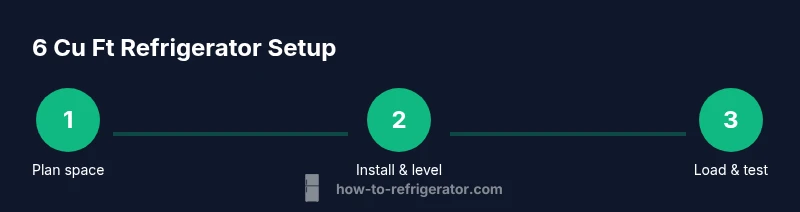
Choose a spot with level flooring and 1–2 inches of clearance on all sides. Measure doorways and hallways to ensure the fridge can pass through upright and reach its final position.
Tip: If a doorway is tight, consider removing doors temporarily or choosing a differently oriented placement. - 3
Move the fridge into position safely
With help if needed, slide the unit into place without tilting excessively. Keep the back away from walls to prevent heat buildup.
Tip: Use a moving dolly or helper to avoid back strain and floor damage. - 4
Level the unit and set door alignment
Adjust front feet until the fridge is level from side to side and front to back. Check that doors close firmly and don’t bind on the frame.
Tip: A level fridge helps doors seal properly and prevents leaks or misalignment. - 5
Install shelves and door bins
Place shelves at desired heights and position door bins for easy access. Distribute items to promote air circulation and avoid blocking vents.
Tip: Keep frequently used items at eye level for quick access. - 6
Plug in and set initial temperature
Connect to a properly grounded outlet. Set the temperature to the manufacturer’s recommended range and allow the unit to stabilize before loading food.
Tip: Expect a stabilization period of several hours; avoid loading heavy groceries until cooled. - 7
Test door seals and airflow
Close the door and check for gaps; run a quick airflow check by verifying cold air returns when doors are opened and closed.
Tip: If you hear excessive air escaping, inspect the gasket for wear and replace if needed. - 8
Load gradually and monitor performance
Begin with a small amount of groceries and monitor cooling performance over the first 24–48 hours. Adjust temperature as needed based on observed performance.
Tip: Avoid overloading initially; give the appliance time to settle and stabilize.
FAQ
What is the typical temperature range for a 6 cubic foot refrigerator?
Most compact fridges are set to around 37-40°F (3-4°C) for fresh food. Use the manufacturer’s guidelines as the baseline and adjust for your climate and use patterns.
Most people keep fresh foods around 37 to 40 degrees Fahrenheit, using the manual or app as a guide to adjust for your space.
How much clearance should I leave around a 6 cu ft fridge?
Leave at least 1-2 inches on the sides and at least 2-3 inches at the back to allow proper airflow and efficient cooling.
Give the back and sides a couple inches of space so the fridge can vent properly.
Can I defrost a frost-free fridge manually?
Frost-free models rarely require manual defrost. If you notice frost buildup, check vents for obstruction and ensure the defrost cycle is operating correctly.
Frost-free models usually don’t need manual defrost, but if you see frost, check vents and the defrost cycle.
What should I do if my refrigerator isn’t cooling?
First, verify it’s plugged in and the outlet works. Check the thermostat setting, door seals, and vents. If it still doesn’t cool after a day, seek professional repair.
Make sure it’s plugged in, the thermostat is set, and the door seals are tight; if it still won’t cool after a day, call a pro.
Is a 6 cu ft fridge suitable for apartments?
Yes, many apartments use 6 cu ft units due to their compact footprint. Check noise levels and dimensions to ensure it fits your space and building rules.
Absolutely, 6 cu ft fridges fit many apartments; just check size and noise first.
How often should I clean the coils and maintenance parts?
Clean condenser coils every 6–12 months, or as recommended by the manufacturer, to maintain efficiency and prevent overheating.
Clean the coils about once or twice a year to keep cooling efficient.
Watch Video
Top Takeaways
- Choose the right size for your space
- Place and level the unit correctly
- Organize shelves for efficient storage
- Maintain regular cleaning and venting checks