Fixing a Refrigerator 20 cu ft: A Complete Step-by-Step Guide
Learn how to diagnose, repair, and maintain a 20 cu ft refrigerator with practical, homeowner-friendly steps. Includes safety tips, maintenance routines, and a clear diagnostic checklist from How To Refrigerator.


You're about to learn how to diagnose, maintain, and fix a standard 20 cu ft refrigerator. This quick guide covers common issues like not cooling, excessive frost, and leaks, plus practical steps to reset temperatures, inspect seals, and improve efficiency. You’ll need a basic toolkit and a clear workspace. Follow the step-by-step process for safe, effective results.
Understanding Refrigerator 20 cu ft Capacity
According to How To Refrigerator, a 20 cu ft refrigerator provides ample storage for a family of four and fits common kitchen layouts. This size typically offers a balanced mix of freezer space and fresh-food capacity, with interior layouts that can vary by brand and model. Understanding what a 20 cu ft unit offers helps you anticipate common failure modes and plan maintenance around the most-used compartments.
In a typical 20 cu ft configuration, you’ll find a freezer section atop or beside the fridge, adjustable shelves, crisper drawers, and door bins designed to maximize organization. The interior dimensions influence airflow, condensing surface area, and how temperature is distributed. Recognizing these fundamentals helps you interpret symptoms more accurately. Also, note that the efficiency of a 20 cu ft unit is heavily influenced by door seals, condenser cleanliness, and proper thermostat calibration. When you inspect your unit, identify where cooling is generated and where heat exchange occurs, so you can target the right components during a repair or maintenance routine. This knowledge sets the foundation for safe, effective troubleshooting and longer-term reliability.
Common Issues That Affect a 20 cu ft Unit
Many homeowners with 20 cu ft refrigerators report a handful of recurring problems. Not cooling is the most common complaint and can stem from a malfunctioning thermostat, a clogged condenser coil, or a faulty start relay. Frost buildup in the freezer or along the evaporator can indicate a defrost system problem or a blocked defrost drain. Leaks or water pooling inside or under the unit often point to a clogged drain, a damaged water line, or a failed ice-maker connection. Unusual noises, such as buzzing or rattling, frequently come from a loose fan, vibrating compressor area, or debris in the condenser housing. By understanding these patterns, you can prioritize checks and avoid unnecessary disassembly. How To Refrigerator analysis shows that many issues are linked to airflow obstructions, so cleaning coils and ensuring vents are clear can yield meaningful improvements in both cooling performance and energy use. Keep food safety in mind—defective cooling can compromise perishables quickly—so address temperature concerns promptly.
Diagnostic Checklist for 20 cu ft Models
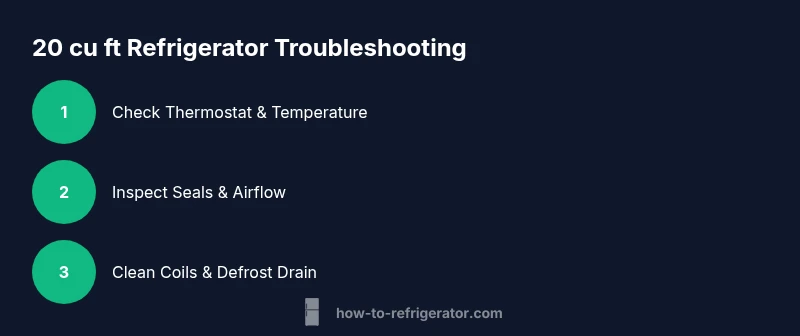
A structured diagnostic approach helps isolate causes without guessing. Start with the thermostat setting and internal temperature readings; small changes can yield big results. Inspect door gaskets for gaps or tears and clean them to restore a tight seal. Check the condenser coils for dust and debris, since dirty coils reduce cooling efficiency. Listen for the evaporator fan when the door is opened and confirm that airflow across shelves is unobstructed. If frost is excessive, perform a manual or automatic defrost according to your model’s design and clear the defrost drain if water backs up. Finally, use a multimeter to verify that the compressor relay and thermistor are functioning. The goal is to create stable, even temperatures throughout the cabinet and to maintain safe storage conditions for perishable items. If the unit still struggles after these checks, consult the service manual or a professional technician. The How To Refrigerator team emphasizes documenting symptoms during checks to help diagnose more complex issues.
Energy Efficiency Tips for a 20 cu ft Refrigerator
Energy efficiency for a 20 cu ft model hinges on minimizing heat gain and maximizing cooling efficiency. Start by ensuring the unit is level and has adequate clearance around the condenser for airflow. Keep door seals clean and replace any damaged gaskets promptly to prevent air leaks. Organize contents so cool air can circulate and avoid overfilling the interior, which forces the compressor to run longer. Regularly cleaning condenser coils and a properly set thermostat near 37–38°F for the fridge and 0–5°F for the freezer can help maintain steady temperatures without excessive energy use. If your home has higher ambient temperatures or frequent door openings, consider energy-saving strategies like placing the unit away from heat sources or using a smart thermostat to optimize compressor operation. How To Refrigerator analysis shows that proactive maintenance not only improves comfort but also supports long-term energy savings for households with this size of refrigerator.
Routine Maintenance for Longevity
Preventive maintenance is the most reliable path to a long-lasting 20 cu ft refrigerator. Schedule monthly inspections of door seals, vents, and interior shelving to ensure nothing is blocking airflow. Clean the condenser coils every 6–12 months, or more often in dusty environments. Check the defrost drain for clogs and purge frost that accumulates in the freezer compartment. Replace water filters as recommended by the manufacturer and inspect ice-maker lines for leaks. Keep the area around the unit clean and free of clutter to improve ventilation. Documenting maintenance tasks with dates helps you track when next servicing is due and reduces the chance of overlooked issues. This disciplined approach reduces energy waste, extends component life, and improves overall food safety and reliability.
Safety and Handling Electrical Components
Working on a fridge involves electricity and refrigerant systems, so safety is essential. Always unplug the unit before removing any panels or touching exposed wiring. Use insulated tools and wear eye protection when dealing with exposed components. Do not attempt to repair sealed refrigerant circuitry or replace major components without the correct training and certification. If you’re uncertain about any step, consult the service manual or contact a licensed technician. Handling electricity near water can be dangerous, so keep the area dry and avoid working in damp conditions. Properly reassemble panels and securely reconnect all wires and hoses before powering the unit back on. The safety-first approach protects you and preserves the integrity of your refrigerator’s cooling system.
Final Recommendations and How To Refrigerator Verdict
The How To Refrigerator team recommends a methodical, safety-first approach to troubleshooting a 20 cu ft refrigerator. Start with simple, non-invasive checks such as door seals and coil cleanliness, then progress to electrical diagnostics if basic fixes don’t resolve the issue. Document symptoms, test outcomes, and settings changes to guide any future repairs. If you discover persistent cooling problems or refrigerant-related concerns, defer to professional service to ensure compliance with safety standards and environmental regulations. Maintaining proper temperatures and preventing moisture buildup are the twin foundations of reliable operation for this size of refrigerator. Following these steps will help you preserve food safety, reduce energy use, and extend the life of your appliance. The How To Refrigerator team stands by a careful, incremental approach to home repairs.
Tools & Materials
- Phillips head screwdriver (#2)(For interior panels and fan housing screws)
- Flathead screwdriver(Alternative for stubborn screws)
- Multimeter(Check compressor and thermistor wiring)
- Thermometer (fridge/freezer)(Place in the fridge section to verify temps)
- Needle-nose pliers(Helpful for unplugging components)
- Towels/absorbent rags(For spills and condensate management)
- Flashlight or headlamp(Illumination inside compartments)
- Bucket(Catch defrost water if defrosting manually)
- Model-specific service manual (PDF)(Helpful for locating parts and diagrams)
Steps
Estimated time: 90-120 minutes
- 1
Unplug and prep
Power down the unit and remove all accessible foods to a temporary cooler. Gather your tools and lay towels to catch any spills. This first step reduces the risk of shock and keeps the workspace organized for the rest of the repair.
Tip: Take photos of panel layouts before removing parts to simplify reassembly. - 2
Verify thermostat settings
Check the thermostat setting and current temperatures with a fridge thermometer. If temperatures are too high or unstable, adjust the setting gradually and monitor for 24 hours to confirm stability.
Tip: Aim for about 37–38°F in the fridge and 0°F in the freezer for most models. - 3
Inspect door seals
Inspect gaskets for cracks, tears, or deformed shapes. Clean any dirt that could cause air leaks and perform a simple water test by closing the door on a folded piece of paper; if it slides out easily, the seal needs replacement.
Tip: Replace damaged gaskets promptly to restore efficiency and prevent moisture buildup. - 4
Clean condenser coils
Locate and clean condenser coils; use a coil brush or a vacuum to remove dust and debris. Dirty coils reduce efficiency and increase the workload on the compressor.
Tip: Vacuum in short strokes and avoid bending delicate components. - 5
Check evaporator and defrost system
Listen for the evaporator fan when doors are opened and observe frost patterns. If frost is excessive or there’s standing water, clear the defrost drain and inspect the defrost heater if present.
Tip: Do not attempt refrigerant work unless trained and certified. - 6
Test electrical components
With the unit unplugged, use the multimeter to verify continuity on the start relay and thermistor circuits. Look for signs of wear, burning, or damaged insulation on wires near the compressor.
Tip: If you’re unsure about sensor readings, refer to the model schematic before replacing parts. - 7
Reassemble and power on
Reinstall any panels, reconnect wiring, and plug the unit back in. Allow 24 hours of normal operation to verify that temperatures remain stable and there are no leaks or abnormal noises.
Tip: Keep the door closed as much as possible during the testing period to avoid temperature swings. - 8
Evaluate results and next steps
Record the temperature readings and any changes in performance. If issues persist after the diagnostic steps, consult a professional technician or contact the manufacturer for service options.
Tip: Document symptoms, settings, and steps taken to help the technician diagnose faster.
FAQ
What does the 20 cu ft specification mean for my refrigerator?
The 20 cu ft rating indicates standard interior volume for both fresh food and freezer compartments. It helps determine storage capacity and the amount of air that must be cooled. Real-world layouts vary by model, but the capacity generally supports a family of four with balanced space.
The 20 cubic feet refers to total usable interior space, guiding how much you can store and how airflow is managed.
Why isn't my fridge cooling properly after a door was left open?
Left-open doors allow warm air to enter, causing the compressor to run longer and the temperature to rise. Close the door firmly, wait for the temperature to stabilize, and check seals for leaks if the issue repeats.
If the door was left wide open, close it and monitor; check seals if you see recurring temperature rise.
How can I tell if the door seals are failing?
Look for cracks, tears, or gaps in gaskets. A simple test is to close the door on a folded piece of paper; if you can pull the paper out easily, the seal may be worn. Replace damaged gaskets to restore efficiency.
Check for cracks in the gasket and use a simple paper test to confirm seal integrity.
Is it safe to use tools near the compressor?
Yes, but only after unplugging the unit and using insulated tools. Avoid direct contact with refrigerant components and never work on pressurized lines unless you are licensed.
Unplug first, use insulated tools, and avoid working on the refrigerant system yourself.
How often should I defrost a manual defrost model?
For manual defrost models, defrost as needed when frost buildup reduces capacity or blocks airflow. Regular cleaning and monitoring can prevent excessive frost.
Defrost when frost starts to block airflow or reduce capacity.
Can I fix a noisy fridge myself?
Some noises come from loose parts or debris; check the condenser fan and remove any obstructions. If noises persist, a professional inspection may be necessary to avoid damage.
Yes, check for loose parts or debris first, but persistent noises may need a pro.
Watch Video
Top Takeaways
- Identify whether temperature and airflow are balanced before disassembling.
- Clean coils and check door seals to improve efficiency.
- Document symptoms and tests to help future repairs.
- If unsure, consult a pro to avoid safety risks.
- A systematic approach reduces downtime and food waste.