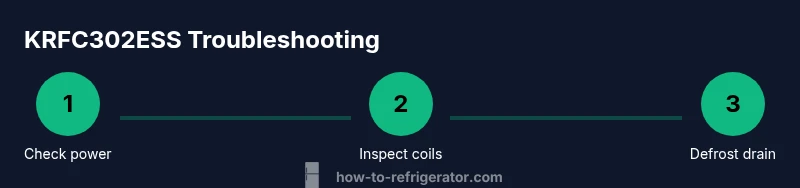
KRFC302ESS Not Cooling? Step-by-Step Troubleshooting
A How To Refrigerator guide to diagnose and fix cooling problems on the KRFC302ESS refrigerator, with safe prep, common causes, and DIY maintenance tips.


Goal: restore cooling on the krfc302ess by a safe, step-by-step check. Start with power, door seals, and airflow, then inspect the condenser coils, defrost drain, thermostat, and compressor. This guide covers safe prep, common causes, and clear actions to decide if you can fix it yourself or need a pro.
Why krfc302ess cooling issues occur
krfc302ess cooling issues typically stem from a few accessible sources: airflow blockages, dirty condenser coils, a malfunctioning defrost system, or a failing thermostat or compressor. The appliance relies on a steady choreography: cold air must circulate evenly; if a seal leaks or a fan stalls, warm air leaks in and the evaporator can't remove heat effectively. Start by verifying basic conditions: is the fridge plugged in and receiving power? Are the interior and door gaskets intact and sealing? Is the temperature control set correctly? Once these basics are confirmed, you can systematically test components without risking shock or water damage. In everyday homes, the most common culprits are blocked coils or a blocked defrost drain. The krfc302ess model uses frost-free technology, but ice buildup can still occur if the drain is clogged or the defrost cycle is interrupted. Regular maintenance reduces the risk of sudden failure and keeps energy use efficient.
Safety and preparation before you start
Before touching any electrical components, unplug the refrigerator and switch off the circuit breaker if needed. Remove perishable items and place them in a cooler. Use a flashlight to inspect behind the grille and around the coils; never remove tools or metal objects with wet hands. Wear gloves to protect from sharp edges. Keep a towel and bucket handy for defrost drainage. Record temperatures and settings before you disassemble any panels, so you can revert to them later. If your fridge has a water line or ice maker, shut off the water supply to avoid leaks.
Quick checks you can perform without tools
Check 1: Ensure power. Verify the outlet is working by plugging another device. Check the interior lights when the door opens. Check 2: Door seals. Close the door on a dollar bill or thin paper and see if you can pull it out without resistance. If the seal is loose, replace gaskets. Check 3: Airflow. Clear the back vent and ensure the evaporator fan is buzzing when the door is closed. Check 4: Condenser fins and coils. Use a flashlight to look for dust and debris; clean gently with a brush or vacuum. Check 5: Drain and defrost. If you see water pooling, pour warm water slowly down the defrost drain and observe for proper drainage. These steps help you pinpoint issues without disassembly.
Diagnosing and fixing common culprits
Condenser coils: Dirty coils reduce heat rejection, causing warm air inside. Vacuum or brush every 3-6 months; never use metal brushes that could damage the fins. Defrost drain: A clogged drain can freeze and block meltwater, leading to frost and poor cooling. Flush with warm water or use a flexible pipe cleaner to ensure unobstructed flow. Thermostat: If the thermostat fails, the compressor may run continuously or not at all. Use a multimeter to test continuity and resistance as per the user manual. Compressor: A buzzing or clicking compressor could signal failure; in many cases, this requires professional service. Evaporator fan: If you only notice poor cooling in some shelves or hearing no hum, inspect the evaporator fan and motor. Remember that not all issues are electrical; sometimes the solution is simply adjusting the temperature setting or replacing worn door seals.
When to replace parts and sourcing replacements
Replace parts only when testing confirms failure and after confirming no simple fixes remain. Condenser coils replacement is difficult; most homeowners opt for professional cleaning. Thermostats and defrost thermostats are DIY-friendly but require caution when removing panels. For parts, check the model number krfc302ess and verify compatibility with official retailers or reputable suppliers. Compare prices and read reviews; choose components with a warranty and clear installation instructions.
DIY maintenance to prevent future problems
Set a recurring maintenance routine: every 3-6 months, vacuum condenser coils, wipe gaskets, and clean the drip pan. Keep the refrigerator at 35-38°F (1.6-3.3°C) and the freezer at 0°F (-18°C). Ensure proper airflow around the back and sides; provide at least 1-2 inches clearance. Avoid placing hot items inside; cool foods first. Inspect door gaskets for cracks and replace if they don't seal within 5-6 inches of a dollar bill test.
Common mistakes and how to avoid them
Don't ignore faint unusual noises or frost buildup; don't slam doors; don't block the back grille; don't use sharp tools to pry panels. When replacing coils, never touch refrigerant lines. Always disconnect power before opening panels; mark wires to ensure correct reconnection. Keep a diagnostic log of symptoms to help a technician diagnose the problem if needed.
Troubleshooting workflow: a practical checklist
- Unplug and inspect seals. 2) Check airflow and fan operation. 3) Clean condenser coils. 4) Inspect and clear the defrost drain. 5) Test thermostat with a multimeter. 6) If unresolved, contact a professional technician and share your symptom log.
Tools & Materials
- Screwdriver set (Phillips and flat-head)(Sizes #0-2 as needed for panels)
- Soft cloths or microfiber towels(For cleaning and wiping surfaces)
- Bucket or shallow tray(Catch defrost water during drainage checks)
- Vacuum or soft brush(Gently clean condenser coils and dust)
- Flashlight(Inspect coils, ducts, and drain areas)
- Digital multimeter(Test thermostat continuity if available)
- Gloves(Protect hands from sharp edges)
- Owner's manual for krfc302ess(Reference model-specific diagrams and specs)
Steps
Estimated time: 60-75 minutes
- 1
Power down and unplug the refrigerator
Unplug the unit from the wall outlet and switch off the circuit breaker if needed. This minimizes the risk of shock while you inspect panels and electrical components.
Tip: Wait 2-5 minutes after unplugging to allow capacitors to discharge before touching any parts. - 2
Relocate perishable items
Move food to a cooler or another cold storage option while you work. This keeps food safe and prevents waste if the door remains open during diagnostics.
Tip: Label items by perishables and rotate stock when you return them to the fridge. - 3
Inspect door seals and airflow
Check gasket integrity by running a dollar-bill test and ensure interior vents aren’t blocked. Poor seals or restricted airflow can cause frost and uneven cooling.
Tip: If a seal is compromised, plan for gasket replacement before continuing. - 4
Clean condenser coils and inspect drain
Gently vacuum or brush coils to remove dust. Locate the defrost drain and flush with warm water to verify unobstructed drainage.
Tip: Avoid bending fins; work slowly to preserve coil integrity. - 5
Test thermostat and defrost system
Use a multimeter to check thermostat continuity and resistance according to the model’s manual. Inspect the defrost heater and timer to ensure the cycle runs as intended.
Tip: If you’re unsure about electrical tests, skip to professional help to prevent damage. - 6
Decide on next steps
If tests point to a faulty thermostat or defrost circuit, you may replace components. If the compressor shows signs of failure (unusual noises, heat, or excessive cycling), schedule professional service.
Tip: Document symptoms and test results to share with a technician.
FAQ
What are the most common causes of krfc302ess not cooling?
Most fixes involve dirty condenser coils, a blocked defrost drain, faulty thermostat, or airflow issues. Start with the basics and test components in a logical order.
Common causes include dirty condenser coils, a clogged defrost drain, and a faulty thermostat or airflow issue. Start with the basics and test components in order.
Can I fix not cooling myself on a krfc302ess?
Many issues are DIY-friendly, especially coil cleaning and gasket checks. More complex problems like compressor faults may require a professional.
Many issues can be fixed yourself, especially cleaning and gasket checks. Compressor problems usually need a pro.
Is it safe to unplug and replug the fridge during troubleshooting?
Yes. Unplug to begin and replug after completing each basic check. If you unplug for a long period, allow a few minutes before powering back on.
Yes, it is safe to unplug. After checks, replug and wait a few minutes before turning it back on.
How long should I flush a defrost drain if it's clogged?
Flush with warm water and observe drainage. If water still pools or freezes, stop and seek professional help.
Flush with warm water and watch the drainage. If it doesn't clear, call a professional.
What maintenance can prevent not cooling in the future?
Regular coil cleaning, gasket inspection, and keeping temperatures within recommended ranges help prevent many issues.
Regular coil cleaning and gasket checks, plus keeping proper temperatures, can prevent future problems.
When should I call a professional for krfc302ess?
If the compressor shows unusual noises, you notice refrigerant leaks, or DIY checks don’t restore cooling, schedule professional service.
Call a professional if the compressor acts up or you suspect a refrigerant leak, or if DIY checks fail.
Watch Video
Top Takeaways
- Prioritize safety and basics first before disassembly.
- Regular coil cleaning and drain checks prevent most cooling issues.
- Use a methodical testing approach for thermostat and defrost systems.
- Know when to DIY and when to call a professional.
- Document symptoms to help technicians diagnose faster.