How to Carry Refrigerator Up Stairs: A Complete Step-by-Step Guide
Learn safe, practical steps for carrying a refrigerator up stairs with two helpers, a dolly, and protective gear. This How To Refrigerator guide covers planning, equipment, and safety tips.


To move a refrigerator up stairs safely, plan with two people, a sturdy dolly, moving blankets, and straps. Clear the path, protect walls, and lock wheels. Tilt gradually, roll slowly, pause for turns, and set the fridge down gently at the end. This guide shows a safe, repeatable method today.
How to carry refrigerator up stairs safely
Moving a refrigerator up stairs safely demands planning, teamwork, and the right equipment. The risk is real, but a clear plan dramatically reduces strain and the chance of damage. According to How To Refrigerator Team, begin with a full route assessment and weight check to decide if you can complete the move with two people and a dolly, or if you should call a professional. In this guide, you will learn the essential steps to carry the fridge up stairs in a controlled, repeatable way, minimizing back strain, appliance damage, or wall scuffs. The plan should cover the route width, stair treads, door clearance, and available landing space. By approaching the move in stages rather than as a single lift, you’ll keep the fridge balanced and predictable, which is the cornerstone of safe appliance relocation.
As you prepare, remember that momentum matters less than balance. A slow, deliberate cadence with clear communication beats fast motion that can throw the fridge off its axis. Throughout this article you’ll see practical checks, equipment recommendations, and step-by-step actions designed for homeowners troubleshooting appliance issues. Keeping your spine aligned and your core engaged reduces the risk of injuries for you and your helper. If at any point the fridge feels unstable, pause, reassess, and never force a turn or a step. The How To Refrigerator team emphasizes patience and precision to protect both people and the appliance.
Planning the route: measurements, clearance, and helpers
Before you touch the fridge, map the journey. Measure the width of each doorway, hallway, and stairwell to ensure the appliance can pass without snagging. Mark the optimal path with tape so everyone knows where to go. For many stair moves, two people plus a dolly is the safest configuration; if the stairs are particularly narrow or steep, you may need additional help or professional assistance. Confirm the fridge’s weight category in the user manual and compare it to the dolly’s load rating. Clear the area of obstacles, remove rugs that could slip, and ensure there is a landing where you can pause to reorient the load. Communicate a simple set of signals (tip, stop, rotate, down) so both movers act in unison. Finally, unplug the fridge and empty its contents where possible to prevent shifting during the move. If you encounter a step that cannot be navigated safely, do not hesitate to reassess and adjust the plan.
When to proceed? If the route requires more than two people or the stairs are too narrow for safe clearance, it’s wiser to hire a professional mover or use a ramp option. How To Refrigerator recommends planning for contingencies, such as backup helpers or a temporary work area, so you can pause without losing balance. The aim is a predictable sequence with clear stopping points, so you never guess your way through a tricky turn or a transition.
Remember, even a well-planned move can hit a snag. If the fridge doors swing open unexpectedly or the dolly wheels slip on a landing, stop and reset. A calm, methodical approach reduces risk for everyone involved.
Equipment and protective gear you need
Having the right equipment is non-negotiable for carrying a refrigerator up stairs. A sturdy appliance dolly with strap kits is essential and should be rated to handle the fridge’s weight. High-quality moving blankets protect the appliance and walls from scuffs and dents. Door jamb protectors or corner guards keep trim from being gouged on tight turns. Protective gloves provide grip and protect your hands, while a measuring tape helps you confirm doorways and landings are clear. If you own a ramp or a foldable stair ramp, have it ready in case you need to reframe the approach. Finally, use sturdy straps to secure the fridge to the dolly and to help stabilize it during movement. Before you start, recheck each item for wear and proper function. If any piece looks compromised, substitute it with a safer alternative.
A well-equipped team can execute the move with confidence. The following items are strongly recommended:
- Two moving helpers who can lift and guide
- A heavy-duty appliance dolly with straps
- Moving blankets or pads
- Door jamb protectors or corner guards
- Work gloves and a measuring tape
- Protective footwear and, if needed, hearing protection
- Sturdy straps to secure the fridge to the dolly
With the proper gear, you’re far less likely to experience slips, scrapes, or accidental releases. Planning for equipment failures (spare straps, extra blankets) helps you stay safe and move forward calmly.
Step-by-step technique overview
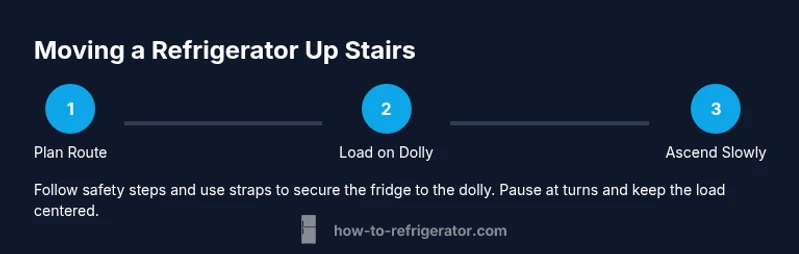
This section gives you a concrete framework for executing the move, covering preparation, on-route handling, and safe placement. While detailed steps are provided in the dedicated STEP-BY-STEP block, it helps to understand the core approach so you can anticipate what comes next. Begin with a clear four-point stance: two movers support the dolly’s base while a third guides the front edge of the fridge. Use straps to secure the load to the dolly and to the fridge doors (if possible) so nothing shifts during elevation. When ascending stairs, maintain a vertical posture with the fridge aligned to the center of the dolly. Communicate in short, fixed commands and avoid twisting while carrying the load. Do not attempt to pivot on a narrow corner without first stopping, repositioning, and ensuring the path is free. If you encounter a stair that feels too steep, back off and consider a different approach or a professional move. The process should be deliberate and disciplined, not rushed, to maintain control and prevent injuries.
For safety, keep a clear separation between the helpers: one person at the top to guide the fridge and another at the bottom to manage the dolly. If you must rotate the fridge at a landing, do so slowly and in short increments. After each major adjustment, pause to re-evaluate balance and confirm that all straps remain secure. When you reach the final landing, lower the fridge slowly onto a stable surface and remove the dolly with the same careful handling used to load it. The key is staying in control, communicating clearly, and using the equipment as intended. By following these principles, you reduce risk and make the move predictable and repeatable.
Tip: Practice your signals with an empty dolly before loading the fridge. This helps prevent miscommunication and builds confidence for the actual move.
Common pitfalls and how to avoid injury
Moving a fridge up stairs is a common homeowner challenge, but several mistakes can elevate risk. Rushing through turns can throw the load off balance, causing strain on the back or dropping the appliance. Skipping the use of a dolly or failing to strap the fridge securely increases the chance of shifting weight and boundary breaches with walls or railings. Not clearing the route or neglecting to measure doorway widths leads to last-minute scrambles. Never attempt a move if you’re unsure about your strength or the fridge’s weight distribution. If a doorway narrows mid-move, pause and reassess rather than forcing the load through. When stairs are uneven or have a loose tread, back away and use a ramp or re-route your path. If you encounter a stuck wheel or a damaged dolly, stop and switch to a backup tool. Finally, do not ignore power safety: unplug the fridge and ensure doors are secured to prevent swinging during transport. By anticipating these issues, you’ll avoid injuries and appliance damage.
If the fridge refuses to move smoothly at any point, stop, stabilize, and consider calling in a professional. The goal is a controlled, deliberate ascent, not a heroic but dangerous effort. Remember: the safer you are, the more likely the fridge arrives intact and performs well once plugged back in.
Special situations: tight corners, narrow stairs, and landing transitions
Tight corners and narrow stairs require extra planning and sometimes alternate strategies. If a turn is too sharp, you may need to reposition the fridge on the dolly, rotate the unit while aligned with the centerline of the stairs, and move slowly with the top helper guiding the edge of the fridge. For very narrow stairwells, consider removing doors or temporarily disassembling non-structural components if safe to do so. When a landing provides limited space, pause, re-center, and ensure both movers have strong, balanced stances before continuing. Landings should be treated as temporary rest points to reorient the load, rather than as places to rush the final lift. If the path requires you to tilt the fridge beyond a safe angle, stop and pivot to a different route. In complex stair configurations, a professional mover with stair-climbing equipment may be the best option rather than risking damage to the appliance or injury. The How To Refrigerator team notes that preparation, patience, and the right equipment are the keys to overcoming challenging stairs while moving a refrigerator upward.
Conclusion: safety and success depend on planning and patience
Moving a refrigerator up stairs is a manageable task when approached with a clear plan, proper equipment, and steady execution. The How To Refrigerator team recommends starting with route planning, verifying load capacity, and using a dolly with secure straps. By maintaining balance, communicating clearly, and pausing when in doubt, you’ll complete the move with minimal risk to you or the appliance. With these practices, you’ll preserve your home and enjoy a safely relocated fridge.
Tools & Materials
- Two moving helpers(Essential for balance and communication)
- Heavy-duty appliance dolly with straps(Rated for fridge weight; secure with straps)
- Moving blankets or pads(Protect fridge surfaces and wall edges)
- Door jamb protectors / corner guards(Prevents wall and trim damage on corners)
- Work gloves(Improve grip and protect hands)
- Measuring tape(Verify doorway and stair clearance)
- Sturdy straps(Secures fridge to dolly and prevents shifting)
- Optional ramp or stair ramp(Assist long moves or tight turns)
Steps
Estimated time: 60-90 minutes
- 1
Prepare the team and route
Gather two movers, the fridge, and all equipment. Confirm the route, measure doorway widths, and establish signals for stopping, rotating, and landing. Ensure the space is clear and well-lit to avoid trips or miscommunications.
Tip: Assign a lead mover who calls out the plan and checks balance before each lift. - 2
Inspect the fridge and secure belongings
Unplug the unit and remove drawers or loose items to minimize shifting. Close doors and secure them with a strap if possible to prevent swinging during the move.
Tip: Emptying the interior reduces weight and keeps doors from swinging. - 3
Position the dolly and attach straps
Roll the dolly to the fridge, slide the lower edge under it, and secure straps around the appliance. Check that wheels are locked and that the load sits centered on the dolly.
Tip: Double-check strap tension so the fridge doesn’t slip laterally. - 4
Lift onto the dolly with balance
Two movers lift together, keeping backs straight and knees bent. Tilt the fridge only as needed to slip it onto the dolly, maintaining a vertical orientation where possible.
Tip: Keep weight close to your body and use leg muscles to lift. - 5
Traverse stairs slowly with guidance
One person guides from the top and one from the bottom, moving the dolly in unison. Take time on each step, pause for turns, and never rush through a corner.
Tip: Communicate stop/slow/rotate commands clearly. - 6
Set down on a stable surface
At the final landing, shift the load to a stable floor surface and slowly detach the dolly. Recheck the fridge is level and clear of debris before reconnecting power.
Tip: Turn the fridge on after confirming level and clearance. - 7
Inspect and test after move
Reinstall drawers as needed, plug in, and verify that the fridge cools. Check for any new scratches or gaps around doors and seal areas to prevent drafts.
Tip: Listen for unusual noises in the first hours of operation and verify temperature settings.
FAQ
Is it safe to move a refrigerator up stairs with just one person?
No. Moving a fridge up stairs should always involve at least two people and proper equipment to maintain balance and control. Solo attempts increase the risk of back injuries and appliance damage.
Moving a refrigerator up stairs is not a one-person job. Hire a helper or professional if needed, and use a dolly for control.
What equipment do I need to move a fridge up stairs?
You’ll need a sturdy appliance dolly, two helpers, moving blankets, straps, gloves, a measuring tape, and optionally corner guards. Having backup straps and blankets is wise in case of equipment failure.
Essential gear includes a dolly, two helpers, blankets, and straps. Have extras available just in case.
How do I protect walls and floors during the move?
Wrap the fridge and any walls with moving blankets, use corner guards at sharp edges, and keep the path clear of loose rugs. Place mats at the entry and where you set the fridge down.
Wrap the fridge with blankets and guard corners to prevent wall and floor damage.
What if the stairs are too narrow?
If stairs are too tight, avoid forcing the move. Remove doors if possible, disassemble non-structural parts, or hire professionals with stair-climbing equipment to prevent injury and damage.
If the stairs don’t allow for safe passage, stop and consider professional help.
Can I move a fridge with an ice maker or water dispenser?
Unplug the fridge and drain any water lines if safely possible. Secure doors and avoid bending the water lines during the move to prevent leaks or damage.
Unplug it and secure any doors; if water lines exist, handle with care to avoid leaks.
What post-move checks should I perform?
Level the fridge, reconnect power, and monitor the compressor for unusual noises. Allow some time for the appliance to reach the proper temperature before loading groceries.
Check level, plug back in, and listen for odd noises after moving.
Watch Video
Top Takeaways
- Plan routes and measure every doorway before moving
- Use two movers, a dolly, and straps for stability
- Protect surfaces with blankets and guards to prevent damage
- Move slowly, communicate clearly, and pause at turns
- Check the fridge after placement for level and operation