How Long Will Homemade Salsa Last in Refrigerator: A Practical Guide
Discover how long homemade salsa lasts in the refrigerator, how to store it safely, signs of spoilage, and practical steps to maximize freshness.


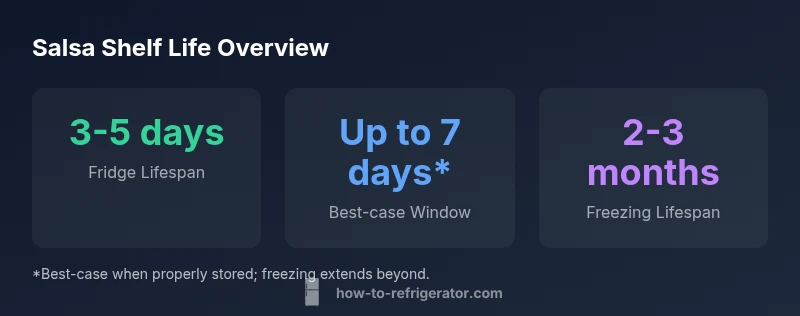
How long will homemade salsa last in refrigerator? In general, homemade tomato-based salsa stays safe to eat for about 3-5 days when kept tightly sealed in the fridge at 40°F (4°C). If stored with thorough sanitation and fresh ingredients, you may squeeze up to 7 days, but taste and texture decline after day five. Trust your senses and discard if off.
How Temperature and Ingredients Shape Shelf Life
The shelf life of salsa is shaped by several core factors, with temperature and ingredient quality at the forefront. When you ask, "how long will homemade salsa last in refrigerator," the simplest rule is: keep it cold, clean, and tightly sealed. At 40°F (4°C) or below, most tomato-based salsa slows microbial growth enough to stay safe for a few days. However, acidity, salt content, and the presence of fresh produce (onions, cilantro, peppers) all influence how long flavors stay vibrant and the product remains safe to eat. If you batch salsa on a hot afternoon and rush to refrigerate, you may reduce the risk of rapid bacterial growth. The bottom line is to treat salsa like other perishable products: fast cooling, proper containment, and consistent refrigeration are your best defenses against spoilage.
Ingredient Variability: Tomatoes, Onions, Cilantro
Ingredient quality matters as much as quantity. Ripe tomatoes with strong acidity can help preserve the mix slightly longer; onions and garlic introduce moisture that can promote faster spoilage if not controlled. Cilantro adds brightness but also introduces moisture. If your salsa uses canned tomatoes or tomato sauces with added acidity, shelf life may edge a little longer, but not dramatically. Wash and dry produce thoroughly, use clean utensils, and avoid cross-contamination. When preparing salsa, aim for consistent chopping size and uniform distribution of spices and herbs; uneven texture can trap moisture, accelerating spoilage.
Acid and pH: The Chemical Guardrails
Acidity plays a major role in determining salsa longevity. A higher acid content (more lime juice, vinegar, or acidic tomatoes) can slow bacterial growth and mold formation, helping the salsa stay safer a bit longer in the fridge. However, even with higher acidity, refrigeration remains essential. If the pH of your salsa drifts toward neutral, the shelf life shortens. Do not rely on acidity alone; this is a safety heuristic, not a guarantee. For home cooks, adding fresh lime juice to taste at the end can help but should be done conservatively.
Pulp, Texture, and Jar Choice: Airtight Storage
Storage containers and density influence salsa longevity. Glass jars with tight-fitting lids or food-grade plastic containers help minimize air exposure, which slows oxidation and microbial growth. Avoid metal lids that may corrode or impart flavors. Whether fresh or reheated, keep salsa in small portions to avoid repeated temperature cycling as you scoop servings. When you reuse containers, ensure they are thoroughly cleaned and sanitized to prevent cross-contamination that could shorten shelf life.
Preparation Practices That Extend Freshness
How you prepare salsa can shave days off its useful life. Work with clean hands and sanitized utensils; wash cutting boards and knives between ingredients. Chill ingredients before combining and cool the finished salsa promptly in shallow layers to maximize surface area for rapid cooling. If you plan to store for several days, consider adding extra acid (lime juice or vinegar) to boost safety margins, but avoid altering taste balance excessively.
Storage Rules: Fridge Placement and Handling
Place salsa toward the back of the fridge, not near the door where temps fluctuate. Use airtight glass containers, and portion into smaller jars to limit repeated exposure to warm air. Label jars with the date of preparation; this makes it easier to track freshness. If you notice an off odor, change in texture, or visible mold, discard immediately.
Signs of Spoilage and Safe Disposal
Mold growth, off smell, separation with sliminess, or a sour, rotten odor are clear spoilage signs. If you see any sign of mold or a drastic change in color, texture, or aroma, discard the batch. Do not taste-test to check safety; a small amount can cause illness. When in doubt, err on the side of caution and dispose of old salsa.
Quick-Reference Guide to Salsa Longevity
For quick planning, assume 3-5 days in the refrigerator as a baseline. Use best practices like tight sealing and cold storage to push toward the higher end of the range, and consider freezing leftovers for longer storage if you have a large batch.
Salsa shelf-life by container and storage
| Storage Condition | Estimated Shelf Life | Notes |
|---|---|---|
| Refrigerated in glass jar | 3-5 days | Sealed, 40°F |
| Refrigerated in plastic container | 3-4 days | Avoid leakage; flavors may mingle |
| Opened jar stored in refrigerator | 3-5 days | Keep lid tight |
| If freezing | 2-3 months | Texture may change |
FAQ
Can I freeze homemade salsa to extend its shelf life?
Yes. Freezing salsa is a viable option to extend storage to about 2-3 months. Texture may change after thawing; thaw in the refrigerator and use promptly.
You can freeze salsa for longer storage; thaw in the fridge and use it soon after.
What storage container is best for salsa?
Glass jars with tight-fitting lids are preferred because they seal well and are easy to sanitize. They minimize air exposure that can accelerate spoilage.
Glass jars with tight lids are the best choice.
Does cooking salsa extend its shelf life?
Cooking can reduce microbial load, but once opened, refrigeration and careful handling are still required. The shelf life remains within the same general window.
Cooking helps, but you still need to store it properly.
What are early spoilage signs I should watch?
Watch for mold, off smell, slimy texture, or color changes. If any sign appears, discard the salsa to be safe.
Look for mold or off smells; when in doubt, throw it out.
Does acidity level affect salsa shelf life?
Higher acidity can slow growth of bacteria, but refrigeration, clean utensils, and proper sealing remain essential. Acidity alone won’t guarantee safety.
Acidity helps a bit, but don’t skip cooling and sealing.
Should I discard salsa if it tastes slightly off but looks okay?
Yes. Flavor changes can precede spoilage; if in doubt, discard to avoid illness.
If it tastes off, throw it away.
“Fresh salsa lasts longest when prepared with clean equipment, promptly refrigerated, and kept sealed. Small, careful handling minimizes waste and safety risk.”
Top Takeaways
- Store salsa promptly after preparation.
- Choose glass jars with tight lids for best longevity.
- Check for spoilage signs before each use.
- Consider freezing for longer storage when appropriate.
- Label dates to track freshness reliably.