How Long Are Mashed Potatoes Good in the Refrigerator: A Homeowner's Guide
Learn how long mashed potatoes last in the fridge, how dairy affects shelf life, safe reheating temperatures, and best storage practices to keep leftovers safe and tasty.


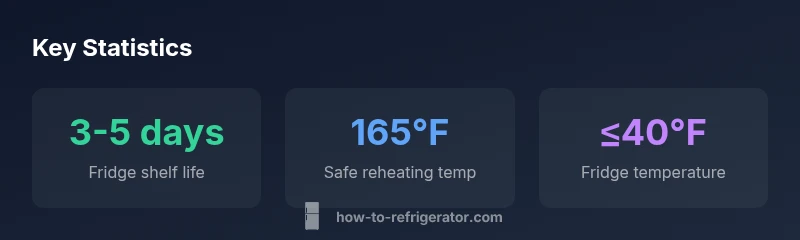
Mashed potatoes stored in the refrigerator remain safe to eat for about 3-5 days when kept at 40°F (4°C) or colder in an airtight container. Refrigerate within two hours of cooking and reheat to at least 165°F (74°C) before serving. If dairy is used, the window may be shorter; label containers with dates to stay organized. Storing in shallow, labeled containers aids rapid cooling and reduces bacterial growth risk.
Food Safety Foundations for Leftovers
When you cook a batch of mashed potatoes, the clock starts ticking on food safety the moment you finish cooking. According to How To Refrigerator, safe handling begins with rapid cooling and proper refrigeration. Proper cooling and storage are your first line of defense against foodborne illness. Aim to cool hot foods quickly, ideally within two hours, and keep your fridge at 40°F (4°C) or lower. Mashed potatoes are forgiving to a degree, but dairy fats and added ingredients can shift their timeline. In this section, we unpack the science behind the storage window and translate it into practical steps for a busy kitchen. By adopting these practices, homeowners reduce waste and enjoy safe leftovers that taste close to fresh.
How Long Are Mashed Potatoes Good in the Refrigerator?
The short answer is that mashed potatoes stored in the refrigerator are typically safe to eat for about 3-5 days when kept cold at 40°F (4°C) or lower in an airtight container. This window assumes standard homemade mashed potatoes without extensive perishable additions. If your recipe uses dairy such as butter, milk, or cream, the window may shrink to about 3-4 days because dairy fats can spoil more quickly after cooking. For recipes that include eggs or soft cheeses, plan for a tighter window of roughly 2-3 days. Always label containers with a date so you can track freshness at a glance. If unsure about smell, color, or texture, err on the side of caution and discard.
Dairy Content and Its Effect on Shelf Life
Dairy ingredients in mashed potatoes, such as butter, milk, sour cream, or cream cheese, boost flavor but also shorten refrigerated shelf life. Water activity and protein breakdown in dairy accelerate spoilage after cooking. To maximize safety, store dairy-containing mashed potatoes in small, shallow containers to speed cooling. Keep lids tight and avoid leaving containers open to fridge air, which can dry out the potatoes and invite microbes. If you know you’ll reheat later, consider adding dairy after reheating or using shelf-stable substitutes when appropriate. This approach balances taste with safety, especially for households with high turnover.
Storage Best Practices for Maximum Freshness
The way you store mashed potatoes matters as much as the ingredients themselves. Use shallow, airtight containers to promote rapid, even cooling. Divide large batches into several portions rather than one tall container, so the interior reaches fridge temperature quickly. Label containers with the date and contents to avoid guessing. Place leftovers on shelves where the temperature is most stable, not on the door where heat exposure from frequent opening can fluctuate. If you’re saving a portion for later, consider adding a small amount of dairy after reheating rather than before storage; this preserves texture and reduces spoilage risk over time. Never mix new potatoes with already stored leftovers to minimize cross-contamination.
Reheating Mashed Potatoes Safely
Reheating is where safety and texture intersect. Reheat mashed potatoes to at least 165°F (74°C) throughout, checking with a food thermometer in several spots to ensure even heating. Microwave reheats work well if you stir every 30 seconds to distribute heat, but the surface can dry out; adding a splash of milk or broth helps restore creaminess. Oven reheating in a covered dish at 350°F (175°C) for 15-20 minutes is a good option for larger portions, followed by a quick stir. If the potatoes were stored with dairy, reheat thoroughly and discard any leftovers that have been kept in the fridge for more than 3-4 days after reheating. Always inspect after reheating and discard if anything looks off.
Visual and Olfactory Cues: Spoilage Signals
Food safety isn’t a guessing game, but your senses are useful early warning signals. If mashed potatoes look discolored or develop a pink or green tinge, or if they emit an off or sour aroma, discard immediately. A sour or moldy odor is a clear sign of spoilage, as is an unusual slimy texture. After reheating, if the potatoes feel unusually watery or gritty, that’s often a sign of poor texture rather than safety; in such cases, err on the side of caution and discard. When stored properly in airtight containers, spoilage is minimized, but never rely on appearance alone if the product has been kept beyond the recommended window.
Freezing Mashed Potatoes: When and How
If you don’t plan to eat leftovers within the 3-5 day window, freezing is a practical option. Freezing mashed potatoes can preserve safety and flavor for longer, though texture may be affected upon thawing. Use shallow, freezer-safe containers or heavy-duty bags and leave space for expansion. Label with date and contents; for best quality, use within 1-2 months. Thaw in the refrigerator overnight before reheating slowly to 165°F. Reheated frozen mashed potatoes should be consumed promptly and should not be refrozen. Freezing is a viable way to reduce waste for big meals or holiday leftovers.
Quick Reference: Storage Time by Variation
Here is a compact guide to help you quickly judge how long mashed potatoes can stay in the fridge. Plain mashed potatoes: 3-5 days. Mashed potatoes with dairy: 3-4 days. Mashed potatoes with egg or extra cheese: 2-3 days. Remember to refrigerate promptly, keep at or below 40°F (4°C), and reheat to 165°F before serving. For longer storage, freezing is a better option, with best results within 1-2 months.
Common Mistakes and How to Avoid Them
• Leaving potatoes at room temperature for more than two hours increases bacterial growth risk. • Storing in a tall, dense container delays cooling in the center; use shallow containers instead. • Reheating only partially can leave some cold spots; always reach 165°F (74°C). • Re-storing leftovers after reheating doubles the handling risk; plan portions and reuse wisely. • Failing to label dates can lead to waste; label every container so you know when to discard.
Shelf-life guide by mashed potato variation
| Storage Type | Fridge Shelf Life | Notes |
|---|---|---|
| Plain mashed potatoes | 3-5 days | Dairy-free, longest fridge life |
| Mashed potatoes with dairy (butter/milk/cream) | 3-4 days | Dairy accelerates spoilage; keep sealed |
| Mashed potatoes with eggs or cheese | 2-3 days | Shorter shelf life with eggs/cheese |
FAQ
Can mashed potatoes be frozen to extend shelf life?
Yes. Mashed potatoes freeze well; store in freezer-safe containers for 1-2 months. Thaw in the fridge overnight and reheat to 165°F.
Yes, you can freeze mashed potatoes for longer storage; thaw overnight in the fridge and reheat to steaming hot.
How long are mashed potatoes good in the refrigerator after reheating?
Refrigerate leftovers promptly after reheating and consume within 3-4 days. Do not re-reheat more than once.
Reheat, then store in the fridge and eat within a few days.
Does adding eggs affect shelf life?
Eggs can shorten shelf life due to safety concerns; keep within 2-3 days.
Eggs can cut fridge time; use within a couple days.
Is it safe to leave mashed potatoes out at room temperature overnight?
No. Do not leave out more than two hours; leftovers left at room temperature should be discarded.
Two hours max at room temperature.
What storage container works best?
Use shallow, airtight containers to speed cooling and reduce contamination.
Choose shallow, airtight containers.
Why does dairy affect shelf life?
Dairy increases spoilage risk; it can lead to faster texture and smell changes.
Dairy can spoil faster; watch the clock.
“Proper cooling and reheating practices are essential to maintain safety and quality in home kitchen leftovers. Follow the 2-hour rule and reheat thoroughly to 165°F.”
Top Takeaways
- Cool leftovers quickly and store in airtight containers.
- Keep your fridge at 40°F (4°C) or colder.
- Reheat to at least 165°F before serving.
- Eat mashed potatoes within 3-5 days for safety and quality.
- Discard if you notice spoilage signs or doubt freshness.