Do You Need to Refrigerate Maple Syrup? A Practical Storage Guide
Discover whether maple syrup must be refrigerated after opening, how to store unopened bottles, signs of spoilage, and best practices for long-term shelf life in real-world home kitchens.


Yes. Do you need to refrigerate maple syrup after opening? Refrigeration is advised once the bottle is opened to minimize mold risk and preserve flavor. Unopened maple syrup can stay in a cool, dark pantry for months to years, depending on the bottle and storage conditions. This guide explains the nuances and safe practices.
Do you need to refrigerate maple syrup?
In practice, the answer hinges on whether the bottle is opened. After opening, refrigeration is the safest path to minimize mold risk and maintain flavor quality. According to How To Refrigerator, cleanliness and temperature control are the two most important factors. Maple syrup is high in sugar, which provides some preservation, but it is not immune to spoilage if contaminated or stored at improper temperatures. If you keep an opened bottle in the fridge and seal it tightly after each use, you’ll likely extend its peak aroma and pourable texture. For households with limited fridge space, you can divide the syrup into smaller, clearly labeled jars and use them within a reasonable timeframe. Always discard syrup that smells off, shows visible mold, or has an unusual texture.
Note: the guidance here applies to standard maple syrup sold for home use; exotic or blended syrups can have different storage notes.
Unopened maple syrup storage basics
Unopened maple syrup typically does best when kept in a cool, dark place away from heat sources and direct sunlight. A pantry or cabinet away from appliances that generate heat is ideal. The bottle should be kept upright and sealed to preserve flavor and prevent moisture ingress. Exposure to light can gradually degrade flavor and color, while heat can speed up spoilage. If you live in a very warm climate, you may choose to refrigerate unopened syrup to lock in quality, but it is not strictly required. Always check the label for manufacturer recommendations, as some brands may differ slightly in storage guidance. How To Refrigerator emphasizes that maintaining a stable storage environment is more critical than the precise location within the pantry.
After opening: fridge vs pantry storage
Once opened, refrigeration offers the most consistent protection against mold and yeast growth. In most homes, refrigeration is the preferred method for any bottle once the seal has been broken. If you must store opened syrup at room temperature, keep it in a cool, dark spot and use it within 1-3 months for best flavor and safety. If you have a very busy kitchen or limited fridge space, portioning into smaller jars can help you manage usage and hygiene more effectively. Always ensure containers are clean before filling and resealing to minimize contamination. The key is to minimize exposure to moisture and air, which can accelerate spoilage even in a high-sugar product.
Signs maple syrup has gone bad and safe handling
Before using syrup, perform a quick check: look for visible mold growth on the surface or inside the bottle, smell for sour or off aromas, and observe unusual cloudiness that doesn’t reverse after shaking and settling. Mold is a common spoilage indicator and means discard. If the syrup is clean, smells right, and pours smoothly, it is generally safe to use. Do not attempt to salvage spoiled syrup by heating or filtering—heat can alter texture and flavor and may not remove toxins formed by spoilage. For best practice, label opened bottles with the date and keep track of how long they’ve been stored.
Freezing maple syrup: when and how
Freezing maple syrup is a viable option for long-term storage, especially if you buy in bulk or want to protect flavor in advance. Freeze in small, airtight containers or silicone freezer bags, leaving headspace for expansion. Thaw slowly in the refrigerator when ready to use. After thawing, shake or stir to recombine any sugar crystals. Freezing may affect texture slightly, but it does not compromise safety if containers were properly sealed.
Practical storage checklist and mistakes to avoid
- Use clean containers and utensils to avoid introducing contaminants.
- Store opened syrup in the fridge and unopened syrup in a cool, dark pantry.
- Date your opened containers and rotate your stock to use older bottles first.
- Avoid storing near heat sources or in glass containers that can crack from temperature changes.
- Do not mix old syrup with new; always discard if spoilage is suspected.
- If you’re unsure about safety, err on the side of caution and discard.
Quick-start storage plan for small kitchens
For small kitchens with limited fridge space, start by keeping one opened bottle refrigerated. Store the rest unopened in a cool pantry. When you open a bottle, transfer a measured amount to a small jar and label it with the date. If you notice anything off, don’t risk it—discard and start fresh. Keeping a simple checklist on the fridge door helps ensure you follow safe storage habits consistently.
Maple syrup shelf life by storage method
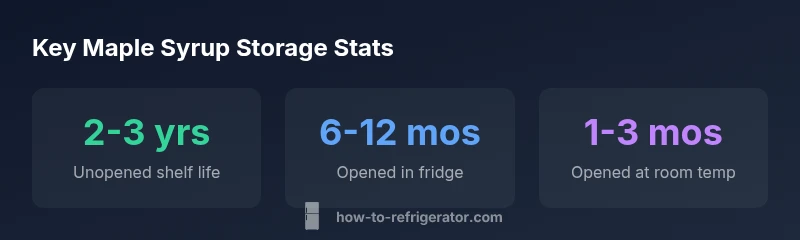
| Storage Condition | Typical Shelf Life | Notes |
|---|---|---|
| Unopened (pantry) | 2-3 years | Store in cool, dark place |
| Opened, in fridge | 6-12 months | Keep container sealed; mold risk decreases |
| Opened, at room temp | 1-3 months | Short-term use; refrigerate for longer life |
FAQ
Do opened maple syrup need refrigeration?
Yes. After opening, refrigeration is recommended to minimize mold risk and preserve flavor. If you must store at room temperature, use a cool, dark spot and consume within 1-3 months. Always reseal tightly and wash utensils between uses.
Yes—open maple syrup should be refrigerated to reduce mold risk. If you’re short on fridge space, keep it cool and dark and use it soon.
Can maple syrup stored in the pantry go moldy?
It can, especially if contamination occurs or the bottle is not sealed properly. Mold growth is more likely with open containers stored at room temperature. Refrigeration greatly reduces this risk.
Yes, pantry storage can lead to mold if the bottle isn’t sealed or contaminated. Refrigeration lowers that risk.
Is freezing maple syrup safe?
Yes. Freezing maple syrup is safe and can extend shelf life. Use small, airtight containers and thaw in the fridge. Expect minor texture changes after thawing, which can be shaken back into smoothness.
Yes, you can freeze maple syrup. Thaw in the fridge and shake to re-emulsify.
What are signs maple syrup has spoiled?
Look for visible mold, off smells, unusual cloudiness that won’t clear with settling, or an off-taste. Mold is a common spoilage indicator and means discard. If you see any of these, discard the syrup right away.
If you see mold or smell sour, discard it. Don’t taste to check.
Does the grade affect storage?
All maple syrups benefit from proper storage, though some grades may show flavor differences sooner. The core rules—keep clean containers, refrigerate after opening, and avoid heat—apply to all grades.
Grade doesn’t change the storage rules much; keep it clean and refrigerated after opening.
How can I store maple syrup in a tiny kitchen?
Use one opened bottle in the fridge and keep unopened bottles in a cool pantry. Portion into small jars for daily use, label dates, and recycle or rotate stock to minimize waste.
In a small kitchen, refrigerate opened syrup and keep others in a cool place; use smaller containers and label dates.
“Proper maple syrup storage is about maintaining a consistent temperature and clean containers to preserve flavor and safety.”
Top Takeaways
- Store opened syrup in the fridge to minimize mold risk.
- Keep unopened syrup in a cool, dark pantry.
- Check for mold and off smells before using.
- Consider freezing for long-term storage.
- Always use clean utensils to avoid contamination.