Do You Need AVR for Refrigerator: A Practical Home Troubleshooter's Guide
Discover whether you need an AVR for your refrigerator, compare AVR vs surge protectors, and learn a practical, safe approach to protecting your fridge from voltage surges.


Do you need an AVR for refrigerator? This guide helps you decide whether an AVR, surge protector, or other protection is right for your fridge. You’ll assess voltage stability, fridge sensitivity to surges, and the best protection approach. Expect practical steps, safety notes, and maintenance tips to keep cooling consistent and reduce component wear.
Understanding AVR and refrigerator power needs
If you ask do you need avr for refrigerator, start with the basics: an AVR is designed to stabilize voltage delivered to an appliance. Refrigerators have a compressor and electronics that are sensitive to voltage swings, especially at startup. In many homes, the electrical supply can experience brief surges, dips, or noise that affects the compressor cycle, defrost timer, and digital controls. The decision to use an AVR depends on local power quality and the fridge’s tolerance, which varies by model and age. This article explains how voltage regulation works, what to measure, and how protection strategies differ. You will learn to distinguish between a true voltage regulator and other devices like surge protectors, and how to read your fridge's specification sheet to gauge whether AVR protection makes sense for your setup. The goal is to empower homeowners to make an informed choice without unnecessary expense or risk.
When an AVR is helpful for a fridge
For environments with frequent surges or dips, an AVR can deliver steadier voltage, reducing wear on the compressor and electronics and helping avoid nuisance tripping. It can also improve performance during marginal grid conditions. However, not all AVR devices are created equal; you must select a unit rated for appliance use and consider the fridge’s startup current. Some high-quality models offer features like passive filtration and noise reduction. Before purchasing, verify that the AVR can handle the fridge’s running and startup loads, and ensure compatibility with your dedicated outlet. If power quality is generally reliable in your area, an AVR may be unnecessary. This section helps you decide, without over-spending, whether AVR protection is warranted for your setup.
Other protection options: surge protectors vs voltage regulators
Surge protectors are excellent for clamping occasional spikes but do not regulate voltage during dips; they won’t actively stabilize a fluctuating supply. Voltage regulators or AVRs actively balance inbound fluctuations to keep a steadier output. Some devices combine surge protection with regulation, but you should read specs carefully to ensure they are rated for appliance use and can handle cold-start inrush currents. Also consider line-noise filtering, which can improve the fridge’s electronics and sensors. If you live in an area with stable voltage and a modern home, a high-quality surge protector on a dedicated circuit may suffice. In contrast, older homes with long feeder runs or rural power can benefit from a purpose-built AVR.
How to determine if your home has voltage stability issues
Begin by testing outlets for stable voltage. Use a multimeter or a dedicated voltage tester to record nominal voltage, then observe during the fridge’s compressor start and defrost cycle. Note any significant dips, surges, or flickering lights. If voltage swings happen frequently or the breaker trips during startup, AVR protection becomes more compelling. Contact your utility if you notice persistent abnormal voltages; utility reports can help you decide whether a local regulator or service upgrade is appropriate. This practical assessment avoids unnecessary purchases and helps you tailor protection to your actual risk.
Step-by-step approach to implementing AVR protection
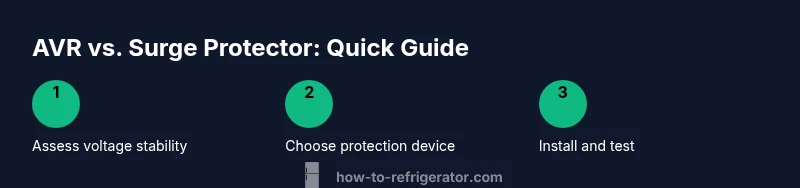
Decide whether AVR protection is right for you, then choose a model rated for appliance use and the fridge’s startup current. Install the AVR between the wall outlet and the fridge; do not plug the fridge into a power strip. If you opt for a surge protector instead, ensure it has a high enough joule rating and is designed for appliances with motor start-up. After installation, run the fridge for several hours and monitor performance and any voltage readings if your AVR provides live feedback. Keep a simple log of outages and surges to review with a technician if needed.
Installation considerations and safety warnings
Electrical work can be hazardous. Always unplug the fridge and, if you’re uncomfortable with wiring or high-voltage devices, hire a licensed electrician. Ensure the outlet is properly grounded and on a dedicated circuit free from other high-draw appliances. Avoid using extension cords for fridge power; a dedicated outlet reduces the risk of overheating and voltage drops. Read the AVR’s installation manual thoroughly, following the manufacturer’s recommendations for location, ventilation, and temperature limitations. Keep liquids away from outlets and devices to minimize shock risk.
Maintenance and long-term protection
Periodically inspect the AVR and outlet for signs of wear, heat, or discoloration. Replace damaged cords or devices immediately and test the system after any major local storm or outage. Keep the fridge’s manual handy and note the model’s voltage and current tolerances. Periodic checks help confirm that protection remains effective and that the refrigerator continues to run on a stable supply. Regular maintenance is a small investment that prolongs appliance life and reduces the risk of unexpected failure.
Common myths debunked about AVR and refrigerators
Myth: AVRs are only for expensive appliances. Truth: Even mid-range fridges can benefit from voltage stabilization in volatile networks. Myth: AVRs fix all electrical issues. Truth: They reduce risk from voltage swings, but won’t correct wiring faults or isolated equipment failures. Myth: A surge protector is enough. Truth: Surge protection defends against spikes but does not regulate voltage during dips. Myth: If lights dim occasionally, you must replace the fridge. Truth: Start by assessing voltage stability and protection options before replacing major components.
Real-world scenarios and decision tree
If you live in a city with hardened electrical infrastructure and stable voltage, AVR may be optional. In rural areas with long feeders and known fluctuations, AVR protection paired with a dedicated circuit often yields the best results. Use a simple decision tree: observe voltage stability → check fridge model tolerance → compare AVR vs surge options → implement the safest, code-compliant solution. This practical framework helps homeowners tailor protection to their unique power quality without guesswork.
Tools & Materials
- AVR (Automatic Voltage Regulator) suitable for household appliances(Rated for fridge startup current; follow manufacturer guidelines)
- Surge protector with built-in surge protection and noise filtering(Use only if AVR is unavailable; ensure it’s high-quality and rated for appliance use)
- Voltage tester or multimeter(Check nominal voltage and measure range; verify outlets supply within ±5% of rated voltage)
- Quality grounded outlet or dedicated circuit(Ensure outlet is properly grounded; avoid daisy-chaining through multiple outlets)
- Fridge specifications manual(Know your model's voltage and surge tolerance)
- Personal protective equipment (insulated gloves, safety glasses)(For handling outlets and devices safely)
Steps
Estimated time: 45-60 minutes
- 1
Assess outlet and fridge power needs
Inspect the outlet used by the fridge and identify whether it is on a dedicated circuit. Use a multimeter to observe baseline voltage and note any dips when the compressor starts. Document any recurrent voltage irregularities that could justify protection.
Tip: Take baseline readings over 10–15 minutes to capture typical swings. - 2
Evaluate protection options
Compare AVR vs surge protector based on your readings. An AVR actively regulates voltage, while a surge protector clamps spikes; the latter may not stabilize dips. Verify current rating matches the fridge’s startup load.
Tip: Ensure the device is rated for appliance use and has a clear tolerance specification. - 3
Install the chosen protection device
Place the AVR or surge protector between the wall outlet and the fridge. Do not plug the fridge into a power strip. Ensure adequate clearance for heat dissipation and avoid moisture sources.
Tip: Follow the installer’s manual exactly to prevent wiring errors. - 4
Test fridge performance
Run the fridge for several hours and monitor for stable operation and temperature. If you have AVR readouts, check whether the output voltage remains steady during compressor cycles.
Tip: Keep a small log of any unusual readings or temperature shifts. - 5
Plan maintenance and future checks
Schedule periodic inspections of the outlet, AVR, and power cords. If you notice warming, discoloration, or unusual odors, stop using the device and consult a professional.
Tip: Set a quarterly reminder to recheck connections and documentation.
FAQ
Do I really need an AVR for my refrigerator?
Not every fridge needs AVR protection. If your area has stable voltage and your fridge runs reliably, a high-quality surge protector on a dedicated outlet may suffice. If voltage swings are common, an AVR can help reduce wear on the compressor and electronics.
If your area has stable power, you might not need an AVR, but if you see frequent voltage swings, AVR protection could extend your fridge’s life.
What is the difference between an AVR and a surge protector?
An AVR actively stabilizes voltage to the appliance, while a surge protector clamps spikes. Surge protectors do not regulate voltage during dips and may not defend against all motor start-up surges.
An AVR regulates voltage; a surge protector clamps spikes but doesn't balance dips.
Can I use a regular power strip with a fridge?
No. Refrigerators should be plugged into a grounded, dedicated outlet. A power strip can overheat or fail to provide stable power during start-up.
Avoid power strips for fridges; use a dedicated grounded outlet.
How do I test my outlet voltage safely?
Use a multimeter or a dedicated voltage tester. Test with the fridge unplugged, then observe voltage during compressor start. If you’re unsure, consult a professional.
Use a multimeter to check voltage, especially during compressor start, and call a pro if readings worry you.
What signs indicate I should consider AVR protection?
Frequent voltage fluctuations, dimming lights, tripping breakers, or erratic fridge behavior are common indicators that protection may help. Use these signs as a trigger to evaluate AVR options.
If lights flicker or the fridge acts oddly, it’s worth checking AVR protection.
Are AVR devices energy-efficient for long-term use?
AVRs add only a small standby load, and the energy difference is typically modest compared with the protection benefits. Consider cost against risk and potential fridge life extension.
AVRs use a little energy, but their protection can be worth it if voltage problems exist.
Watch Video
Top Takeaways
- Assess your voltage stability before purchasing AVR.
- Choose protection rated for appliance use and fridge startup
- Avoid using a power strip for fridge power.
- Conduct a hands-on test and keep simple maintenance logs.
- If in doubt, consult a licensed professional.