Can You Have a Refrigerator Outside? Practical Guide for Homeowners
Discover whether you can safely place a refrigerator outside, the risks involved, and practical steps to protect an appliance from weather, power, and maintenance challenges. How To Refrigerator guides homeowners through fridge fixes and maintenance with clear, actionable steps.


Can you have a refrigerator outside? In general, outdoor placement is not recommended for standard residential fridges due to temperature swings, moisture, and warranty concerns. If you must, protect it with weatherproof housing, use an outdoor-rated appliance, install a dedicated outdoor outlet, and maintain proper ventilation. This guide explains when it's feasible and how to do it safely.
Outdoor Fridge Feasibility: When It Makes Sense
The question can you have a refrigerator outside often comes down to climate, usage, and risk tolerance. Outdoor placement is feasible for some households, but it is not the default choice for most kitchens. According to How To Refrigerator, the most important factor is keeping the appliance out of direct weather while allowing adequate ventilation. The team notes in How To Refrigerator Analysis, 2026 that most standard refrigerators are engineered for indoor conditions with relatively stable temperatures and humidity. In regions with extreme heat, cold snaps, or heavy rain, a conventional fridge can struggle to maintain safe temperatures, leading to higher energy consumption, condensation, and more frequent part wear. Temperature swings can cause seals to shrink or crack, shortening the life of gaskets and foam insulation. If you decide to pursue outdoor use, plan for a weatherproof enclosure, shade to limit sun exposure, and a dedicated, properly protected power source. In the following sections, we’ll explore climate-specific feasibility, enclosure strategies, and models designed for outdoor environments.
Choosing the Right Refrigerator for Outdoor Use
Not all fridges are created equal when it comes to outdoor use. If you must place a unit outside, the safer route is to select an outdoor-rated model or a fridge with a proven outdoor conversion kit from the manufacturer. Look for an appliance with an IP rating suitable for the environment and an interior cooling system designed to tolerate wider ambient ranges. Indoor-only units typically assume a controlled temperature range and may not perform well under direct sun or high humidity. If you’re unsure, consult the manufacturer’s specifications and read the user reviews focusing on outdoor performance. How To Refrigerator’s guidance for 2026 emphasizes choosing equipment explicitly built or certified for exterior use, then pairing it with protective housing and weatherproof connections.
Weatherproofing: Enclosures, Ventilation, and Placement
Effective weatherproofing starts with a sturdy enclosure that keeps rain, dust, and sunlight away while allowing enough airflow to prevent overheating. Position the fridge in a shaded area where afternoon sun is minimized. Maintain at least a few inches of clearance on all sides for air circulation around the condenser coils. Use vented panels or louvered doors rather than sealed shells to prevent heat buildup. Elevate the unit on a raised pad or platform to minimize ground moisture and improve drainage. Always protect the power cord and outlets with weatherproof covers and use corrosion-resistant fasteners to secure the enclosure.
These placement and enclosure decisions significantly affect energy efficiency and longevity. If the unit is shaded and well-ventilated, a fridge designed for outdoor use can perform closer to indoor expectations. Remember, the goal is to reduce temperature stress on the compressor and maintain stable internal temperatures.
Electrical Safety and Power Considerations
Outdoor use demands careful electrical planning. Install a dedicated outdoor-rated outlet that is GFCI-protected and housed in a weatherproof enclosure. Avoid daisy-chaining standard indoor cords or adapters and use an outdoor-rated extension only for temporary solutions. Ensure the outlet nearby has a weatherproof cover that remains closed when not in use, even in rain. If your climate experiences heavy moisture, consider a surge protector rated for outdoor use and a cord with proper insulation. Keep power cords off wet surfaces and away from potential splash zones. A mismatched electrical setup is a common cause of fridge failures outdoors and can pose safety hazards.
Maintenance and Longevity in Outdoor Environments
Outdoor fridges require more frequent checks than indoor units. Rinse off dust and debris on a regular basis, inspect seals for cracks or hardening, and watch for condensation inside the door gaskets. Outdoor conditions can accelerate corrosion on metal components, so use rust-resistant door hinges and hinges’ lubrication as needed. Periodically verify proper drainage around the unit to prevent water pooling that could corrode components. If you notice unusual noises, frost buildup, or inconsistent temperatures, address the issue promptly to prevent long-term damage. A well-maintained exterior unit will tend to last longer and operate more efficiently.
Common Pitfalls and How to Avoid Them
Common mistakes include using an indoor-only fridge outdoors, neglecting weather protection, and not providing adequate ventilation. Another pitfall is choosing a unit based on price alone without checking operating temperature ranges. Be cautious about climate compatibility and warranty terms—outdoor use can void some warranties. Never run non-weatherproof electrical connections or cover vents during operation, and avoid placing the fridge directly on soil or concrete that traps moisture. Plan for seasonal maintenance and a contingency for extreme weather to protect your investment.
Indoor Alternatives That Actually Work
If outdoor conditions are too hostile, a garage or covered porch can be a practical compromise. A garage fridge often sits inside a climate-controlled space while still freeing kitchen space. Look for compact, energy-efficient models designed for larger temperature swings if you must place something near a doorway or in a semi-exposed area. Another option is a dedicated beverage cooler for outdoor entertaining, which is typically smaller and easier to shield from the elements. In many cases, an extra indoor fridge in a dry, climate-controlled space provides a safer, longer-lasting solution compared with a standard kitchen unit kept outdoors.
Quick-start Checklist for Outdoor Setup
- Confirm climate suitability and non-extreme exposure
- Choose an outdoor-rated unit or a fridge with manufacturer-approved outdoor kit
- Plan weatherproof enclosure with ventilation and shade
- Install a dedicated outdoor GFCI outlet with weatherproof cover
- Elevate and level the appliance for drainage and stability
- Schedule regular maintenance checks (monthly) for seals, condensation, and corrosion
- Keep a moisture barrier between ground and enclosure to prevent rust
Real-world Scenarios and Expert Tips
In practice, many homeowners successfully use outdoor-rated fridges in covered patios or garages with proper protection. The key is to respect operating temperatures and ensure your unit has consistent airflow. If you live in areas with drastic temperature changes, consider an insulated enclosure with reflective panels to minimize heat absorption. As a general rule, outdoor use should be considered only when the benefits clearly outweigh the risks, and safety and warranty implications are fully understood. For homeowners, the question of can you have a refrigerator outside should be revisited with a plan that emphasizes weatherproofing, electrical safety, and maintenance.
Tools & Materials
- Outdoor-rated refrigerator(Specifically designed for outdoor use; verify IP rating and operating temperatures.)
- Weatherproof enclosure or cabinet(Protects from sun, rain, and debris; ensure ventilation.)
- Dedicated outdoor outlet (GFCI)(GFCI protection; use outdoor-rated receptacle.)
- Weatherproof power cord and connectors(Outdoor-rated cable with proper connectors.)
- Ground pad or anti-vibration mat(Elevates unit; improves drainage and reduces wobble.)
- Ventilation spacer/clearance gauge(Maintain recommended clearance for heat dissipation.)
- Temperature/humidity monitor (optional)(Keeps track of ambient and internal temps.)
Steps
Estimated time: 2-4 hours
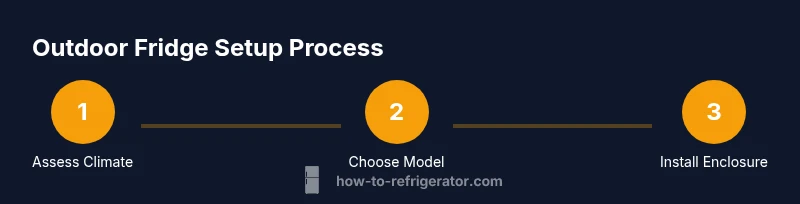
- 1
Assess climate and codes
Evaluate your local climate and check any applicable building or electrical codes. Determine if outdoor use is permissible and what protections are required. This step prevents choosing a setup that won’t perform in your environment.
Tip: Document any code requirements before buying equipment. - 2
Choose the right fridge
Select an outdoor-rated model or indoor unit with an approved outdoor kit. Compare operating temps and energy efficiency to ensure reliable performance outside the house.
Tip: Prioritize temperature tolerance over fancy features. - 3
Select protection and placement
Install a weatherproof enclosure, ensure shade, and provide at least 2-3 inches of clearance for airflow. Position away from direct rain and sprinkler spray.
Tip: Avoid blocking access to the condenser coils. - 4
Set up electrical safely
Install a dedicated outdoor outlet on a GFCI circuit. Use weatherproof covers and secure connections to prevent water ingress.
Tip: Never daisy-chain multiple cords or use indoor-rated adapters. - 5
Connect and test
Plug in the unit, verify it cycles correctly, and monitor temps for a full 24 hours. Check for frost, condensation, or unusual noises.
Tip: Keep a thermometer near the unit for accurate readings. - 6
Establish ongoing maintenance
Schedule monthly inspections of seals, drainage, and hardware. Clean surfaces to prevent corrosion and verify ventilation remains unobstructed.
Tip: Treat metal hinges with rust-preventive lubricant as needed.
FAQ
Can I legally place a refrigerator outside in my yard?
Legality varies by location and property rules; there’s usually no specific law against placing an outdoor fridge, but warranty terms and local electrical codes will apply. Always consult local guidelines and the appliance manual.
Rules depend on your area, but check warranty terms and electrical codes before setting up outdoors.
Will outdoor use void the fridge warranty?
Many manufacturers restrict outdoor use or require outdoor-rated models to keep warranties valid. Review the warranty terms and the device’s outdoor certifications before proceeding.
Warranties can be voided for outdoor use if the unit isn’t approved for exterior conditions.
What temperatures are safe for an outdoor fridge?
Most refrigerators specify a safe operating range around standard indoor temperatures, but outdoor units are tested for wider ambient ranges. Verify the manufacturer’s stated operating temperature and monitor temps closely.
Check the unit’s manual for safe operating temps and keep an eye on temperature stability.
Do I need a weatherproof outlet or special wiring?
Yes. Outdoor use requires a GFCI-protected outdoor outlet with weatherproof covers and proper weatherproof wiring to prevent shock hazards.
You’ll need a weatherproof, GFCI outlet to keep things safe outdoors.
Is a garage a good compromise for outdoor storage?
A dry, climate-controlled garage is usually a safer alternative that still frees kitchen space while reducing weather exposure.
Garages can be a safer middle ground than exposed outdoor placement.
Are there models designed specifically for outdoor use?
Yes. Some manufacturers offer fridges designed for outdoor use with appropriate ratings. Look for outdoor-certified labels and consult the spec sheet.
Yes—choose models labeled for outdoor use and check their specs.
Watch Video
Top Takeaways
- Assess climate before choosing outdoor setup
- Use outdoor-rated equipment and weatherproofing
- Prioritize ventilation and electrical safety
- Regular maintenance improves longevity
- Consider indoor alternatives if conditions are hostile