60-In Refrigerator Guide: Troubleshooting, Setup & Maintenance
Learn how to troubleshoot, install, and maintain a 60 in refrigerator. Practical steps, safety tips, and expert guidance from How To Refrigerator for homeowners.


A 60 in refrigerator requires careful space planning, ventilation, and secure mounting to ensure proper cooling and longevity. This quick guide helps homeowners confirm fit, understand size-specific considerations, and perform safe, initial maintenance and basic troubleshooting. You’ll learn essential measurements, door-swing, and coil-access checks. According to How To Refrigerator, mastering these steps reduces risk and saves time on large refrigerator projects.
What is a 60 in Refrigerator and Why It Matters
A 60 in refrigerator describes a very large appliance dimension, most commonly referring to height or width in inches. In real kitchens you may encounter a 60 in refrigerator that is 60 inches tall in a built-in or cabinet-front design, or a 60-inch-wide model in spacious layouts. For homeowners, understanding this size matters for fit, ventilation, energy use, and service access. How To Refrigerator notes that large refrigerators require stricter clearance around the back, sides, and top to ensure proper airflow and efficient operation. Without adequate space, motor strain and inconsistent temperatures can develop, increasing energy bills and reducing longevity. This groundwork helps you approach installation, door swing, and placement with confidence, especially when coordinating with other large appliances.
Sizing, Space Planning, and Installation Considerations
When planning to install a 60 in refrigerator, start with precise measurements: width, height, depth, and the required clearances from walls, cabinets, and flooring. Most guides recommend at least 1-2 inches of breathing room on the sides, 2-3 inches at the top, and a small gap at the back for heat dissipation. Verify door swing clearance in the room layout and account for any adjacent cabinets that might obstruct full door opening. Power outlets must be within a reachable distance, and a dedicated 15-amp or 20-amp circuit is often required for large appliances. Also consider floor strength in older homes; a heavy refrigerator can stress subfloors if not supported. This planning stage is essential to avoid late-stage problems during delivery and setup, and to ensure you can access service panels if needed.
Electrical, Ventilation, and Clearance Guidelines
Electrical connection should meet local codes and the manufacturer's specifications. Never run a 60 in refrigerator on an extension cord. Check that the outlet is grounded and that the circuit can handle startup surges. Ventilation matters: leave space behind and above the unit so condenser coils can dissipate heat. For most models, a nearby return air opening or ventilation grille helps maintain even temperatures. Clean coil access panels at least every 6-12 months, and check the rear grille for dust accumulation. These steps reduce strain on the compressor and improve energy efficiency, especially with high–volume doors that cycle more often. Proper clearance also minimizes vibration and wear on hinges and feet.
Common Problems with Large Refrigerators and How to Diagnose
Large refrigerators bring unique issues: inconsistent cooling, frost buildup in the freezer, and excessive condensation around seals. Start by verifying the internal thermostat setting (commonly around 37-40 °F in the fresh-food compartment and 0 °F in the freezer). Listen for a running but quiet compressor; if you hear loud buzzing or banging, you may have a fan or compressor problem. Inspect door seals for cracks or gaps using a thin dollar bill test: if you can pull the bill out easily when the door is closed, the seal may be failing. Check the defrost drain for clogs, especially if you notice standing water in the freezer. If you suspect refrigerant leaks, contact a pro. For safety, never attempt to reseal or repair refrigerant lines yourself.
Step-By-Step Setup for a 60 in Refrigerator
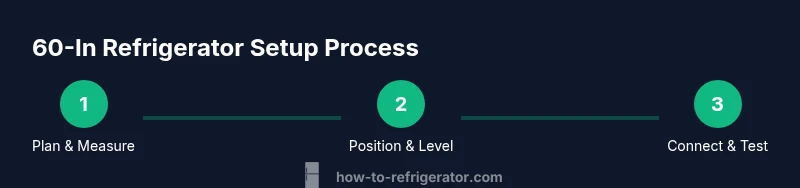
This overview provides a quick, practical sequence before first use. 1) Unplug the unit during installation and remove transit packing; 2) Move the fridge into position with help, and confirm level across corners; 3) Install anti-tip brackets if provided, and ensure proper ventilation; 4) Connect power and wait for the compressor to start within a few minutes; 5) Set initial temperatures to recommended ranges and verify cool-down across compartments; 6) Inspect door gaskets for a tight seal and adjust door alignment as needed. If the model includes a water dispenser, connect the water line following the manufacturer instructions. After setup, allow 24-48 hours for the temperatures to stabilize. Pro tip: document the location of service panels for future maintenance.
Maintenance Routine for Longevity
Proactive maintenance keeps a 60 in refrigerator running efficiently and reduces surprise outages. Create a monthly checklist that includes: inspecting door seals for cracks and clean edges; wiping vents clear of dust; checking interior temperature accuracy with a simple thermometer; and keeping the condenser coils free of dust. Every 6-12 months, unplug the unit and vacuum dust from the coils and rear grille, then re-check level and door alignment. Regular cleaning of shelves and gaskets prevents food contamination and extends gasket life. Keep a small log of temperatures and daily observations to spot slow changes early.
Safety Considerations for Large Refrigerators
Moving or adjusting a 60 in refrigerator can be hazardous if you don’t use proper lifting techniques. Always recruit at least one helper, wear protective gloves, and avoid forcing doors when they resist. Never bypass electrical safety schemes or tamper with sealed refrigerant components. Use a stable, level surface; avoid tilting the unit excessively during repositioning. If you smell gas or perceive a strong electrical odor, discontinue work and call a professional. A careful approach prevents personal injury and appliance damage.
How to Find Replacement Parts and Service
Finding compatible parts for a 60 in refrigerator starts with the model number and a trusted parts supplier. Keep the serial number handy when contacting service centers and verify compatibility for components like thermostats, fans, door seals, and defrost timers. For safety and reliability, rely on official service technicians for major repairs or parts that involve refrigerant or high-voltage systems. When in doubt, request a written estimate that itemizes parts, labor, and warranty terms. This section helps you avoid counterfeit parts and ensure long-term performance.
Authority Sources and Further Reading
To verify safety and best practices, consult authoritative resources on large-appliance care and energy efficiency. [Energy.gov] and [EPA.gov] offer guidelines on energy use, ventilation, and safe appliance operation. For workplace safety tips related to heavy lifting or electrical work, see [OSHA.gov]. These sources support the recommendations in this guide and help homeowners stay compliant with local codes and manufacturer requirements.
Tools & Materials
- Tape measure(At least 60 inches; measure width, height, and depth.)
- Spirit level(Check front-to-back and side-to-side level.)
- Flat-head and Phillips screwdrivers(For hinges, panels, and panels.)
- Socket wrench set(Feet leveling and bracket installation.)
- Gloves (work gloves)(Protect hands during moving and cleaning.)
- Cordless drill (optional)(Eases stubborn screws.)
- Multimeter (optional)(Electrical checks only if comfortable.)
- Owner’s manual(Model-specific instructions.)
- Soft cloths and mild cleaner(Exterior cleaning.)
- Defrost drain cleaner (optional)(Only if drain is clogged.)
Steps
Estimated time: 90-120 minutes
- 1
Unplug and prep the area
Power down the refrigerator and unplug from the outlet. Clear a path for movement and, if necessary, remove doors per the manual to reduce the risk of snagging on fixtures. Use blankets or moving pads to protect floors and the unit during relocation.
Tip: Always unplug before any relocation or disassembly; never move a plugged-in appliance. - 2
Measure space and plan clearance
Take precise measurements of width, height, and depth and compare to the appliance’s official dimensions. Confirm at least 1–2 inches of clearance on the sides and 2–3 inches at the top for heat dissipation. Ensure door swing will not hit cabinets or walls.
Tip: Double-check measurements at multiple points to avoid not fitting through doorways. - 3
Position and level the unit
Move the refrigerator into its final position and use a spirit level to verify it sits flat on all four feet. Adjust the feet until both front corners are level; ensure doors align and close without binding.
Tip: A level fridge seals better and reduces vibration noise. - 4
Reconnect power and set initial temperatures
Plug the unit in and set the fresh-food shelf to about 37°F (3°C) and the freezer to 0°F (-18°C) as a starting point. Do not make drastic temperature changes right away. Allow the fridge to run and reach steady-state temperatures.
Tip: If you recently moved, give the system 24–48 hours to stabilize before making further changes. - 5
Check door seals and alignment
Inspect gaskets for cracks or gaps; perform a dollar-bill test to confirm a tight seal. If doors rub or misalign, adjust hinges or shims per the manufacturer’s instructions. A poor seal wastes energy and can cause frost buildup.
Tip: A damaged gasket is cheaper to replace early than to pay higher energy bills. - 6
Inspect coils and airflow
Locate the condenser coils and gently remove dust with a brush or vacuum. Ensure there is ample clearance behind the unit for air flow. If coils are heavily dirty, perform a more thorough cleaning per the user manual.
Tip: Never spray water directly on electrical components; unplug before cleaning. - 7
Perform a final test run
Close all doors, listen for the normal cycling of the compressor, and verify the internal temperatures after 24 hours. If temperatures are off or noises persist, consult a professional rather than attempting risky repairs.
Tip: Document readings and any unusual noises to share with a technician. - 8
Document maintenance and future tasks
Create a simple maintenance log noting dates, settings, and any parts replaced. Schedule coil cleaning and gasket inspections every 6–12 months as part of ongoing care.
Tip: Set calendar reminders to maintain a regular service rhythm.
FAQ
What does a 60 in refrigerator mean in practice?
The term typically refers to a large appliance dimension—either width or height—impacting fit, clearance, and service access. Always verify the exact spec from the model’s data plate or manual.
A 60 in refrigerator usually means a very large model; always check the exact height or width on the data plate to confirm fit.
Can a 60 in refrigerator fit in a standard kitchen?
It can, but you must confirm clearances, door swing, and cabinet dimensions before purchase. If the space is tight, consider a model with a slimmer depth or a built-in configuration.
Yes, but you need to measure carefully and ensure door clearance and cabinet space first.
What are the energy considerations for large refrigerators?
Larger units generally consume more energy, but modern models with high efficiency ratings can mitigate this. Check Energy Star ratings and ensure ventilation reduces compressor cycling.
Energy use goes up with size, but high-efficiency models can keep operating costs reasonable.
Is professional installation required for a 60 in refrigerator?
Professional installation is recommended for large, heavy refrigerators, especially when perimeter walls, electrical outlets, or water lines are involved.
For a big fridge, a pro install is usually best, especially with water lines or complex hookups.
How often should condenser coils be cleaned on large fridges?
Condenser coils should be cleaned at least every 6-12 months, or more often in dusty areas. Regular cleaning improves efficiency and extends compressor life.
Clean the coils every 6 to 12 months, or more if your kitchen gets dusty.
What signs indicate a failing defrost system on a large fridge?
Frequent frost buildup, water pooling in the freezer, or warm temps in the fresh-food compartment can indicate a defrost problem. A service technician should assess refrigerant and defrost components.
If you see repeated frost or pooling water, get a pro to check the defrost system.
Watch Video
Top Takeaways
- Plan space and clearance before purchase or relocation.
- Avoid extension cords and ensure proper electrical supply.
- Regularly inspect seals, coils, and airflow for efficiency.
- Document settings and schedule preventive maintenance.
- Consult a professional for major repairs or refrigerant work.