What Refrigerator Makes Nugget Ice: A Practical Homeowner Guide
Discover which refrigerators offer nugget-ice capability, how nugget ice works, and practical maintenance tips for homeowners. Compare built-in versus countertop options and learn what to look for when buying for nugget ice at home.


There isn’t a single refrigerator that universally makes nugget ice. Nugget ice is usually produced by external machines or by select premium built‑in models with integrated nugget‑ice modules. For homeowners, the practical paths are a countertop nugget‑ice maker or a fridge that includes a dedicated nugget‑ice feature. Expect differences in ice quality, peak production rates, and maintenance needs.
What nugget ice is and why it matters
Nugget ice, also known as sonic ice or pellet ice, is beloved for its soft, chewable texture and rapid chilling. Unlike dense cube ice, nugget ice shatters more readily as it melts, delivering a cooler mouthfeel without diluting drinks as quickly. For homeowners, nugget ice quality often boils down to the ice maker design, water quality, and the freezer’s operating temperature. According to How To Refrigerator, nugget ice is prized in beverages, cocktails, and even smoothies because it blends smoothly with liquids and preserves flavor while staying cooler longer. This makes nugget ice a feature worth evaluating if you entertain or simply enjoy premium ice at home.
- Key traits to look for: ice texture, melt rate, and whether the system supports a steady supply without frequent refills.
- Common implementation paths: countertop nugget‑ice machines, portable modules, and select built‑in models that claim nugget‑ice capability.
- Maintenance reality: nugget-ice mechanisms often rely on a dedicated water line or reservoir, plus regular cleaning to prevent mineral buildup.
The end goal is consistent ice quality with manageable maintenance, not just a one‑time purchase. Homeowners who value this feature should weigh upfront cost against ongoing upkeep and reliability over several years.
Built-in nugget ice in refrigerators: reality vs countertop alternatives
Built‑in nugget‑ice capability is relatively rare in standard residential refrigerators, but it exists in select premium configurations and certain manufacturers’ high‑end lines. In practice, many households rely on countertop nugget‑ice machines or external modules that connect to a dedicated water line. The advantage of a built‑in approach is seamless integration with the fridge and dispenser, reducing clutter and moving parts on the countertop. The downside can include higher upfront cost, more complex maintenance, and potential service lag if the ice system develops a fault. How To Refrigerator Analysis, 2026 notes that built‑in nugget ice remains a niche feature, often bundled with broader “lifestyle” or “premium performance” claims rather than universal availability across all models. For most homeowners, a reliable countertop nugget‑ice maker paired with a traditional refrigerator remains the most practical path.
- Pros of built‑in: integrated aesthetics, fewer loose components, synchronized water supply.
- Cons: limited model availability, higher repair complexity, potential compatibility issues with existing water lines.
- Countertop path: flexibility, easier replacement, cross‑brand compatibility, and usually lower upfront cost.
How to tell if your fridge can make nugget ice
Assessing nugget‑ice capability starts with the product spec and the dispenser interface. Look for terms like “nugget ice,” “chewable ice,” or “specialty ice” in the feature list. Some models advertise a dedicated nugget‑ice module integrated into the freezer wall or dispenser assembly. Water supply considerations matter: built‑in Nugget‑ice features typically require a reliable water line and a filtration setup to prevent mineral buildup that can clog ice pathways. If your refrigerator lacks explicit nugget‑ice language, you’re unlikely to get true nugget ice from it without a separate solution.
- Check the user manual for ice type options and maintenance steps.
- Inspect the ice maker housing and dispenser area for branding that indicates nugget capability.
- Consider your water quality: hard water increases mineral buildup and maintenance needs.
In many homes, the most dependable path to nugget ice is a compact countertop unit with its own reservoir or line that can be used alongside a standard refrigerator. The “nugget‑ice ready” label is helpful, but verify with official specs and reviews before buying.
Design variants and considerations
Ice maker design hinges on how water is delivered, how the ice is shaped, and how the system clears and dispenses ice. Nugget ice requires fine control over water flow and chiller temperatures to form the small, soft pieces. Some configurations use a dedicated ice maker module within the freezer compartment; others employ integrated modules in the ice dispenser housing or a separate line connected under the sink. Filtration becomes more important with nugget ice because mineral buildup can alter texture and clog passages. Space, drainage, and energy use must be weighed against convenience. If you’re upgrading an existing fridge, verify: does your current plumbing support a new ice system, what is the maintenance cadence, and how easy is it to access repairs?
- Evaluate water filter compatibility and change frequency.
- Confirm service accessibility: can a nearby technician service the ice module separately?
- Consider energy‑efficiency features that minimize running costs during the ice‑production cycle.
Maintenance and troubleshooting for nugget ice functions
Routine maintenance for nugget ice systems focuses on keeping the water line clean, ensuring the water filter is up to date, and running periodic cleaning cycles to prevent mineral buildup. Start with the manufacturer’s cleaning instructions, then schedule a deep clean every 6–12 months depending on usage and water hardness. Common issues include reduced ice production, changes in ice texture, or ice dispensing jams. If ice quality drops, inspect the water line for kinks, verify the reservoir is vented properly, and ensure the freezer temperature is in the recommended range. For built‑in modules, consult a certified technician if you encounter persistent clogs or leaky connections. A simple rule of thumb is to treat nugget‑ice systems as higher‑maintenance components that directly affect beverage quality and overall fridge performance.
- Replace or clean water filters on schedule.
- Run the cleaning cycle as recommended by the manufacturer.
- Inspect for leaks and verify drainage is clear.
- If problems persist, contact a qualified technician for safe service and parts replacement.
Pros, cons, and decision framework
Choosing a nugget‑ice solution involves balancing convenience, cost, and reliability. Pros of nugget ice in a fridge or module include better beverage texture and faster chilling for parties. Cons center on higher maintenance needs and potential service costs. The decision framework should include: how important nugget ice is in your daily routine, your tolerance for maintenance, space considerations, and long‑term ownership costs. If you entertain frequently or value a premium drink experience, a built‑in nugget‑ice option may justify the investment; otherwise, a standalone countertop unit paired with a conventional refrigerator is often more pragmatic. In the end, test both the ice quality and the failure rate across several weeks to determine whether nugget ice meets your lifestyle.
Homeowner buying and care checklist
- Prioritize nugget‑ice capability in the feature list or verify via independent reviews.
- Confirm water supply and filtration requirements; ensure compatibility with your plumbing.
- Assess serviceability and parts availability in your region.
- Compare energy efficiency ratings and expected annual operating costs.
- Plan for maintenance cadence and budget for occasional professional service.
- Read user reviews focusing on reliability and ice quality over time.
- Factor in total cost of ownership rather than upfront price alone.
- Inspect warranty terms and what components are covered for nugget‑ice systems.
By following this checklist, homeowners can choose a solution that aligns with how they use nugget ice daily and minimize surprises down the road.
Nugget ice capability: built-in vs countertop options
| Feature | Nugget Ice Capability | Notes |
|---|---|---|
| Availability | Limited; varies by region | Selective premium models or countertop devices |
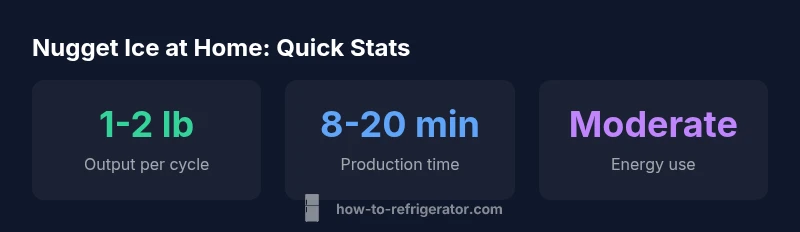
| Ice Production Time | 8-20 minutes per batch | Depends on model and water quality |
| Maintenance | Moderate | Regular cleaning and filter changes recommended |
| Water Supply | Requires dedicated line or reservoir | Hard water reduces performance |
FAQ
Do all nugget ice makers come built-in, or are countertop options enough?
Nugget ice is available in both built-in modules and standalone countertop machines. Built-in options offer sleek integration but can be less flexible and harder to repair. Countertop units provide portability and easier service, but require counter space and power sources.
Nugget ice can come from built-in modules or countertop machines. If you value flexibility, a countertop unit is often the easiest option.
Are nugget ice appliances energy-intensive?
Nugget ice systems vary in energy use. Built-in modules with efficient compressors and smart controls can be competitive with standard ice makers, while older or larger countertop units may use more energy. Check Energy Star ratings and model specs for precise figures.
Energy use varies by model—look for efficiency ratings when choosing.
Can I retrofit my existing fridge to make nugget ice?
A retrofit to add nugget ice to an old fridge is usually not practical. It’s typically better to add a separate nugget ice maker or replace with a fridge that includes a nugget-ice feature. Consult a technician for feasibility if you’re unsure.
Retrofits are typically not practical; a standalone unit is usually the better route.
Is nugget ice healthier than other ice types?
Healthiness largely depends on water quality and sanitation practices. Nugget ice isn’t inherently safer or healthier than other ice types; ensure clean water and proper cleaning routines to minimize contamination risk.
Health depends on water quality and cleanliness, not the ice shape.
What maintenance should I schedule for nugget ice?
Regular maintenance includes water filter replacement, cleaning of the ice path, and periodic descaling in hard-water areas. Follow the manufacturer’s guidelines, usually every 6–12 months, and monitor ice texture for signs of buildup.
Keep up with filters and cleaning to keep nugget ice flowing smoothly.
“Nugget ice can elevate beverage quality at home, but it’s a specialized feature that deserves careful evaluation of reliability and maintenance.”
Top Takeaways
- Identify nugget-ice capability in the feature list during shopping.
- Expect variations in production time and maintenance between models.
- Consider countertop nugget-ice devices as a pragmatic alternative to built-in modules.
- Maintain a regular cleaning and filter schedule for optimal ice texture.
- The How To Refrigerator team recommends testing ice quality before committing to a full system.