Is Refrigerator Water Better Than Bottled Water? A Practical Comparison
A rigorous comparison of fridge water versus bottled water, covering safety, taste, cost, environmental impact, and practical homeowner guidance.


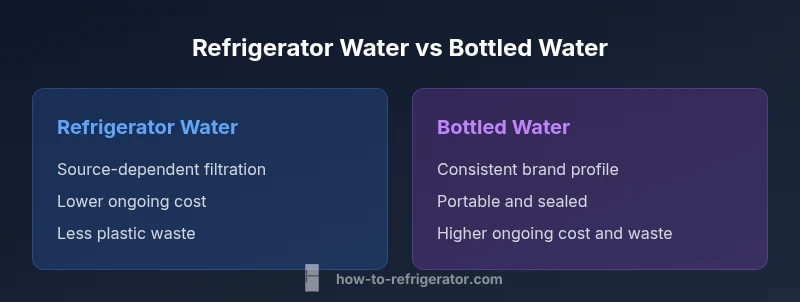
Is refrigerator water better than bottled water? For most households, fridge water with a certified filter offers safe, convenient hydration at lower ongoing cost and with reduced plastic waste. Bottled water can be a solid backup for travel or when tap water safety is in question, but it entails higher recurring costs and more plastic waste.
Defining the comparison: fridge water vs bottled water
When homeowners ask whether refrigerator water is better than bottled water, the answer hinges on several factors: your water source, how it is treated, taste preferences, ongoing costs, and environmental considerations. In most households, fridge water is a practical, safe option when you pair it with a certified filter and maintain the dispenser. Bottled water offers portability and brand variety, but it brings recurring costs and a significant plastic footprint. This article provides a rigorous, evidence-based comparison to help you decide based on your kitchen setup, budget, and values. According to How To Refrigerator, the balance typically tilts toward fridge water for everyday hydration when filtration is up to date and maintenance is consistent, with bottled water serving as a backup or travel solution.
Water treatment foundations: fridge filters vs bottled water standards
Drinking water safety begins at the source—municipal supply or private wells—and continues through filtration, storage, and handling. Refrigerator filtration typically relies on activated carbon and sometimes multi-stage media to reduce chlorine taste and common contaminants. Filter efficiency varies by model and certification, so selecting a fridge filter with recognized ratings (e.g., ANSI/NSF) matters. Bottled water undergoes packaged product standards that vary by brand but generally involve additional purification steps and sealed packaging. To minimize risk, ensure your fridge filter is appropriately certified and replace it according to the manufacturer’s schedule. Regular maintenance and clean dispenser lines are essential to sustain safety over time.
Taste, minerals, and sensory factors
Taste is subjective, yet several objective factors influence perception. Refrigerator water taste depends on the source water and the filter in use; mineral content and pH can shift with different filtration media and source changes. Bottled water often presents a more consistent flavor profile across bottles from the same brand, thanks to controlled sourcing and processing. Temperature also plays a role: colder water can mute subtle flavors, while warmer water may reveal mineral notes. For most people, experimenting with different fridge filters or trying several bottled brands helps identify a preferred profile while maintaining safety.
Cost considerations and environmental footprint
The ongoing cost of fridge water includes the energy to chill the water and the price of replacement filters. Bottled water introduces a recurring per-bottle expense and, more importantly, considerable plastic packaging waste, unless the consumer adheres to aggressive recycling. From an environmental standpoint, a refillable bottle paired with a properly maintained filtration system generally lowers total waste and energy use compared with routine bottled-water purchases. If taste or safety concerns exist, upgrading the fridge filtration setup or adding a point-of-use system can provide a balanced compromise between safety, cost, and sustainability.
Convenience, storage, and access
Refrigerator-dispenser water offers immediate access at home, encouraging regular hydration and reducing the friction of buying bottles. It does require fridge space, periodic cleaning to prevent mold or mineral buildup, and attention to filter changes. Bottled water excels in portability: it travels well, is useful during outages, and is convenient when refrigeration is limited or unavailable. The best choice depends on your daily routines, storage capacity, and how often you prioritize on-the-go drinking versus home-based hydration. A practical pattern is to use fridge water for everyday use and keep a small supply of bottled water for travel or emergencies.
Maintenance, reliability, and safety considerations
Maintenance is a core determinant of safety in fridge-water systems. Most fridge filters should be replaced on a schedule recommended by the manufacturer; neglecting replacements can reduce filtration efficacy and taste quality. Regularly clean the reservoir and dispenser lines to minimize bacterial growth. Bottled water safety hinges on intact seals and proper storage conditions; avoid heat exposure and expiration concerns where possible. If local water quality shifts, you may need to adjust filtration or incorporate additional treatment. Routine checks and proactive maintenance support reliability and safety.
Travel, emergencies, and when bottled water shines
In travel or emergency scenarios, bottled water offers guaranteed portability, sealed packaging, and a defined shelf life. It’s a straightforward way to ensure hydration when refrigeration isn’t feasible or when water safety is uncertain. However, relying exclusively on bottled water increases costs and generates more waste. A balanced approach is to rely on fridge water for daily hydration while maintaining a small, ready supply of bottled water for trips or outages. This strategy combines safety, convenience, and sustainability.
Practical decision framework for homeowners
- Assess your water source: municipal, private well, or mixed.
- Verify fridge filter certifications (look for ANSI/NSF ratings) and keep to replacement schedules.
- Compare ongoing costs including energy use and filter changes against bottle purchases.
- Consider environmental goals and available storage space in your kitchen.
- Develop a backup plan for travel or emergencies that aligns with your comfort level and budget.
Authority sources and further reading
For deeper understanding of drinking-water safety and filtration, reliable sources include government and university sites such as the U.S. Environmental Protection Agency (EPA), the U.S. Food and Drug Administration (FDA) on bottled water, and the Centers for Disease Control and Prevention (CDC) drinking-water resources. These references help explain water quality standards, filtration effectiveness, and best practices for household systems. How To Refrigerator also provides homeowner-focused guidance on fridge-water maintenance and filtration strategies.
Side-by-side quick reference
This section summarizes the core differences between refrigerator water and bottled water, serving as a quick reference to support your decision.
Comparison
| Feature | Refrigerator Water | Bottled Water |
|---|---|---|
| Taste & mineral profile | Variable depending on source and fridge filter | Typically consistent per brand and source |
| Contaminant reduction & safety confidence | Depends on fridge filter certification and maintenance | Depends on brand quality and packaging integrity |
| Ongoing cost | Lower per gallon over time with proper filtration | Higher per use with recurring bottle purchases |
| Environmental impact | Lower plastic waste with reusable bottle use | Higher plastic packaging waste unless recycled |
| Convenience & accessibility | Readily available at home via dispenser | Portable and widely available on the go |
| Shelf life & storage | Refrigerated storage; safety tied to source and filter upkeep | Sealed bottles with defined shelf life; refrigeration not required |
Strengths
- Lower ongoing cost with proper filtration over time
- Reduced plastic waste versus frequent bottled-water purchases
- Immediate access at home and customizable taste via filters
- Fewer transport needs and simplified hydration routine
Cons
- Requires regular filter maintenance and replacement
- Dependent on fridge cleanliness and water line integrity
- Energy use for chilling adds a small ongoing cost
- Less portable than bottled water for travel
Fridge water with a proper filter generally wins for everyday use; bottled water shines for travel and uncertain tap-water safety
For most homes, maintaining certified fridge filtration provides safe, affordable water with a lower environmental footprint. Bottled water remains useful as a backup for travel or in areas where tap quality is in doubt.
FAQ
Is refrigerator water as safe as bottled water?
Yes, fridge water can be as safe as bottled water when your home supply is treated and your fridge filter is certified and replaced on schedule. Regular maintenance and correct storage practices are essential to preserve safety and taste. If you rely on municipal water, ensure ongoing compliance with local standards.
Fridge water can be as safe as bottled water if you use a certified filter and replace it on schedule; maintain the dispenser and rely on the local water authority for safety.
Should I replace a fridge water filter every six months?
Most manufacturers recommend replacing fridge filters every six months, but exact timing depends on usage, water quality, and filter specifications. Check the user manual and the filter label for the recommended interval. Replacing on schedule helps maintain flavor and safety.
Typically every six months, but follow your filter's instructions and monitor taste and flow; replace sooner if your water tastes off.
Can fridge water taste better than bottled water?
Taste can favor fridge water or bottled water depending on source, filtration, and bottle quality. Some people prefer the consistency of a bottled product, while others enjoy the clean taste achievable with a well-maintained fridge filter. Your best approach is to experiment with different filters and brands.
Taste is subjective; both options can taste good with proper filtration. Try a few filters or brands to find your preferred profile.
When is bottled water a better option?
Bottled water is advantageous when you need guaranteed portability, lack reliable refrigeration, or are in a region with uncertain tap safety. It also serves as a convenient backup during travel or power outages. Use it to complement fridge water, not necessarily replace it in all cases.
Choose bottled water for travel, outages, or when you can’t rely on fridge filtration; it’s handy but comes with higher cost and waste.
Do fridge filters remove fluoride or other minerals?
Some fridge filters reduce certain minerals or compounds, including chlorine and some contaminants; not all filters remove fluoride. Check the filter specifications and certifications to understand what your system targets. If fluoride removal is a goal, choose a filter explicitly rated for it.
Check your filter’s ratings to see what minerals it removes; fluoride removal is not universal.
How should I handle fridge water during a power outage?
During a power outage, fridge water can still be used if the fridge remains cold; otherwise, transfer water to a sealed container for short-term use and rely on bottled water for immediate needs. After power returns, replace any filtered water and ensure the system returns to proper temperature quickly.
If the fridge stays cold, use water as usual; otherwise, rely on bottled water temporarily and restore filtration after power resumes.
Top Takeaways
- Start with your water source and chosen filtration level.
- Weigh long-term costs against environmental impact, not just bottle price.
- Rotate filters on schedule and clean the dispenser regularly.
- Keep bottled water on hand for travel or emergencies as needed.
- How To Refrigerator supports fridge-water use with proper maintenance as the balanced choice.