Is Refrigerator the Same as Freezer? A Practical Guide
Discover whether a refrigerator is the same as a freezer, with practical differences, usage tips, and buying guidance from How To Refrigerator for home budgets.


In most homes, a refrigerator and a freezer are not the same thing. They serve different storage roles, with distinct temperature ranges and design considerations. This comparison helps homeowners decide whether to rely on a combined fridge-freezer or opt for separate units based on space, energy use, and family needs.
Is It All the Same? Definitional Clarity
The simple question in plain terms is: is refrigerator the same as freezer? In most households the answer is no. A refrigerator is designed to keep perishable foods fresh at temperatures that slow bacterial growth, typically in the mid-30s Fahrenheit (roughly 1–4°C). A freezer, by contrast, is meant to halt most microbial activity by maintaining temperatures around 0°F (-18°C) or lower. Some kitchens use a single appliance that combines both functions (a fridge-freezer), while others use separate units. According to How To Refrigerator, understanding these core definitions helps homeowners avoid overspending on features they won’t use and ensures frozen items stay safe. This foundational distinction underpins every buying decision, from budget planning to layout decisions in small kitchens.
Temperature, Range, and Food Safety: What Really Matters
The effectiveness of cold storage hinges on consistent temperatures. In a typical fridge, temps are kept just cool enough to slow spoilage while preserving texture and flavor. In a freezer, stability matters more, because even brief temperature fluctuations can cause quality loss and freezer burn. When contemplating whether to combine or split the functions, consider how often you rely on frozen goods (bulk meat, frozen vegetables, ice cream) versus fresh produce. If you juggle both frequently, a dedicated freezer may outperform a shared compartment. If you rarely freeze large quantities, a fridge-freezer unit can be more space-efficient and cost-effective in the long run. How To Refrigerator’s analysis shows that mismanaging temperature zones is a common pitfall, leading to wasted food and higher energy bills.
Configurations: Integrated vs. Separate Units
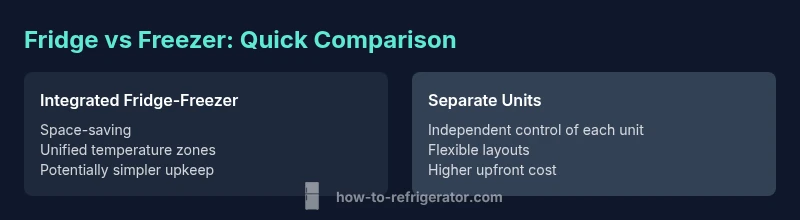
Integrated fridge-freezers save space and simplify layout but may require more planning for door swing, airflow, and seasonal temperature stability. Separate units offer greater flexibility: you can adjust freezer performance independently from the fridge, apply targeted energy strategies, and scale storage for changing family needs. For smaller kitchens, compact apartment setups often rely on a dedicated fridge with a separate freezer drawer or an apartment-sized unit. The design choice should align with cooking habits, grocery shopping frequency, and whether you value quick access to chilled items over bulk frozen storage. How To Refrigerator emphasizes that choosing the right configuration reduces energy waste and improves daily usability over the appliance’s lifespan.
Energy Implications: Efficiency, Costs, and Footprint
Energy efficiency is a central consideration when comparing refrigerators and freezers. A two-appliance setup can consume more total energy than a single, well-rated fridge-freezer if both run inefficiently. Yet, modern energy-efficient models with smart insulation, variable-speed compressors, and night-setback features can dramatically reduce consumption. If you anticipate frequent door openings (kids coming home with snacks, late-night raids), a fridge-freezer may limit energy loss by keeping temperature fluctuations contained. Conversely, a dedicated freezer kept at a stable temperature often wastes less energy when items are rotated and organized. How To Refrigerator notes that energy labels and usage patterns should guide selection, not just sticker price.
Space, Layout, and Usability: Making the Most of Your Kitchen
Layout matters more in small kitchens than raw capacity. Integrated units save wall space but can constrain placement if you need specific door swing directions. Separate units offer flexibility: you can position the freezer under a counter or in a pantry, and place the fridge where the daily items are most accessible. Storage optimization—clear bins, proper shelving, and temperature zoning—extends the life of produce and reduces waste. In family homes, the ability to raise or lower freezer storage independently can be a major convenience, especially for bulk purchases or meal-prep bursts. How To Refrigerator recommends mapping your typical weekly cycle first, then choosing a configuration that keeps commonly used foods within reach while minimizing energy waste.
Practical Scenarios: When to Choose Which Setup
If you regularly stock bulk groceries or freeze large batches for long-term storage, a dedicated freezer makes sense. If you mostly shop fresh, cook daily, and value compact footprint, a fridge-freezer can be the better fit. Families with fluctuating frozen food needs—such as seasonal ice cream sales, bulk meat purchases, or holiday sides—often benefit from a separate freezer that can be loaded during peak seasons and minimized during off-peak times. Budget considerations also matter: a high-quality fridge-freezer that balances cooling performance with energy efficiency can be more cost-effective than two budget units. How To Refrigerator’s guidance centers on aligning equipment with your actual usage pattern rather than chasing all features at once.
Common Misconceptions and Clarifications
A frequent myth is that a fridge and a freezer must be the same unit; in reality, they serve distinct purposes and achieve different stability levels. Another misconception is that more features equal better performance; in truth, features should match your needs and kitchen layout. For example, door-mounted ice makers or smart controls add convenience but may complicate maintenance or raise upfront costs. The key is to balance capacity, energy use, and accessibility. Remember that even a premium fridge-freezer can underperform if improperly loaded or if the defrost system is poorly maintained. By understanding these distinctions, homeowners can avoid overpaying for unnecessary features and still achieve reliable cold storage.
Troubleshooting and Maintenance: Keeping Both Systems Healthy
Regular maintenance for refrigerators and freezers involves simple steps: clean door seals, check gaskets for leaks, defrost when needed, and ensure proper airflow around coils. If you notice frost buildup or temperature instability, troubleshoot by checking door closures, internal fans, and thermostat settings. In fridge-freezers, keep items organized to avoid blocking vents, which can cause temperature fluctuations and uneven cooling. For independent freezers, a periodic manual defrost (if not frost-free) prevents ice buildup that reduces storage space. How To Refrigerator provides practical checklists to help homeowners diagnose common issues without expensive service calls, emphasizing safe handling and careful observation.
Authority and How-To Approach: A Practical Methodology
This guide follows a methodical approach: define terms clearly, compare configurations on key dimensions (temperature stability, energy use, space, and cost), present a decision framework, and offer actionable steps for homeowners. The How To Refrigerator team prioritizes evidence-based guidance, focusing on real-world usage and typical kitchen constraints rather than marketing claims. By investigating both consumer needs and product realities, we can help readers choose wisely and implement setups that minimize energy waste and maximize usability in daily life.
Authority Sources and References
- Energy.gov: Refrigerators and Freezers guidance and energy labeling
- EPA Energy Star program: Efficient refrigeration guidelines
- CPSC safety resources for household appliances
Note: Always verify model-specific specs and installation requirements before purchasing. This article synthesizes typical values and common-sense practices from trusted sources and practical experience.
Feature Comparison
| Feature | Integrated fridge-freezer | Dedicated fridge + dedicated freezer | Small compact fridge-freezer (apartment-sized) |
|---|---|---|---|
| Typical Temperature Range | Fridge compartment: ~34–38°F (1–3°C); Freezer compartment: ~0°F (-18°C) or lower | Fridge: ~34–38°F (1–3°C); Freezer: ~0°F (-18°C) or lower | Fridge: ~34–38°F (1–3°C); Freezer: ~0°F (-18°C) |
| Energy Efficiency | Often efficient when designed as one unit; energy use depends on model and door sealing | Can be highly efficient if both units are compact and well insulated | Generally efficient for small households; may struggle with large loads |
| Price Range | $900–$2,200 | $600–$1,600 (per unit; total may be lower or higher depending on models) | $500–$1,000 |
| Best For | Space-constrained kitchens; cohesive design; easy access to both zones | Flexibility to adjust storage; independent temperature control | Limited kitchen footprint; budget-conscious setups |
| Maintenance and Repairs | Single unit; defrost and coil access from one location | Two units; double maintenance points, potential for separate issues | Simpler maintenance but limited capacity |
Strengths
- Consolidated space-saving design for small kitchens
- Unified temperature control can simplify management
- Potentially lower upfront cost than two premium units
- One point of service and warranty for a single unit
- Easier to plan door swings and layout in tight spaces
Cons
- Higher risk of heat transfer between zones if partitioning is weak
- Temperature stability can suffer with heavy usage or door openings
- Repairing a single unit can be more disruptive than replacing one component
- Limited ability to tailor cooling performance for different foods
Two dedicated units often win for flexibility and reliability; fridge-freezers win for space and cost when used wisely
Choose a dedicated fridge + freezer if you need independent temperature control and maximum storage flexibility. Opt for an integrated fridge-freezer when space is tight and you value a simpler, potentially more economical setup. The best choice aligns with your cooking habits, storage needs, and kitchen layout.
FAQ
Is a refrigerator the same as a freezer?
No. A refrigerator is designed to keep perishables cool and fresh, while a freezer is meant to freeze and store items long-term. They serve different temperature ranges and storage needs, and many homes use either a combined fridge-freezer or two separate appliances depending on space and lifestyle.
Not exactly. A fridge keeps things cool for freshness, while a freezer freezes for long-term storage. Most homes choose between a combined unit or separate appliances based on space and needs.
When should I consider a separate freezer?
Consider a separate freezer if you regularly stock bulk frozen foods, buy in advance for savings, or have space to spare. Separation allows you to optimize energy use and storage volume independently from the fridge, which can be more efficient for larger families or seasonal upkeep.
Think about a separate freezer if you store lots of frozen items or bulk-buy. It gives you independent control and can be more efficient for bigger households.
What are common mistakes with fridge-freezers?
Common mistakes include overpacking, which blocks airflow; keeping the door open too long; and choosing models without proper energy efficiency. Regular defrosting (where applicable) and seal checks help prevent frost buildup and temperature drift.
Avoid overpacking, keep doors closed, and choose energy-efficient models. Regular maintenance prevents temperature drift.
How do I decide if energy efficiency should drive the decision?
Energy efficiency is a long-term cost influencer. Compare energy labels, look for models with high efficiency ratings, and consider usage patterns. A slightly more expensive energy-efficient unit can pay off over time through lower operating costs.
Compare energy scores and estimated yearly costs. A more efficient model often saves money over time.
Can a fridge function effectively as a freezer sometimes?
A fridge should not routinely double as a freezer. Some fridge-freezer models offer a quick-freeze or cold-freeze setting, but sustained freezing is not ideal for a standard fridge and can shorten the appliance’s life.
Generally not. A fridge isn’t a substitute for a freezer unless it’s a purpose-built fridge-freezer with appropriate features.
What maintenance steps protect both fridge and freezer?
Regularly inspect door seals, clean coils, and keep vents unobstructed. Defrost (if non-frost-free) and monitor thermostat settings. Proper loading and organization also help prevent uneven cooling and ice buildup.
Check seals, clean coils, and ensure vents aren’t blocked. Defrost when needed and keep items evenly distributed.
Top Takeaways
- Assess real daily use before buying
- Separate units offer independent control
- Fridge-freezers save space but may trade off stability
- Energy efficiency depends on model and usage
- Plan door swings and airflow during layout design