How Refrigerators Are Made: A Complete Guide to Production
Explore how refrigerators are made, from initial design and material selection to assembly lines, testing, and energy efficiency considerations. Learn core components, manufacturing steps, quality checks, and how to compare configurations for your home use.


This guide explains how refrigerators are made, tracing design choices, materials, key components, and the assembly process. You’ll see how the compressor, evaporator, condenser, insulation, and controls come together on the factory floor, followed by testing and quality assurance. Ideal for homeowners who want to understand production cues behind reliable, energy-efficient fridges.
Core design principles behind modern refrigerators
Designing a modern refrigerator means balancing cooling performance, energy efficiency, noise, and cost. When you consider how refrigerators are made, teams start from constraints like heat load, climate, and regulatory requirements. A thermal model informs component choices, from the compressor to insulation thickness, ensuring stable temperatures while minimizing energy use. The How To Refrigerator team notes that design also emphasizes reparability and modularity for serviceability. Materials are chosen for longevity and resilience—steel that resists corrosion, durable plastics, and foam insulation that reduces heat gain. Early decisions about cooling cycles, door seals, and electronics set the stage for a product that remains reliable under daily use across homes and kitchens. This design philosophy translates into a production-ready blueprint that guides every subsequent step and keeps consumer needs front and center. For homeowners, recognizing these design priorities helps explain why newer models emphasize efficiency ratings and smarter controls.
Key components: The heart of a refrigerator
At the core of every refrigerator is the refrigerant cycle, driven by a compressor that compresses the refrigerant gas. This gas then travels through the condenser where it releases heat, and the evaporator where it absorbs heat from the interior. An expansion device regulates the flow of refrigerant, while insulation in the cabinet minimizes heat transfer. The control system, sensors, and fans manage temperatures and airflow. The door seals and interior liners complete the airtight system. In short, the performance you rely on at home is the result of a carefully engineered loop of heat exchange, controlled by electronics and passive materials, all chosen to sustain consistent cooling while using less energy. When you read about how refrigerators are made, you’re watching a harmony of mechanical, electrical, and materials engineering. The end goal is a durable unit that keeps food safe and fresh with minimal environmental impact.
Materials and manufacturing methods
Manufacturing starts with forming cabinet panels from steel or coated metals, followed by cutting, stamping, and welding to shape the outer shell. Inside the cabinet, polyurethane foam insulation is injected between panels to create a rigid, highly energy-efficient wall. Plastics and durable polymers are molded for liners, shelves, and door interiors. The refrigerant circuit, along with the compressor and condenser, is assembled in a sealed module that is tested for leaks before integration. Electrical harnesses, sensors, temperature controls, and fans are installed, then wired to the control board. Adhesives, sealants, and gaskets ensure airtight seams and robust durability. Throughout production, quality checks verify tolerances, fit, and finish. This combination of metalworking, polymer science, and precision assembly demonstrates how refrigerators are made as integrated systems rather than simple boxes.
The assembly line: from parts to a working unit
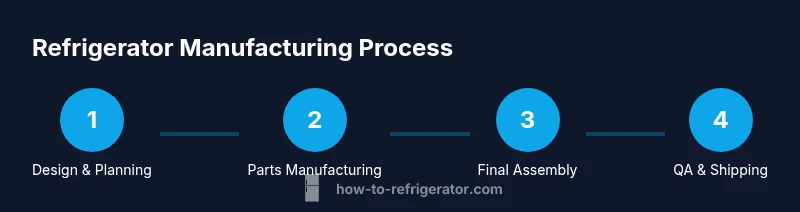
The factory workflow follows a logical sequence: cabinet and frame are prepared, insulation is integrated, and inner liners are attached. Panels are joined to form the outer shell, then the refrigerant circuit is installed, followed by the compressor package, condenser, and evaporator assembly. The electrical harness and control circuitry are connected, doors are fitted with seals, and shelves are installed. Final wiring checks, leak tests, and functional tests validate cooling performance and control accuracy. The final stage includes cosmetic touches, labeling, and packaging for shipment. This staged approach minimizes rework and keeps the line running smoothly. By understanding the assembly flow, you’ll see how each subsystem fits into the whole and why even small changes in materials or layout can affect efficiency and reliability.
Quality assurance and testing across stages
Quality assurance spans material sourcing, component inspection, and end-to-end system testing. Refrigerant circuits are pressure-tested, doors are checked for airtight seals, and insulation effectiveness is validated with thermal performance tests. Noise and vibration are measured to ensure quiet operation, while thermal stability tests verify that interior temperatures stay within target ranges under varying loads. Energy efficiency tests compare power draw against regulatory standards, and durability tests simulate years of use. Documentation captures all results to verify compliance before a model reaches shelves. The emphasis on QA reflects a commitment to safety, efficiency, and longevity, ensuring that how refrigerators are made translates into real-world reliability for households.
Energy efficiency and standards: how performance is measured
Energy efficiency is a defining factor in modern refrigerators. Standards and labeling programs push manufacturers toward lower power consumption without compromising cooling. Designers optimize compressor speed, insulation air gaps, and refrigerant charge to reduce waste heat. Testing aligns with regulatory requirements from government bodies and industry groups, ensuring a consistent baseline across brands. How To Refrigerator Analysis, 2026 shows that advancements in insulation materials, variable-speed compressors, and smart controls have collectively improved efficiency while expanding feature sets. Homeowners benefit through lower operating costs and better environmental performance, especially when choosing models with robust insulation and efficient compressors. This section connects the practical manufacturing decisions to the energy labels and real-world savings you’ll see in the kitchen.
Variants, configurations, and future-proofing
Fridge configurations vary by model type: top-freezer, bottom-freezer, side-by-side, and French-door designs each present different manufacturing challenges and opportunities. Suppliers tailor door hardware and shelving to specific layouts, while cooling circuits are configured to meet performance targets for each variant. While the core refrigeration cycle remains the same, the external form factor influences ventilation, door seal geometry, and interior layout. Manufacturers are increasingly adopting modular components and standardized interfaces to simplify assembly, maintenance, and aftermarket parts. The future of refrigerator production points toward more sustainable materials, digital controls, and predictive maintenance capabilities, all aimed at longer service life and easier upgrades for homeowners. This makes the manufacturing story of how refrigerators are made an evolving field driven by consumer demand and environmental responsibility.
Tools & Materials
- Safety gear (safety glasses, gloves)(Essential for handling metal, cutting tools, and chemicals during demonstrations or factory tours.)
- Measuring tools (calipers, tape measure)(Used to verify panel dimensions and tolerances in teaching demos.)
- Cutting tools (snips, shears)(For trimming metal and plastic samples during workshops.)
- Prototype materials sample set (steel, polyurethane foam, plastics)(Helps visualize insulation and structural differences.)
- Electrical testing kit (multimeter)(Used to illustrate circuit checks and sensor tests.)
- Reference manuals/design specs(Core documents that outline materials and tolerances for teaching.)
Steps
Estimated time: 3-4 hours
- 1
Review design goals
Identify key performance targets such as cooling range, energy efficiency, and space constraints. Understand how these goals drive material selection and component choice in the manufacturing plan.
Tip: Start with a simple diagram of the refrigerant cycle to anchor design decisions. - 2
Analyze core components
Study the compressor, condenser, evaporator, and expansion device. Learn how each part contributes to heat transfer and pressure changes within the system.
Tip: Relate each component to a real-life failure mode (e.g., leakage, overheating) to understand maintenance needs. - 3
Explore insulation and cabinet materials
Examine how foam insulation and cabinet walls reduce heat gain and protect the interior. Compare different plastics and coatings used in liners and doors.
Tip: Note the role of seals and gaskets in preventing air leaks. - 4
Visualize the assembly flow
Follow the sequence from frame fabrication to final wiring and panel assembly. Identify quality checks at each stage.
Tip: Ask yourself how a minor mismatch could impact efficiency and cooling. - 5
Assess quality assurance steps
Map tests such as leak checks, thermal performance, noise levels, and energy consumption to production stages.
Tip: Observe how data logging supports traceability and accountability. - 6
Compare configurations
Review how top-freezer, French-door, and side-by-side designs change internal layouts and cooling strategies.
Tip: Consider user needs and installation space when evaluating configurations. - 7
Evaluate future-proofing options
Consider modular components, smarter controls, and sustainable materials that extend product life and simplify upgrades.
Tip: Think about maintenance accessibility and standardized interfaces.
FAQ
What is the role of the compressor in a refrigerator?
The compressor acts as the pump for the refrigerant cycle, compressing low-pressure gas to high-pressure gas and circulating it through the system. It is essential for maintaining the refrigerant’s pressure and enabling heat transfer that cools the interior.
The compressor is the heart of the cooling loop, pushing refrigerant through the system to keep the interior cold.
Why is insulation so important in refrigerators?
Insulation minimizes heat transfer from the surrounding environment into the cabinet, helping the refrigerant cycle work efficiently. High-quality foam or similar materials reduce energy use and improve temperature stability.
Insulation keeps heat out and cold in, which means less energy is needed to keep food fresh.
Are manufacturing methods different for energy-saving models?
Yes, energy-saving models often use advanced compressors, better insulation, and smarter controls to reduce power draw while maintaining cooling performance.
Newer models use smarter controls and better insulation to save energy without sacrificing cooling.
What safety tests are performed during production?
Manufacturers conduct leak checks, electrical safety tests, and durability tests to ensure safety and compliance with standards before products reach consumers.
They test for leaks, electrical safety, and long-term durability, ensuring safe operation.
Do differences in fridge configurations affect production complexity?
Yes, configurations like French-door or side-by-side require different door mechanisms, wiring, and airflow layouts, which can add variation to the manufacturing process.
Different layouts mean different parts and assembly steps on the line.
Watch Video
Top Takeaways
- Understand the refrigerant cycle and major components
- Recognize how insulation and seals impact energy efficiency
- Visualize the assembly sequence from frame to QA
- Acknowledge the role of standards in guiding design and testing
- Appreciate how configurations affect both production and user experience