Standard Refrigerator Dimensions: How to Choose the Right Size
Understand standard refrigerator dimensions, how they affect kitchen layout, installation, and model selection. This guide covers common width, height, and depth ranges, plus tips for measuring and choosing the right fridge.


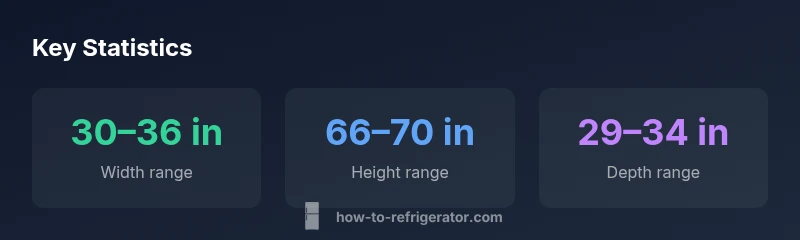
Standard refrigerator dimensions typically place most full-size models within a width of 30–36 inches, height of 66–70 inches, and depth of 29–34 inches. Counter-depth variants are typically shallower but taller to align with cabinetry, while compact apartment fridges fit smaller kitchens at around 24–30 inches wide. Always verify door swing and ventilation clearances before purchasing.
The Core idea behind standard refrigerator dimensions
When homeowners plan a kitchen or replacement fridge, the phrase standard refrigerator dimensions should guide both layout and purchase decisions. In practice, most full-size models fall within a broad width of 30–36 inches, a height around 66–70 inches, and a depth of 29–34 inches. These ranges reflect common interior configurations and cabinet depths in many homes. The exact footprint, however, varies by brand, door style, and whether you choose a standard, counter-depth, or apartment/compact model. Understanding these baseline measurements helps prevent space issues during installation and ensures that doors will open comfortably without colliding with nearby cabinetry or walls. According to How To Refrigerator, starting with these ranges makes the rest of the planning process more predictable and minimizes post-purchase surprises.
Why these dimensions matter for kitchen flow and accessibility
Right-sized dimensions affect not just fit but also daily usability. If a fridge is too wide for a narrow kitchen corridor, it can impede traffic, especially in galley layouts or small apartments. Height interacts with overhead cabinets and ceiling height; if a unit is too tall, it may rub the cabinet soffit or require a lift during installation. Depth matters for door swing clearance and ventilation space. A deeper fridge can protrude into walkways in tight kitchens, while a shallower model might reduce usable interior volume. By anchoring your planning on the 30–36 inch width, 66–70 inch height, and 29–34 inch depth ranges, you establish a dependable framework for evaluating model options and ensuring a smooth fit in a real home setting.
Configurations and how they shift footprint expectations
Standard full-depth fridges maximize storage but are generally wider and deeper than counter-depth and apartment versions. Counter-depth models are designed to sit closer to the countertop line, typically reducing depth but sometimes increasing height to preserve capacity. Apartment or compact refrigerators emphasize space efficiency, so these units often clock in at 24–30 inches wide and 60–66 inches tall, with shallower depths. It’s important to compare the stated exterior dimensions with the usable interior volume because some models compress interior space to maintain a slimmer exterior. When evaluating options, always check the product sheet for both exterior footprint and interior layout notes, including shelf adjustability and door-overture space.
How to read the spec sheet and identify critical numbers
Manufacturers publish a spec sheet with exterior dimensions, door swing diameter, and ventilation clearance recommendations. Look for three numbers labeled width (W), height (H), and depth (D). Then cross-check with the retailer’s installation diagram to ensure the cabinet openings remain unobstructed. Don’t forget to add clearance for door swing and for maintenance access, which is often omitted in marketing materials. If you’re replacing an older fridge, measure the existing opening with a tape measure at multiple points to account for irregularities in walls or flooring. Remember, the exact numbers vary by configuration, so rely on the model’s official dimensions rather than estimates from pictures.
Planning for installation: ventilation, gaps, and door swing
Ventilation space and door swing are critical to performance and longevity. Even a perfectly sized unit can overheat if there isn’t adequate air flow around the condenser and rear coils. Similarly, doors require clearances to swing fully without hitting adjacent walls or cabinetry. In practice, plan for a margin around the appliance equivalent to a few inches, depending on the model and whether you anticipate door shelving or handle additions. The How To Refrigerator team emphasizes confirming the recommended ventilation gaps in the installation manual and simulating door movement with cardboard cutouts or tape marks on the floor to visualize space usage before buying.
Practical examples: fitting a fridge into three common layouts
Example A: A standard 30–36 inch wide, 66–70 inch high, 29–34 inch deep fridge fits most traditional kitchens with a full-height pantry wall behind it. Example B: In a modern galley with limited width, a counter-depth option around 30–36 inches wide but 70 inches tall can maintain sightlines while reducing depth by several inches. Example C: An apartment kitchen might use a compact 24–30 inch wide fridge, which requires careful planning for storage efficiency and door clearance. Each scenario illustrates how the same dimensional framework adapts to real-world kitchens, underscoring the importance of precise measurements and model-specific details.
A compact planning checklist you can use today
- Measure the opening: width, height, depth, and the floor-to-ceiling clearance where the fridge will sit.
- Note existing wiring and plumbing constraints near the installation area.
- Check cabinet and counter alignments to ensure a flush look and practical door swing.
- Compare at least three models within the identified dimensional ranges to gauge interior layout vs exterior footprint.
- Confirm ventilation requirements and any installation accessories recommended by the manufacturer.
- Leave a small procedural margin for movement during installation and future maintenance.
How to adjust for nonstandard openings without compromising fit
If your kitchen has an opening that deviates from typical dimensions, you can explore a few noninvasive options. Some models offer adjustable feet that help achieve level alignment on uneven floors, while others provide hinge adjustments or removable handles for narrower openings. In some cases, a shallow wall clearance can be gained by relocating nearby shelving or using a doorway spacer. If these modifications seem daunting, contact a professional installer who can advise on whether a slightly different model with compatible exterior dimensions would preserve interior volume and door clearance.
Final thought: plan for the long view
Choosing standard refrigerator dimensions is more than matching numbers to a space. It’s about envisioning how the fridge will integrate with your daily routines, traffic patterns, and delivery versatility for groceries. By anchoring your decision in the common ranges (width 30–36 inches, height 66–70 inches, depth 29–34 inches) and carefully validating model-specific specs, you reduce the risk of a mistaken purchase and create a kitchen that remains functional for years.
Dimension ranges by model type
| Model Type | Typical Width | Typical Height | Typical Depth | Notes |
|---|---|---|---|---|
| Standard Full-Size | 30-36 inches | 66-70 inches | 29-34 inches | Common for family kitchens |
| Counter-Depth | 30-36 inches | 70-75 inches | 23-32 inches | Aligns with countertop height, less protrusion |
| Compact/Apartment | 24-30 inches | 60-66 inches | 23-28 inches | Fits small spaces |
| French Door | 32-36 inches | 68-72 inches | 28-36 inches | Requires wider opening |
FAQ
What is considered a standard width for most full-size refrigerators?
Most full-size refrigerators fall in the 30–36 inch width range, but exact measurements vary by model. Always check the product specs and confirm it fits your cabinet opening.
Most full-size fridges are about 30 to 36 inches wide. Check the exact spec before you buy.
How do I measure a space for a new refrigerator?
Measure the height, width, and depth of the opening, plus door swing clearance and vent space. Compare with the appliance’s listed dimensions and add a margin for maneuvering.
Measure width, height, depth, and add some room for doors to open.
Are counter-depth fridges actually shallower?
Counter-depth fridges are typically shallower than standard models, but can be taller to maintain capacity. Always check the specific model’s depth and clearance.
Yes, they’re shallower and often taller to fit near countertops.
Do standard fridge dimensions vary by region or brand?
Dimensions vary by brand and design (top-freezer, French door, etc.). Refer to exact model specs and measure your space for accuracy.
They vary by model, so read the exact specs carefully.
What should I do if the fridge doesn’t fit after purchase?
Double-check the opening measurements, consider removing handles or trimming doors if allowed, and contact the seller for space-fit guarantees.
If it won’t fit, consult the seller for space-fit guarantees.
“Choosing the right refrigerator starts with accurate dimensions and planned clearance. The How To Refrigerator Team emphasizes measuring twice, then choosing a model with comfortable margins for doors and ventilation.”
Top Takeaways
- Verify space before buying
- Account for clearance and door swing
- Choose configuration to fit your layout
- Always check model-specific dimensions
- Plan ventilation and access before installation