When to Clean Refrigerator: Practical Cleaning Schedule
Learn the right times to clean your refrigerator with a practical schedule, step-by-step guidance, and safety tips to keep food safe and your fridge efficient.


Goal: keep your refrigerator hygienic, odor-free, and energy efficient. For routine maintenance, clean every 4–6 weeks; perform a deeper clean every 3–4 months or after spills or leaks. Use mild dish soap, warm water, and a microfiber cloth. Remove shelves, wipe, rinse, dry, and reassemble. According to How To Refrigerator, a simple, consistent routine prevents food waste and odors.
Why Regular Cleaning Matters
Regular cleaning matters for hygiene, food safety, and appliance efficiency. A dirty fridge can harbor bacteria, cause cross-contamination, and mask spoiled foods. Odors can spread to new items, making planning meals harder. Beyond cleanliness, dust and spills on coils can raise energy use and shorten the unit’s lifespan. According to How To Refrigerator, regular fridge care helps prevent odors and keeps energy use in check. This section explains the why and how of keeping your fridge fresh, organized, and reliable.
Key reasons to clean:
- Food safety: remove spills and spoiled items to prevent bacterial growth.
- Odor control: stop lingering smells from affecting new groceries.
- Energy efficiency: clean coils and seals help maintain proper cooling without extra work.
- Organization: a tidy interior makes access and inventory easier.
Tip: plan your routine around shopping days or a calendar reminder so you don’t skip cleanings.
Understanding the When: Routine vs Deep Clean
There are two levels of fridge hygiene: routine wipe-downs and deeper, quarterly or seasonal cleans. Routine cleaning targets the interior walls, removable shelves, and door seals with a quick wipe-down and a rinse. Deeper cleans involve removing all shelves and drawers, cleaning gaskets, cleaning condenser coils if accessible, and addressing odors with baking soda or activated charcoal.
Why the distinction matters: routine care preserves freshness and reduces spill buildup, while deeper cleans reset odors, tackle hidden grime, and refresh seals and components that influence cooling performance. How To Refrigerator emphasizes that consistency matters more than the exact frequency; a feasible cadence beats sporadic, lengthy scrubs.
How Often to Clean: A Practical Guide
A practical cadence combines routine care with periodic deep cleans:
- Routine wipe-downs: every 2–4 weeks. This includes interior walls, shelves, and removable drawers wiped with mild soap and warm water, followed by thorough drying.
- Full interior refresh: every 3–4 months, or after a major spill, strong odor, or visible mold. Deep cleans should include gaskets, coils (if accessible), and exterior surfaces.
- After food incidents: immediately remove spoiled items, wipe the area, and re-clean if spills become widespread.
If you have kids, take extra care to clean spills promptly, as dairy and produce can leave persistent odors. If you notice cooling inefficiency or frost buildup, consider a more frequent cleaning cycle or professional inspection. How To Refrigerator’s framework suggests tailoring this cadence to your household’s usage and grocery habits.
What to Clean and What to Skip
Not every surface requires the same treatment. For most kitchens, focus on:
- Interior walls, ceiling, and corners (with a mild soap solution).
- Removable shelves and drawers (wash with warm soapy water and rinse thoroughly).
- Door gaskets (wipe gently to avoid tearing; trim mold with a soft brush).
- Exterior surfaces and handles (wipe with nonabrasive cleaner).
- Condenser coils (only if you know how to access them safely, and only when unplugged).
Skip harsh solvents that can damage plastics or leave residues. Never spray cleaner directly onto seals or electronics; apply to a cloth first and then wipe.
Deep-Clean Schedule: 12-Month Plan
A sustainable plan blends seasonal attention with routine upkeep:
- Winter: check door seals for cracks; clean gaskets and remove any condensation.
- Spring: empty the fridge, deep-clean interior, and deodorize with baking soda.
- Summer: verify airflow around the condenser area and clean exterior surfaces more often due to higher humidity.
- Fall: rotate stock to use items before expiration; perform a full interior wipe-down and inspect shelves.
Additionally, set reminders after major holidays or gatherings when you store more leftovers. This helps maintain a consistent rhythm without feeling overwhelmed.
Step-By-Step Quick Clean Routine
This section focuses on a fast cadence you can perform in under 20 minutes for routine maintenance:
- Empty a few items, move perishables to a cooler if needed.
- Wipe shelves and drawers with a mild soap solution, then dry.
- Clean the interior walls with a damp cloth, then wipe again with a dry cloth.
- Check seals for grime; wipe gently and dry.
- Return items in an organized manner and recheck the door seals.
- Note the date of the clean to inform your next session.
This quick routine helps prevent buildup between deeper cleans. If you have odors, add a baking soda tray to absorb smells.
Dealing with Odors: Neutralizing Smells
Odors usually originate from spoiled foods or spills that aren’t fully neutralized. Combat odors with:
- Baking soda: place an open box on a shelf to absorb odors.
- Clean rags and vinegar rinse for stubborn smells near vegetable drawers.
- Activated charcoal sachets can help between deep cleans (replace every 1–3 months).
- Proper airflow is essential; avoid overcrowding that blocks ventilation.
Rotate items regularly to prevent odors from settling into shelves or drawers. If odors persist after cleaning, run a quick interior wipe-down with a fresh soap solution and repeat.
Spills, Stains, and Food Safety Tricks
Spills require prompt action to prevent staining and growth of bacteria. Steps include:
- Wipe up spills immediately with a clean cloth and warm water.
- For sticky residues, use a small amount of dish soap and a sponge, then rinse.
- For strong stains, a baking soda paste can lift residue without damaging surfaces.
- Always rinse and dry surfaces to avoid moisture buildup.
- Keep a small stock of spill-cleaning wipes for quick touch-ups.
Food safety tricks include maintaining a consistent internal temperature and separating raw meats from ready-to-eat foods.
Tools, Materials, and Safe Cleaning Agents
To optimize cleaning sessions, keep a dedicated fridge-cleaning kit:
- Mild dish soap and warm water for everyday cleaning.
- White vinegar for deodorizing and disinfecting (dilute before use).
- Baking soda for odors and gentle scrubbing.
- Microfiber cloths and a soft sponge to avoid scratching.
- Old toothbrush for gasket crevices.
- Bucket or bowl for mixing solutions.
- Gloves if you prefer added protection or have sensitive skin.
Choose non-abrasive cleaners to protect interior surfaces, shelves, and gaskets; avoid bleach or ammonia inside the fridge unless specifically approved by the manufacturer.
Maintenance Habits to Extend Fridge Life
Small daily habits can extend the life of your refrigerator:
- Keep the interior organized to improve airflow and cooling efficiency.
- Don’t overload doors; too much weight can warp seals.
- Clean up spills promptly to prevent stains and mold.
- Check the door seals regularly for wear and tear, and replace as needed.
- Schedule regular professional inspections if you notice temperature inconsistencies.
Regular maintenance reduces expensive repairs and keeps your fridge running efficiently year-round.
Seasonal Deep-Clean Checklist
Use this concise checklist to stay on track throughout the year:
- Winter: inspect seals, dust coils if accessible, wipe interior.
- Spring: deep-clean shelves and bins, deodorize with baking soda.
- Summer: ensure coils are clean and accessible, clean exterior more often.
- Fall: perform a comprehensive interior wipe-down, reorganize contents for the holiday season.
Keep a calendar of the above tasks and adjust frequency based on household activity and food intake.
Common Mistakes to Avoid
Avoid these frequent missteps that undermine cleaning efforts:
- Using harsh chemicals inside the fridge or spraying cleaners directly on gaskets.
- Not drying surfaces thoroughly, leading to mold growth.
- Cleaning when the fridge is heavily loaded with items, which can lead to spills.
- Ignoring door seals or coils, which reduces efficiency and cooling performance.
- Waiting too long to clean after spills, which makes stains harder to remove.
Sticking to a routine helps minimize these errors and keeps your fridge in top shape.
Tools & Materials
- Mild dish soap(Gentle on surfaces)
- Warm water(For dilution and rinse)
- Microfiber cloths(Lint-free and absorbent)
- Soft sponge(Non-abrasive)
- White vinegar(Optional deodorizer/disinfectant)
- Baking soda(Odor absorption and gentle scrubbing)
- Old toothbrush(Gasket crevices)
- Bucket or bowl(Mixing solution)
- Gloves(Protect hands)
- Trash bag(Dispose spoiled items)
- Drying towels(Thorough drying after cleaning)
Steps
Estimated time: 60-90 minutes
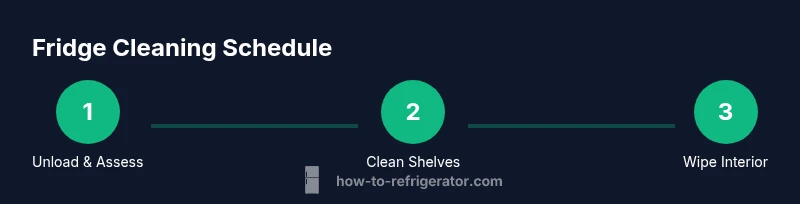
- 1
Unload and assess contents
Remove all items from the fridge. Check expiration dates and set aside anything spoiled or questionable. This clears space and reduces food waste during the cleaning.
Tip: Use a cooler to keep perishables cold while you clean; it preserves safety. - 2
Remove shelves and drawers
Take out all removable components to wash them separately. This ensures every surface is reachable and clean, avoiding hidden grime.
Tip: Place small parts in warm soapy water to soak while you clean the interior. - 3
Prepare cleaning solution
Mix a mild soap solution with warm water in a bucket. For deodorizing, add a little baking soda to the water or use a vinegar rinse on stubborn odors.
Tip: Do not mix bleach with ammonia or vinegar; it can create harmful fumes. - 4
Wipe interior walls
Wipe the interior surfaces from top to bottom. Rinse and wring cloth frequently to avoid spreading grime. Dry with a clean towel before reinstalling shelves.
Tip: Always follow with a dry buff to prevent moisture buildup. - 5
Clean shelves and drawers
Wash each shelf and drawer with the same mild soap solution. Rinse thoroughly and dry before placing back inside the fridge.
Tip: Check shelves for scratches; damaged shelves may need replacement to maintain cleanliness. - 6
Clean door gaskets
Gently wipe the door seals with soapy water. Use a soft brush for crevices to remove mold or residue without tearing the gasket.
Tip: Be careful not to pull or stretch the gasket; damaged seals reduce efficiency. - 7
Clean condenser coils (if accessible)
If you can access coils safely, dust them with a soft brush. Do not use water directly on coils unless the model manual specifies; unplug the unit first.
Tip: Only perform coil cleaning if you’re confident; improper handling can damage the appliance. - 8
Rinse and dry interior
Wipe away any soap residue with a clean damp cloth, then dry thoroughly with a towel to prevent moisture buildup.
Tip: A dry interior reduces mold growth between your deep clean cycles. - 9
Reassemble and restock
Replace shelves and drawers, then restock items in an organized manner to improve airflow and accessibility.
Tip: Group similar items together and label shelves if helpful. - 10
Check temperature and airflow
Ensure the fridge is at the recommended temperature (usually around 37–40°F / 3–4°C) and that air can circulate freely.
Tip: If you notice cooling inefficiency, reassess placement and avoid overfilling. - 11
Perform a quick freshness check
Inspect items for spoilage and verify dates. Clean any condensation and ensure drawers are dry before closing.
Tip: Use a marker to date leftovers for easier rotation. - 12
Document sanitation date
Record the date of the cleaning in a notebook or calendar to keep your schedule consistent.
Tip: Set a reminder for the next deep clean or quick wipe-down.
FAQ
How often should I clean my refrigerator?
Most households benefit from a quick interior wipe-down every 2-4 weeks and a full interior clean every 3-4 months, or after spills. Adjust frequency based on usage and household size.
Clean the inside every few weeks with a quick wipe-down, and do a deeper clean every few months or after spills.
Can I use bleach or harsh chemicals inside the fridge?
Harsh cleaners should be avoided inside the fridge. Use mild dish soap, water, or a vinegar-water solution. Rinse and dry thoroughly before returning food.
Avoid bleach inside the fridge; stick to mild cleaners and rinse well.
Should I unplug the fridge during cleaning?
For routine interior cleaning, you don’t typically need to unplug. Unplug if you’re cleaning coils or removing electrical components, or if the manual requires it.
Only unplug if you’re cleaning coils or accessing parts; otherwise it’s safe to clean with power on.
What should I do about strong odors in the fridge?
Address odors by cleaning with baking soda, deodorizing with an open baking soda box, and ensuring good airflow. Deep clean if odors persist after wiping.
Use baking soda and proper airflow to neutralize fridge odors.
Is it safe to clean condenser coils myself?
Coil cleaning is sometimes possible by the homeowner if coils are accessible and you follow the manual. If unsure, hire a pro to avoid damaging the compressor.
Only clean coils if you’re confident; otherwise seek professional help.
Watch Video
Top Takeaways
- Schedule routine cleanings every 4–6 weeks.
- Do a deeper clean every 3–4 months or after spills.
- Respect seals, shelves, and coils; avoid harsh chemicals.
- Restore order and date the next cleaning for consistency.
- Use baking soda to neutralize odors and improve freshness.