How to Store Blueberries in the Refrigerator
Learn the best ways to store blueberries in the refrigerator to maximize freshness, avoid mold, and reduce waste. This guide covers washing timing, container choices, humidity control, and freezing options for longer storage.


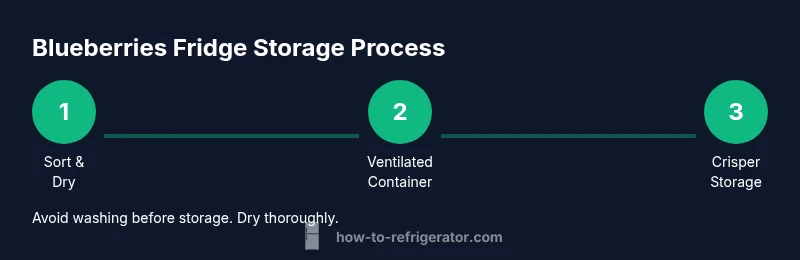
According to How To Refrigerator, today you will learn how to store blueberries in the refrigerator to maximize freshness. The key is to start with dry, unwashed berries and use a breathable container in the crisper drawer, not an airtight bag. Wash berries only right before use, and avoid crowding to prevent moisture buildup and mold.
Why blueberries spoil quickly
Blueberries are delicious but perishable. Their thin skins and high moisture make them susceptible to mold and decay if moisture builds up inside storage. Airflow matters: when berries sit in a sealed container, condensation can form and create an ideal environment for spoilage. The How To Refrigerator analysis shows that moisture plus poor airflow are the main culprits behind quick wilting or mold. For best results, start with dry berries and a container that breathes. Keep berries away from strong-smelling foods, and don’t store ripe blueberries next to other produce that emits ethylene. By understanding these factors, you can maximize freshness in the fridge and enjoy berries longer.
Preparation: washing vs drying
A key decision is whether to wash berries before refrigerating. Washing adds moisture, which speeds spoilage. If you must wash, do it quickly under cold water, and dry thoroughly before storage. The sweetest approach is to wash only what you plan to consume in the near term. After washing, spread berries on a clean towel or paper towels and pat them dry. Allow a few minutes for surface moisture to evaporate before placing them into a storage container. This discipline reduces clumping, mold risk, and overall waste.
Storage options: containers and airflow
Choose a breathable storage method that promotes airflow while protecting from damage. A ventilated container or a shallow tray lined with paper towels helps wick away moisture and prevents berry bruising. Do not seal berries in airtight bags, which trap moisture and accelerate spoilage. Arrange berries in a single layer whenever possible; if you must stack, place parchment between layers to maintain airflow. The crisper drawer in your fridge is ideal because it tends to be slightly more humid, yet you still want to maintain airflow around the fruit.
Temperature and life span in the crisper
Store blueberries in the fridge’s crisper drawer, away from the door where temperature fluctuates. Aim for a consistently cool environment with minimal temperature swings. The crisper’s humidity setting often supports fruit freshness; use it to your advantage by pairing a ventilated container with the drawer. Even with ideal conditions, blueberries are best consumed within a few days of storage. Regular checks help you pull out any spoiled berries before they affect the rest.
How to tell if blueberries are bad
Good blueberries are firm, plump, and deeply blue with a powdery bloom. Spoiled berries may appear mushy, leak juice, or show visible mold. An off smell or a slimy coating is a red flag. If you notice any of these signs, remove the affected berries immediately to prevent the entire batch from spoiling. When in doubt, discard questionable fruit rather than risk foodborne illness or mold spread in the fridge.
Freeze and quick-use tips; long-term storage options
If you won’t finish the batch in a few days, freezing is a reliable option. Freeze berries in a single layer on a tray to prevent clumping, then transfer to a freezer-friendly bag or container. When you’re ready to use them, thaw in the refrigerator or add them frozen to smoothies. For best results, don’t thaw berries completely before using them in recipes that require heating. Freezing preserves flavor and extends shelf life without reliance on your fridge alone.
Tools & Materials
- Ventilated produce storage container(Choose a container with small perforations to maximize airflow and reduce moisture buildup.)
- Paper towels or clean kitchen towels(Used to blot moisture and line the storage container.)
- Shallow tray or dish for single-layer storage(Optional to prevent stacking and promote even airflow.)
- Breathable produce bag (optional)(Can be used if a ventilated container isn’t available; still avoid airtight sealing.)
- Reusable label or marker(Date the storage to track freshness.)
Steps
Estimated time: 20-25 minutes
- 1
Sort and inspect the berries
Open the container and sort berries; remove any with mold, soft spots, or leaks. Keep only firm, uniformly colored berries for storage. Quick inspection helps prevent mold from spreading to good berries.
Tip: Discard moldy fruit promptly to protect the rest. - 2
Wash only if you will eat now
If you choose to wash, rinse quickly under cold running water, then dry thoroughly. Do not leave berries soaking; moisture invites spoilage. Wash only what you plan to eat within a day or two.
Tip: Dry with paper towels or a clean cloth until surfaces feel dry. - 3
Dry completely before storage
Spread berries on a clean towel and pat them dry; allow surface moisture to evaporate for a few minutes. Moisture is the enemy of berry freshness.
Tip: Patience here pays off; avoid piling them while damp. - 4
Line the storage container
Line the bottom of a ventilated container with paper towels to wick moisture. Place berries in a single layer if possible; slight spacing helps airflow.
Tip: A single layer reduces bruising and promotes even drying. - 5
Store in the crisper drawer
Put the container in the fridge’s crisper drawer, not the door. The drawer maintains cooler, more stable temperatures, which blueberries prefer.
Tip: Keep away from strong-smelling foods to preserve flavor. - 6
Monitor and maintain
Check berries daily for moisture and spoilage; remove any compromised fruit immediately. If you notice signs of spoilage, use or discard promptly.
Tip: Set a reminder to rotate produce and keep the batch fresh.
FAQ
Should I wash blueberries before storing them?
No. Wash berries only when you’re ready to eat them; drying them before storing helps prevent mold.
Never wash blueberries before storing; wash them only when you’re about to eat them.
Can blueberries be stored in a plastic bag?
Ventilated bags are acceptable, but avoid airtight bags or containers that trap moisture.
Ventilated bags or containers are best; avoid fully airtight options.
What’s the best place in the fridge to store them?
In the crisper drawer, away from the door to minimize temperature swings.
Keep them in the crisper, away from the door.
How can I tell if blueberries are bad?
Look for soft spots, mold, leaking juice, or off smells; discard affected berries.
Look for mold, mushy texture, or off smells.
Can I freeze blueberries for long-term storage?
Yes; freeze in a single layer on a tray, then transfer to a freezer bag or container.
You can freeze them; freeze in a single layer.
Watch Video
Top Takeaways
- Dry berries before storage to reduce mold.
- Use a ventilated container to promote airflow.
- Store in the fridge crisper drawer away from the door.
- Wash only before use to maximize life.
- Check daily and remove spoiled berries.