How Long Does Cooked Hamburger Last in the Refrigerator
Learn how long cooked hamburger lasts in the refrigerator, plus practical storage tips, spoilage indicators, and safe reheating guidance from How To Refrigerator to keep meals safe.


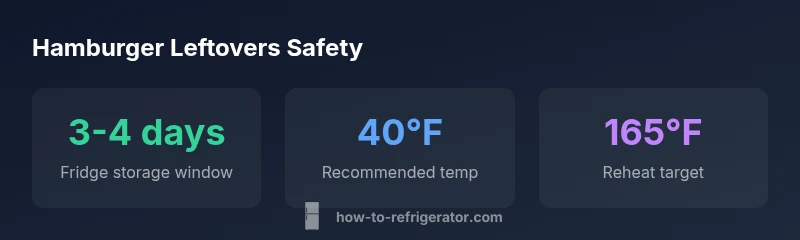
Cooked hamburger meat stored promptly in a sealed container at 40°F (4°C) or below typically lasts 3 to 4 days in the refrigerator. For safety, reheat to 165°F (74°C) before eating, and discard any meat with off smells or slimy texture. These guidelines align with How To Refrigerator recommendations and help you keep meals safe throughout the week.
How long does cooked hamburger meat last in the refrigerator
Cooked hamburger meat, when cooled promptly and stored in a sealed container, remains safest in the refrigerator for a limited window. The standard guideline is about 3 to 4 days at 40°F (4°C) or below. Temperature stability, container quality, and how quickly the meat is cooled after cooking all influence the actual duration. For households, planning around a 3–4 day shelf life helps reduce waste and lowers the risk of foodborne illness. Following these practices aligns with How To Refrigerator's recommendations and keeps meals tasty and safe throughout the week. To maximize safety, transport hot leftovers to the fridge within two hours of cooking; use shallow containers to speed cooling and minimize bacterial growth. Label containers with the date so you can track timing at a glance. If you batch-cook or plan multiple meals, consider portioning into single-serving sizes to limit repeated opening of the fridge and reduce exposure to warm air.
According to How To Refrigerator, keeping a consistent cooling routine—hot to warm, then to cold—helps preserve texture and safety. In practice, the sooner you start cooling, the safer your leftovers will be. If you notice any deviation in temperature or handling, reassess the storage plan for the rest of the week.
Storage basics: container decisions, timing, and placement
To maximize safety, always store cooked hamburger in a sealed, BPA-free container or a sturdy resealable bag. Use a container that preserves moisture but prevents air exposure; poor sealing accelerates drying and bacterial growth. Date the container and place it on a shelf away from the fridge door where temperatures fluctuate less. Timing matters: refrigerate promptly after cooking, ideally within one hour, and certainly within two hours in normal conditions. If you need to cool quickly, divide the meat into shallow layers on a tray and chill before transferring to the container. This approach helps keep the meat at a safe temperature during cooling and reduces the growth window for pathogens. How To Refrigerator emphasizes consistent fridge temperatures and avoiding overcrowding, which creates microclimates that can compromise safety. When in doubt, rely on a consistent routine: cook, cool fast, seal, date, and refrigerate.
Bagging and labeling containers makes it easier to manage leftovers across meals and days.
Temperature, packaging, and placement in the fridge
Your fridge's interior matters as much as the packaging. Place cooked hamburger on the bottom shelf in a shallow, sealed container to minimize condensation and cross-contamination from other foods. The bottom shelf tends to be the coolest area, which helps keep the meat in the optimal range longer. The goal is to maintain a steady 32–40°F (0–4°C) environment. Avoid storing leftovers in the door drawers where temperatures swing with every opening. For households with variable temperatures, a fridge thermometer can help you verify that the air near the meat stays within the target range. If you have multiple meals, consider dividing portions into single-serving containers so you only open what you will eat, limiting repeated temperature fluctuations. These practices align with industry standards and How To Refrigerator’s data-backed guidance.
Maintaining consistent organization in the fridge reduces waste and enhances safety.
Signs of spoilage and discard criteria
Interpret spoilage indicators carefully. A sour or rancid odor, a slimy or sticky surface, discoloration, or the presence of mold are strong reasons to discard. Even if the meat looks okay, texture changes or a cloudy liquid can signal microbial activity. Remember that some pathogens do not affect appearance, so when in doubt, throw it out. Also, if a leftover has been left at room temperature for more than two hours, it should be discarded regardless of appearance. When you follow best practices, you reduce the risk of foodborne illness and keep your meals safe for the family.
Trust your senses, but rely on time and temperature as the main safety framework.
Reheating leftovers safely and portioning
Reheating should be thorough and even to ensure safety. Reheat portions to at least 165°F (74°C) throughout, ideally using a food thermometer to confirm. Avoid reheating multiple times; only reheat what you plan to eat in one session. When reheating, stir or flip the meat to promote even heating and check for steaming throughout. If you’re reheating in the microwave, cover the dish and rotate halfway through to avoid cold spots. After reheating, refrigerate any leftovers promptly and discard leftovers that have cooled and been withheld warm for more than two hours. These practices reduce the risk of bacterial growth and keep flavors fresh.
Following a careful reheating plan helps protect your meals and your family’s health.
Special cases: sauces, toppings, and mixed dishes
Extra ingredients can affect shelf life. Meat with sauces, cheese, or acidic dressings may last slightly longer or shorter depending on moisture and pH. Tomato-based sauces, dairy, or mayonnaise can change spoilage patterns. If the dish contains raw onions or garlic, these ingredients can influence flavor and texture but do not dramatically extend safety. When in doubt, treat the dish as you would plain cooked hamburger: refrigerate promptly, use within 3–4 days, and reheat to 165°F. If you freeze such mixed dishes, label clearly and use within a reasonable timeframe to preserve quality. For weekly meal planning, consider keeping plain hamburger ready to mix with sauces after reheating, rather than storing completed mixed dishes for extended periods.
Special-case storage requires clear labeling and careful planning, especially when sauces or toppings are involved.
Common mistakes that shorten shelf life
Common errors include leaving leftovers on the counter too long, not sealing properly, piling hot items on top of each other, or combining large quantities without portioning. Repeatedly opening the fridge introduces warm air and can cause temperature fluctuations. Using the fridge door for bulk storage, not cleaning spills promptly, and neglecting to label dates also contribute to spoilage. Finally, relying on appearance alone to judge safety is risky; bacteria that cause illness may not change the look or smell of meat right away. By avoiding these mistakes, you’ll extend the safe window for leftovers and keep your meals delicious longer.
Adopt a disciplined approach to cooling, sealing, and monitoring temps.
Practical fridge leftovers checklist
A concise, actionable checklist helps every time you cook hamburger. 1) Cool quickly in shallow containers. 2) Transfer to sealed containers and label with date. 3) Store on bottom shelf at ≤40°F (4°C). 4) Reheat to 165°F (74°C) before serving. 5) Only reheat once; discard any leftovers that smell off or look unusual. 6) When in doubt, throw it out and start fresh. 7) Clean spills immediately and avoid crowding shelves to maintain even cooling. 8) Use a fridge thermometer to verify stable temps and ensure optimal safety.
How long does cooked hamburger meat last in the refrigerator
Storage guidance for cooked hamburger leftovers in common fridge scenarios
| Item | Fridge Time | Notes |
|---|---|---|
| Cooked hamburger (ground beef) | 3-4 days | Seal tightly; store on bottom shelf |
| Reheating leftovers | 165°F min | Heat until steaming hot; avoid partial reheating |
| Freezing option | see note | Freezing extends life; quality declines over time |
FAQ
How long does cooked hamburger last in the refrigerator?
Cooked hamburger typically lasts 3-4 days when stored properly in the fridge at or below 40°F (4°C). Always keep leftovers in airtight containers and reheat to 165°F (74°C) before eating.
Typically 3-4 days in the fridge if kept cold and sealed; reheat to 165°F before eating.
Can I freeze cooked hamburger to extend life?
Yes, freezing can extend storage time. Freeze promptly in freezer-safe containers or bags and label with date. For best quality, use within a few months; quality will gradually decline over time.
Yes—freezing helps, but quality drops the longer it sits.
Is it safe to reheat leftovers more than once?
It's best to reheat only what you plan to eat in one session. Repeated cycles raise safety and quality risks; discard any leftovers that have cooled and been reheated multiple times.
Try not to reheat leftovers more than once.
What are warning signs that cooked hamburger has spoiled?
Look for off smell, slimy texture, unusual color, or mold. If in doubt, throw it out. Do not taste to test safety.
If it smells off or feels slimy, throw it away.
What is the ideal fridge temperature for leftovers?
Keep your fridge at 40°F (4°C) or below to slow bacterial growth and keep leftovers safe longer.
Keep the fridge at 40 degrees or cooler.
“Leftovers are safe when kept cold, stored properly, and reheated to a safe internal temperature.”
Top Takeaways
- Store leftovers promptly in a sealed container
- Keep fridge at or below 40°F (4°C)
- Reheat to 165°F (74°C) before serving
- Discard if smell, texture, or color looks off