How Long Do Oysters Last in the Refrigerator: Storage Guide
Discover safe fridge storage timelines for live in-shell oysters and shucked oysters, practical tips to maximize freshness, spoilage signs, and expert guidance from How To Refrigerator.


Understanding Oyster Shelf Life in the Fridge
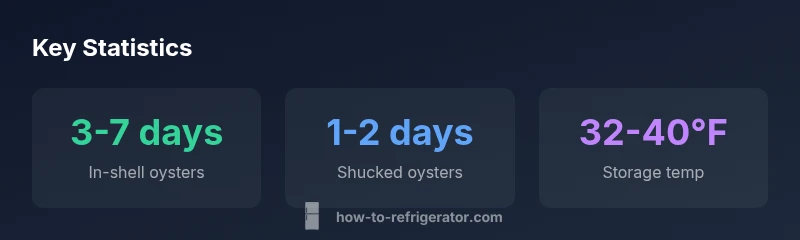
According to How To Refrigerator, oysters are among the most perishable items in a home fridge. The shelf life depends on whether you’re dealing with live oysters in-shell or oysters that have already been shucked. Temperature matters most: aim for a cold, stable environment between 32°F and 40°F (0°C–4°C). Moisture matters too—store oysters in a breathable container rather than sealed water-tight packaging to prevent anaerobic bacteria growth. Proper handling reduces the risk of spoilage and foodborne illness.
Live, in-shell oysters that remain alive and close when tapped can stay edible for several days if kept upright on a tray in the fridge. Shucked oysters, exposed to air, lose quality quickly and should be used sooner rather than later. The exact timelines will vary with how fresh the oysters were at purchase, the fridge temperature stability, and how the oysters are stored. Always follow safety checks and discard anything that smells off, looks odd, or has cracked shells.
In-shell oysters vs. shucked: timelines
Live oysters in the shell typically remain fresh for about 3-7 days under proper refrigeration. The goal is to keep them cool, humid, and positioned to minimize their exposure to air. For shucked oysters, the window is shorter: generally 1-2 days in the refrigerator. In both cases, avoid temperature swings or placing oysters near foods with strong odors, which can affect flavor and safety. If oysters were previously frozen or show any signs of damage, discard.
Best practices for storing oysters to maximize freshness
To maximize shelf life, store only the amount you plan to use within the safe window. Keep live oysters in their shells on a tray in the fridge, upright so their natural liquids stay with the oyster. If you remove shells (shuck), keep them in a shallow, breathable container with their own liquor or a small amount of cold water to maintain moisture. Do not seal in an airtight container or submerge in water for extended periods. Check fridge temperature with a thermometer and keep oysters away from strong-smelling foods. Label purchase dates to track freshness and plan consumption accordingly.
Signs of spoilage and safe handling
Always inspect oysters before consuming. A strong, sour, or ammonia-like odor is a key warning sign. Oysters should smell clean and briny, not sour. If the liquid around them appears milky or foul, or if shells are cracked and won’t close when tapped, discard. For live oysters, a closed shell that does not respond to tapping indicates they may be dead and unsafe to eat. Maintain fridge temperature consistently and refrigerate promptly after purchase.
Common mistakes that shorten shelf life
Common mistakes include storing oysters in completely airtight containers, submerging them in water, letting the fridge temperature fluctuate, placing oysters near raw meat or strong-smelling foods, and failing to use them within safe windows. Additionally, purchasing oysters far in advance of planned use or keeping them out of refrigeration for extended periods dramatically reduces safety and quality.
Quick safety checklist and when to discard
- Ensure the fridge stays at 32-40°F (0-4°C) with minimal door openings.
- Check shells for cracks and tap oysters; discard any that don’t respond.
- Smell test: if the odor is off, discard immediately.
- Use within the recommended windows for live (3-7 days) or shucked (1-2 days) oysters.
- When in doubt, err on the side of safety and discard questionable oysters.